🩹 Personal website for Nurses

Show hospitals the skilled, registered nurse behind the CV

Hospitals, agencies and overseas recruiters shortlist nurses on registration, ward experience and clinical skills. A personal site presents all three clearly, with certificates and a CV they can open on any phone.

Claim your name: digitalcvmaker.com/

● Live in 5 minutes · free to start · no auto-renew · हिंदी में पढ़ें

See it live

See a live demo of a nurse website

Real designs filled in for a sample person (not a real profile). Open one, scroll it like a visitor would, then make yours free.

Before and after

Same person, same details — as a PDF and as a website.

Before: the resume Sample nurse resume, page 1 of the PDF
Page 1 of the PDF
After: the website
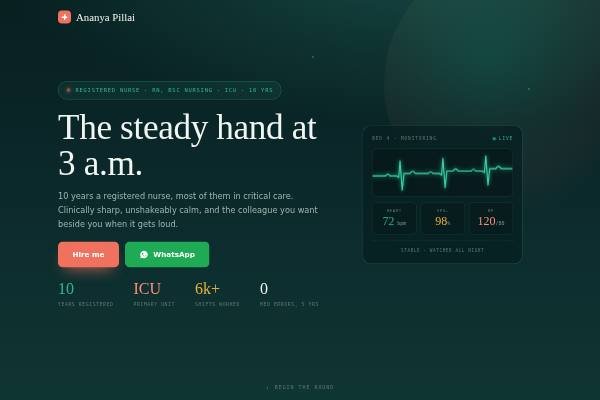
The live demo website · Open it →

Does a nurse need a personal website?

Yes — especially for nurses applying to other hospitals, staffing agencies or overseas employers. A personal website puts your council registration, unit experience, procedures and current certifications such as BLS and ACLS behind one link, which helps recruiters screen you quickly before they ask for formal documents.

Why Nurses choose a personal site

Everything a nurse needs, in one link

Credentials in one place

Nursing council registration, degree and certifications like BLS or ACLS listed where a recruiter expects to find them.

Ward experience that reads well

Describe the units you’ve worked in, patient ratios and procedures, instead of squeezing them into one line.

Ready for every application

Share the same link with a hospital HR team, a staffing agency or an international recruiter.

Before you publish

What to put on your nurse website

Tick off each item as you add it — and why each one matters to the people who read your site.

Page outline

How to lay out a nurse website

  1. Profile summary Qualification (GNM, B.Sc or M.Sc Nursing, Post Basic), total years, current unit and the role you want next, such as ICU staff nurse, charge nurse or nurse educator.
  2. Unit-by-unit experience For each posting: department, bed count, nurse-to-patient ratio, typical case mix and equipment handled — ventilators, infusion pumps, dialysis machines, cardiac monitors — plus any in-charge duties.
  3. Skills and competencies Procedures you are signed off on, such as IV cannulation, ABG sampling, catheterisation, tracheostomy care, wound care and high-alert medication administration, grouped by unit.
  4. Quality and teaching work Accreditation audits you took part in, infection control committee work, fall or pressure-injury prevention projects, in-service sessions you taught and documentation systems you have used.
  5. Registration and exams State nursing council registration number, plus overseas exam or registration status — licensing exams, language tests, credential verification — stated factually with the stage reached.
  6. Availability and references Notice period, preferred shifts and cities, willingness to relocate, and how referees such as your nursing superintendent can be contacted on request.
Templates

Website templates for nurses

What nurses in India should know before going online

Nurses in India register with their state nursing council, and working in another state usually means registering there as well; the Indian Nursing Council also maintains a national online registration and tracking system that recruiters may ask about. Hospital HR teams and agencies find nurses mainly through Naukri, LinkedIn, WhatsApp groups and referrals, and often prefer experience in accredited hospitals. Overseas recruitment to the Gulf, the UK and elsewhere is active, and so are fake agencies, so a site listing your own verifiable details helps genuine recruiters without you sending passport scans to strangers. The nursing code of ethics and hospital social media policies rule out patient photos or case details. Listing languages — Malayalam, Tamil, Hindi, Kannada, English — helps with both Indian hospitals and overseas roles.

Common website mistakes nurses make

  • Writing “worked in ICU” with no detail. Name the ICU type — medical, surgical, cardiac, neonatal — the bed strength and the equipment you handled independently.
  • Posting photos taken on the ward. Even a monitor or wristband in the background can identify a patient; use a plain professional photo and no clinical images.
  • Publishing passport, registration certificate or Aadhaar scans for convenience. They get misused; list the numbers recruiters need and share copies only with verified employers.
  • Leaving expired BLS or ACLS certificates listed. Show validity dates and update after renewal, because recruiters check that certifications are current, not just completed once.
  • Using one generic page for every application. Add a line about your target role — Gulf ICU, UK hospital, Indian nurse educator — and move the most relevant experience to the top.
How it works

From nothing to a live site in three steps

1

Pick a template

Start from a design built for professionals like you.

2

Make it yours

Add your details, work and photo — no code, no designer.

3

Go live and share

Publish to your own link and put it everywhere that matters.

Plans from Rs.499 a month · See plans

One place for your job

Everything for nurses

FAQ

Questions from Nurses

Listing your registration and the council that issued it helps recruiters verify you quickly. Keep content factual and within your professional body’s guidelines, and avoid publishing personal documents like your full certificate scans publicly.

It can help. International recruiters often want clear details on your specialties, years of experience and certifications. A tidy site plus a downloadable CV makes their screening easier, alongside the formal paperwork they require.

Name the unit, hospital type, bed strength and the procedures or equipment you handled, such as ventilators or dialysis. Specific details show depth far better than a generic “worked in critical care”.

Only in general terms. Never share patient names, photos or identifiable details. You can describe the kind of cases you handled and what you learnt without breaching confidentiality.

List your qualification, registration, total experience by unit, procedures you are competent in, valid certifications and where you are in the licensing process for the country you want. Keep scanned documents offline and share them only with verified recruiters.

Your qualification, years of experience, main units, the kind of patients you care for and the role you want next. Two or three plain sentences are enough.

Made for you

Personal websites for every profession

All professions →

Your name, your site, your callback

Join the Nurses who let their own site do the talking.

● Live in 5 minutes · free to start · no auto-renew

Chat on WhatsApp