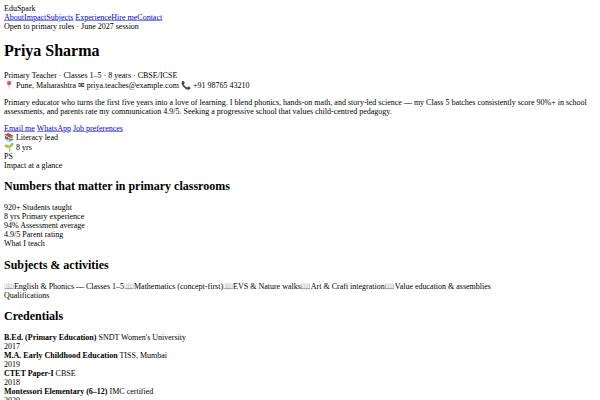
 Primary Teacher (EduSpark)
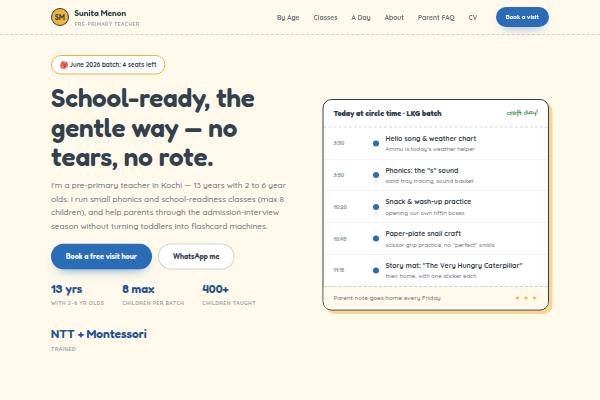 Pre-Primary Teacher
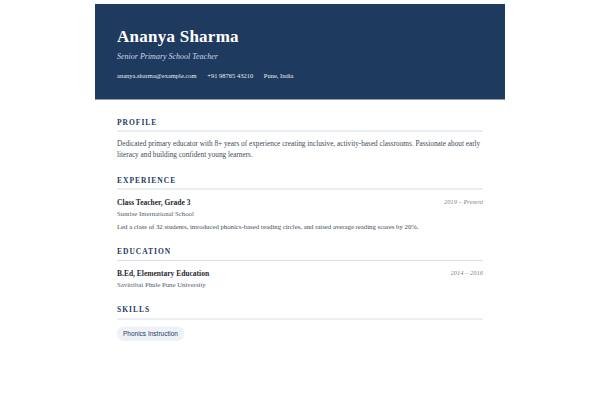 Classic Resume

What tutors in India should know before going online
Individual home tutors do not need a licence in India, but coaching centres are increasingly regulated. Central guidelines for coaching centres, adopted by states in different ways, cover registration, batch conditions and misleading promises, and consumer protection authorities have acted against coaching advertisements that overstate results. The safe practice is simple: do not guarantee marks or ranks, and share results only with student and parent consent. Parents check tutors through school WhatsApp groups, neighbourhood references, Google Maps searches for “tuition near me” and YouTube if you teach online. Be clear about boards — CBSE, ICSE, state boards and IB differ in syllabus — and about the language of instruction, since many families want English-medium teaching with explanations in Hindi, Marathi, Tamil or another home language.
Common website mistakes tutors make
- Writing “100% results” or promising a percentage; replace it with your method, testing routine and a few consented examples of student progress.
- Listing every class from 1 to 12 in every subject, which parents find hard to believe; show the classes and subjects you teach most often and best.
- Publishing students’ full names, photos and marks without consent; use first names or initials only with written permission from parents.
- Not stating the locality or online time zone, so you get enquiries from across the city you cannot travel to; list the areas you cover.
- Leaving last year’s batch timings online after the academic session changes; update them every April and before board exam revision months.