🗂️ Personal website for Company Secretaries

Present your governance and compliance expertise with clarity

Companies hiring a CS, and startups needing compliance help, look for precise experience with filings, board processes and secretarial audits. A personal website sets that out in an orderly way that reflects how you work.

Claim your name: digitalcvmaker.com/

● Live in 5 minutes · free to start · no auto-renew

See it live

See a live demo of a company secretary website

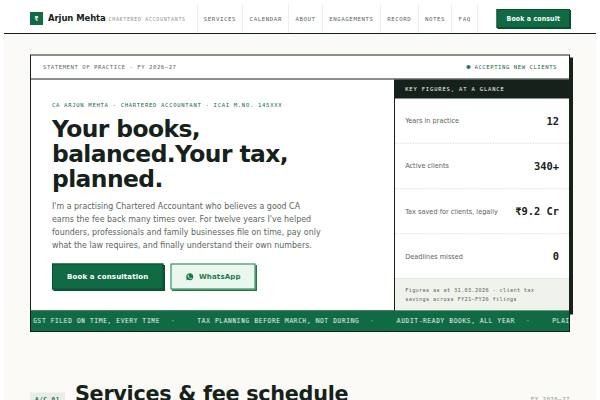
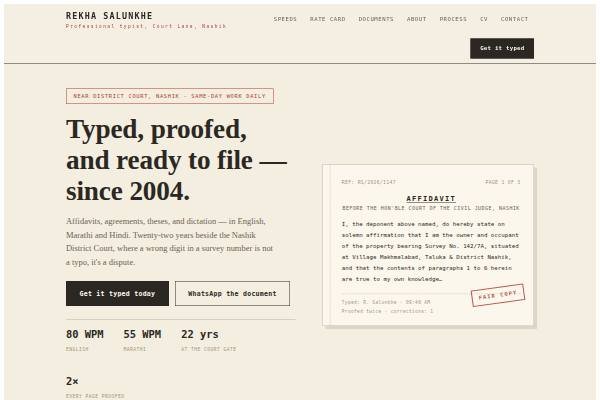
Real designs filled in for a sample person (not a real profile). Open one, scroll it like a visitor would, then make yours free.

Before and after

Same person, same details — as a PDF and as a website.

Before: the resume Sample company secretary resume, page 1 of the PDF
Page 1 of the PDF
After: the website
The live demo website · Open it →

Does a company secretary need a personal website?

Yes — a company secretary benefits from a website, whether employed or in practice. For employed CSs it works as a detailed compliance CV; for practising CSs it sets out membership, certificate of practice and areas of work factually, within ICSI’s guidelines, so companies can check you before an appointment.

Why Company Secretaries choose a personal site

Everything a company secretary needs, in one link

Compliance experience in detail

ROC filings, board and AGM management, listing compliance and secretarial audits described properly.

Credible and understated

A clean layout suits a profession built on accuracy, discretion and good governance.

Useful for jobs and practice

Share it with recruiters or with founders who need help setting up and staying compliant.

Before you publish

What to put on your company secretary website

Tick off each item as you add it — and why each one matters to the people who read your site.

Page outline

How to lay out a company secretary website

  1. Membership and practice details ACS or FCS, membership number, certificate of practice number if practising, peer review status where applicable, and qualifications such as LLB or insolvency professional registration.
  2. Statutory work handled Annual filings, charge creation and satisfaction, share allotments, buy-backs, conversions, strike-off and revival, and event-based filings, described by type and approximate volume.
  3. Board and shareholder processes Agendas and notes, minutes, e-voting, AGMs and EGMs, committee meetings, board evaluation and related-party approvals you have run end to end.
  4. Listed-company and regulatory work Listing obligations, insider trading compliance and the structured digital database, FEMA filings, IBC work or RBI returns for NBFCs, as relevant to you.
  5. Sectors and company sizes Startups, private limited companies, listed entities, NBFCs, section 8 companies or LLPs, so recruiters and founders see exactly where your experience lies.
  6. Updates and checklists Factual compliance calendars and explanations of recent amendments, dated and kept current, useful to readers without being promotional.
Templates

Website templates for company secretaries

What company secretaries in India should know before going online

Company secretaries are members of ICSI under the Company Secretaries Act, and its code of conduct prohibits members in practice from soliciting work or advertising, though ICSI permits websites carrying factual information within its guidelines. Keep to membership and certificate of practice details, areas of practice, partners and contact, without client names, fee offers or superlatives, and check the current guidelines before publishing. Practising CSs increasingly hold peer review certificates and generate UDINs on certifications, and clients may ask about both. Employers hire CSs through Naukri, LinkedIn and ICSI placement drives, and listed companies look closely at SEBI listing and insider trading experience. Startups often find a practising CS through their CA or founder networks, so a clear, sober site the CA can forward helps.

Common website mistakes company secretaries make

  • Offering “company incorporation in 3 days at ₹4,999”. Package pricing and speed promises read as solicitation; describe the work and quote after understanding the requirement.
  • Listing sections of the Companies Act instead of real experience. Recruiters want to know what you actually filed, drafted or managed, and for what size of company.
  • Naming clients or companies audited. Keep engagements confidential; mention sectors and the number of engagements in neutral terms.
  • Leaving out listed-company or SEBI experience when you have it. It is a key differentiator in hiring; describe the listing obligations and disclosures you managed.
  • Compliance calendars left untouched after amendments or extended due dates. Date every update and correct superseded information promptly, because readers may rely on it.
How it works

From nothing to a live site in three steps

1

Pick a template

Start from a design built for professionals like you.

2

Make it yours

Add your details, work and photo — no code, no designer.

3

Go live and share

Publish to your own link and put it everywhere that matters.

Plans from Rs.499 a month · See plans

One place for your job

Everything for company secretaries

FAQ

Questions from Company Secretaries

Board and general meeting management, ROC and MCA filings, listing obligations if applicable, secretarial audits, FEMA or SEBI work and any due diligence you’ve handled. Mention sectors and company sizes too.

Professional bodies usually restrict solicitation by members in practice. Keep content factual and within your professional body’s guidelines, and check the current ICSI rules on websites before publishing.

Yes. List your training, the company or firm where you trained, the compliance tasks you handled and your exam status. It gives recruiters more context than a standard CV template.

Founders can use the enquiry form to share their company type and query. You can then respond with next steps or a call, keeping sensitive documents off the public form.

Usually incorporation support, board meetings and minutes, share allotments and transfers, ROC filings, ESOP paperwork and keeping statutory registers up to date. A website listing these services helps founders understand what you can take off their plate.

Highlight your training period, the filings and meetings you handled, and software you know. A simple website with these details and a CV makes your applications easier to review.

Made for you

Personal websites for every profession

All professions →

Your name, your site, your callback

Join the Company Secretaries who let their own site do the talking.

● Live in 5 minutes · free to start · no auto-renew

Chat on WhatsApp