👗 Personal website for Fashion Designers

A lookbook website that shows your label at its best

Whether you run a boutique label or are applying to design houses, people judge your eye instantly. A personal site presents collections as a proper lookbook and lets buyers or clients request custom pieces easily.

Claim your name: digitalcvmaker.com/

● Live in 5 minutes · free to start · no auto-renew

See it live

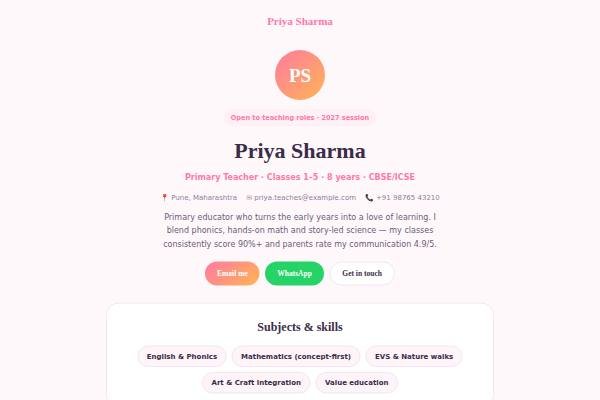
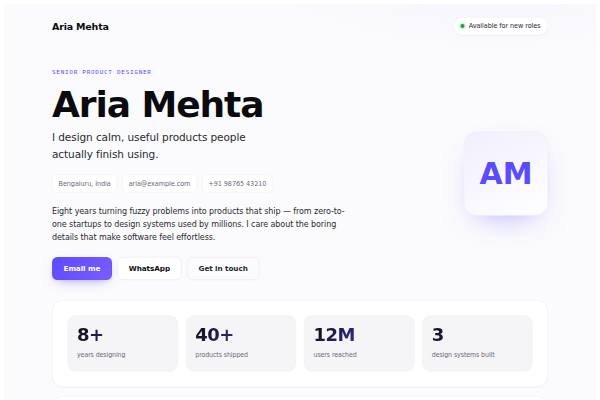
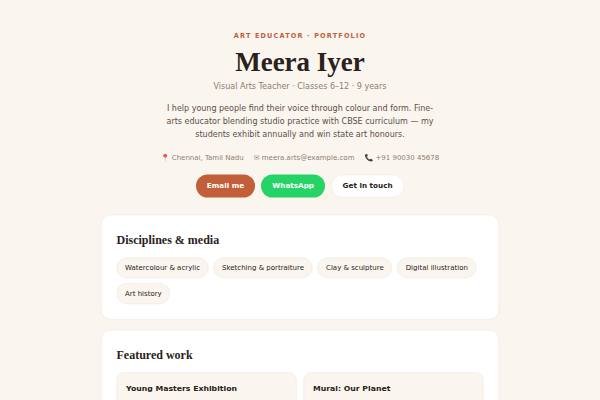
See a live demo of a fashion designer website

Real designs filled in for a sample person (not a real profile). Open one, scroll it like a visitor would, then make yours free.

Before and after

Same person, same details — as a PDF and as a website.

Before: the resume Sample fashion designer resume, page 1 of the PDF
Page 1 of the PDF
After: the website
The live demo website · Open it →

Does a fashion designer need a personal website?

Yes — whether you run a boutique label or want a job at a design house, a personal website presents your collections the way a designer thinks about them. It shows your process, construction knowledge and brand identity together, which scattered social posts and a PDF portfolio cannot do as well.

Why Fashion Designers choose a personal site

Everything a fashion designer needs, in one link

Collections as stories

Moodboards, sketches and final looks grouped by collection, the way a designer thinks.

Custom orders simplified

Clients describe the occasion, fabric and budget through a single enquiry form.

Credible for industry roles

Graduates can share a portfolio link with design houses and export firms.

Before you publish

What to put on your fashion designer website

Tick off each item as you add it — and why each one matters to the people who read your site.

Page outline

How to lay out a fashion designer website

  1. Label story or designer statement Who you design for, your aesthetic and influences such as handloom revival, contemporary Indo-western or sustainable basics, and where you are based.
  2. Collections Each collection with a concept note, moodboard, fabric story, final looks and shoot credits, presented as a lookbook rather than a product grid.
  3. Process and construction Sketches, technical flats, pattern work, draping, fittings and sampling notes, showing recruiters and clients that your designs can actually be made.
  4. Textiles and artisans Weaves, prints and embroidery you work with, and the clusters or karigars you collaborate with, credited properly and described accurately.
  5. Custom and bridal orders How made-to-measure works: consultation, fabric selection, number of fittings, timelines in weeks and a starting price range in ₹.
  6. Press, shows and contact Fashion weeks, exhibitions, pop-ups and press mentions, plus an enquiry form for custom orders, stockists and collaboration.
Templates

Website templates for fashion designers

What fashion designers in India should know before going online

Fashion designers in India have no licensing body, but a few rules are worth knowing. Original designs can be registered under the Designs Act, and your label name can be protected as a trademark, which is worth considering before a collection gets copied. If you describe products as handloom or use a Geographical Indication name such as a regional weave, make sure the claim is accurate. Clients find boutique designers through Instagram, WhatsApp catalogues, exhibitions and word of mouth, while design houses and export firms recruit graduates through campus placements, LinkedIn and portfolio reviews. Cities like Delhi, Mumbai, Jaipur, Kolkata, Hyderabad and Bengaluru have strong ecosystems, and NRI clients ordering wedding wear from abroad rely heavily on your website to judge quality.

Common website mistakes fashion designers make

  • Only styled shoot images. Add close-ups of fabric, embroidery, finishing and fit so clients and recruiters can judge the craftsmanship.
  • No credits for photographers, models, stylists or artisans. Add a credits line for every shoot and name the craft clusters you work with.
  • Unclear custom order timelines. State the usual weeks needed for bridal and occasion wear, including fittings, to avoid last-minute rush requests.
  • Calling pieces handloom or pure silk without being certain. Describe fabrics precisely; inaccurate claims damage trust with informed buyers.
  • Mixing graduation work with current commercial pieces without labels. Separate them, so recruiters and clients understand what stage each collection represents.
How it works

From nothing to a live site in three steps

1

Pick a template

Start from a design built for professionals like you.

2

Make it yours

Add your details, work and photo — no code, no designer.

3

Go live and share

Publish to your own link and put it everywhere that matters.

Plans from Rs.499 a month · See plans

One place for your job

Everything for fashion designers

FAQ

Questions from Fashion Designers

Your graduation collection, process work such as sketches, moodboards and fabric development, technical flats and any internship projects. Recruiters look for both creativity and construction knowledge.

Yes. Clients share the occasion, measurements timeline and budget through the enquiry form. You follow up for fittings and payment, which keeps the initial request organised.

This site is designed as a portfolio and enquiry hub rather than an online shop. Many designers link to their store or take orders after an enquiry.

Add a short credits line for each shoot naming the photographer, stylist and models. It’s professional courtesy, builds goodwill in the industry and helps collaborators share your work.

Show a few complete collections with mood boards, sketches, fabric choices and final photographs. Add technical drawings and specs if you are applying to brands.

Begin with a website showing your pieces and a simple order enquiry, take payments through a trusted gateway, and use Instagram to drive visitors to it.

Made for you

Personal websites for every profession

All professions →

Your name, your site, your callback

Join the Fashion Designers who let their own site do the talking.

● Live in 5 minutes · free to start · no auto-renew

Chat on WhatsApp