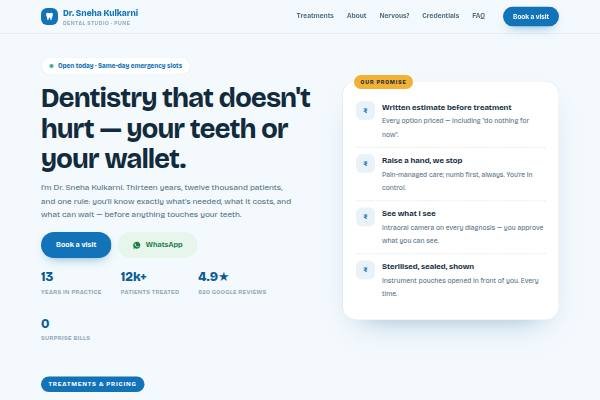
 Dentist
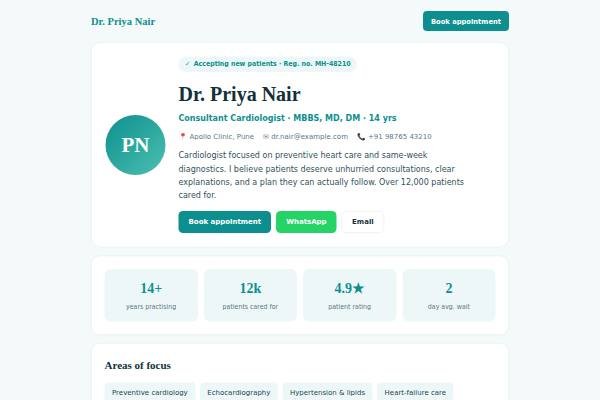 Practice
 Vitals

What dentists in India should know before going online
Dentists in India register with their State Dental Council, and the national code of ethics — framed by the Dental Council of India, which the National Dental Commission Act replaces — restricts advertising and solicitation. In practice a website should be informational: qualifications, registration number, treatments, timings and location, without claims of superiority, discount offers or promotional patient testimonials. Read the current code and your state council’s guidance before publishing. Patients mostly find clinics through Google Maps searches, map reviews, local directory apps and word of mouth, then open the website to check the dentist and the clinic. Keep the clinic name, address and timings identical on your signboard, map listing and site. Offering content in Marathi, Kannada, Tamil, Hindi or another local language alongside English helps older patients.
Common website mistakes dentists make
- Calling the clinic the “best dental clinic in the city” or promising “painless root canals”. Superlatives and guarantees conflict with dental ethics; describe what you do and how.
- Running festival discount banners on implants or aligners. Price-led promotion may breach advertising norms; give indicative ranges with a note that the examination decides the cost.
- Using stock photos of perfect smiles. Patients spot them instantly; show your actual chair, sterilisation area and team, with your staff’s permission.
- Listing every treatment taught in BDS. Show what you and visiting specialists actually do regularly, and say plainly which cases you refer elsewhere.
- Clinic name, phone or timings differing between website, map listing and signboard. Patients arrive at closed doors; update all three together whenever anything changes.