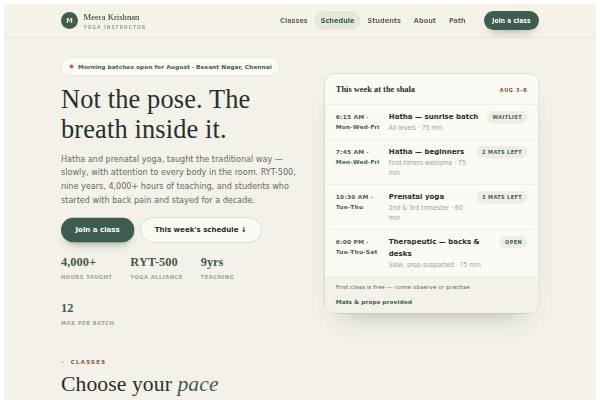
 Serene
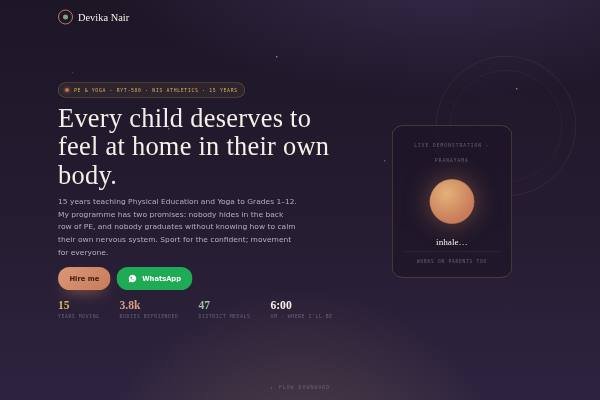 Prana
Prana
 Coach Pro

What yoga instructors in India should know before going online
Yoga teaching is not licensed in India, but the Ministry of AYUSH set up the Yoga Certification Board, which certifies instructors at levels such as Yoga Protocol Instructor and Yoga Wellness Instructor. It is voluntary, yet corporate clients, schools and some overseas students recognise it, so list it if you hold it. Avoid claiming that yoga cures diabetes, thyroid problems or other diseases; Indian law restricts advertising remedies for many conditions, and the honest framing is wellbeing and practice. Students find teachers through YouTube classes, Instagram, Google Maps listings of studios and word of mouth in housing societies. Demand rises around International Day of Yoga every June. Offering classes in Hindi, Tamil or another regional language, and early-morning online batches for NRIs, widens your reach.
Common website mistakes yoga instructors make
- Promising to cure back pain, PCOS, diabetes or thyroid conditions; describe classes as supportive practice and advise students to follow their doctor’s guidance.
- Using only Sanskrit names for classes and poses, which confuses beginners; add a plain English or Hindi description beside each style or batch name.
- Showing only advanced poses in photos, which puts off stiff beginners and older students; include pictures of props, modifications and ordinary students with consent.
- Listing teacher training without hours, institute or tradition; give those details so studios, schools and corporate clients can verify your background.
- Keeping an old retreat page live for months; archive past events or mark them clearly as completed so no one tries to book.