📊 Personal website for Chartered Accountants

A factual, professional profile clients and employers can verify

Businesses and recruiters want to know a CA’s qualifications, experience and areas of work before they call. A restrained personal site presents these details clearly, whether you’re in practice or pursuing an industry role.

Claim your name: digitalcvmaker.com/

● Live in 5 minutes · free to start · no auto-renew · हिंदी में पढ़ें

See it live

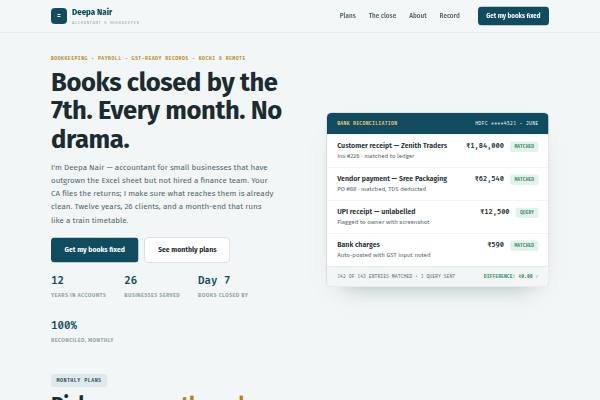
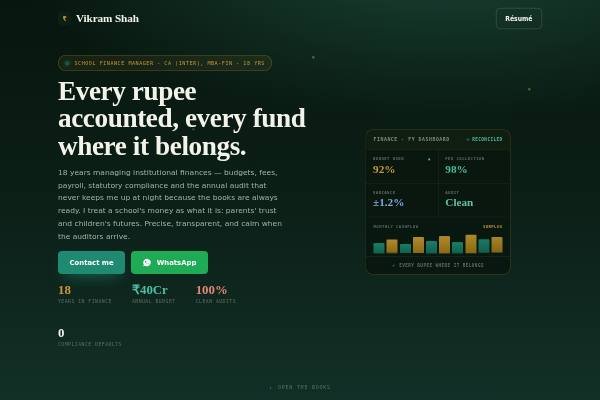
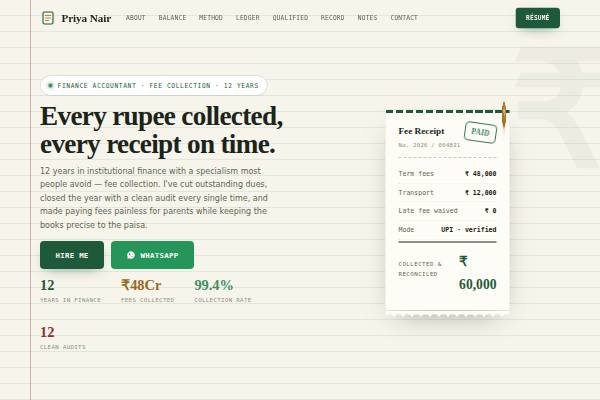
See a live demo of a chartered accountant website

Real designs filled in for a sample person (not a real profile). Open one, scroll it like a visitor would, then make yours free.

Before and after

Same person, same details — as a PDF and as a website.

Before: the resume Sample chartered accountant resume, page 1 of the PDF
Page 1 of the PDF
After: the website
The live demo website · Open it →

Does a chartered accountant need a personal website?

Yes — a CA can have a personal or firm website, as long as it follows ICAI’s guidelines, which allow factual information that people seek out rather than promotional push. It helps clients and employers check your membership, areas of work and experience before calling, and supports applications for CAs in industry.

Why Chartered Accountants choose a personal site

Everything a chartered accountant needs, in one link

Credentials, stated plainly

Membership details, articleship firm and post-qualification experience in a clean, sober layout.

Areas of work at a glance

Audit, GST, direct tax, company law or FP&A, listed so the right people get in touch.

One link for both paths

Use the same site for practice enquiries or for applications to corporate finance roles.

Before you publish

What to put on your chartered accountant website

Tick off each item as you add it — and why each one matters to the people who read your site.

Page outline

How to lay out a chartered accountant website

  1. Membership and firm details Name, ACA or FCA, membership number, firm name and firm registration number if in practice, year of qualification, and post-qualification courses such as DISA or IFRS certificates.
  2. Areas of work Statutory and internal audit, direct tax, GST, transfer pricing, company law, valuation, Ind AS — described as areas of work, not as sales offers.
  3. Partners and team For firms, each partner’s qualifications and areas; for individuals, the articleship and industry roles that shaped your experience.
  4. Knowledge section Neutral, dated updates on due dates, budget changes or GST notifications, written to inform readers rather than to advertise services.
  5. Industry profile For CAs in employment: reporting, consolidation, controllership or FP&A responsibilities, ERP systems, audits faced and team size, without disclosing your employer’s confidential figures.
  6. Office and contact Office address, working hours, email and phone, plus a note that documents should be shared through a secure channel, never the enquiry form.
Templates

Website templates for chartered accountants

What chartered accountants in India should know before going online

The Chartered Accountants Act and ICAI’s Code of Ethics bar practising members from soliciting clients or advertising beyond what the Council permits, but ICAI allows websites within its guidelines. Broadly, a site may state factual details — names, qualifications, services, address, contact and knowledge articles — and should avoid client names, fee offers, testimonials, claims of superiority and promotion of the site beyond what the guidelines allow. Separate rules govern use of the CA logo. Guidelines are revised, so read the current version before publishing. Clients mostly reach CAs through referrals from other businesses, bankers and peers, then check the website and Google listing. CAs in industry are hired through Naukri, LinkedIn and ICAI campus placements, where a clear online profile helps.

Common website mistakes chartered accountants make

  • Listing marquee client names or logos. ICAI guidelines treat this as solicitation; describe industries and engagement types instead, such as statutory audits of mid-sized manufacturers.
  • Publishing “GST registration at ₹999” style price offers. Fee advertising sits badly with the Code of Ethics; invite enquiries and quote after understanding the work.
  • Using words like “leading”, “top” or “best CA firm”. Keep the language factual; experience and areas of work read far more credibly than self-praise.
  • Letting the knowledge section go stale. Outdated due dates or superseded provisions damage credibility; date each update and remove what no longer applies.
  • CAs in industry building a practice-style site. If you are job hunting, lead with roles, systems and reporting responsibilities, not services offered to the public.
How it works

From nothing to a live site in three steps

1

Pick a template

Start from a design built for professionals like you.

2

Make it yours

Add your details, work and photo — no code, no designer.

3

Go live and share

Publish to your own link and put it everywhere that matters.

Plans from Rs.499 a month · See plans

One place for your job

Everything for chartered accountants

FAQ

Questions from Chartered Accountants

CAs can have websites, but ICAI has guidelines on what practising members may publish. Keep content factual and within your professional body’s guidelines, and review the current ICAI rules before going live.

Your qualification year, articleship and industry experience, areas like reporting, audit, taxation or FP&A, the tools you use and key responsibilities. It works well as an online CV for finance roles.

Be cautious. Naming clients or advertising fees may conflict with professional guidelines for practising members. Describe the types of engagements and industries you work with in neutral terms instead.

Yes. The enquiry form lets a visitor share their name, contact details and a short query. Ask them not to send financial documents through the form; share those securely later.

ICAI rules restrict advertising, so most CAs grow through referrals, networking and a factual online presence. A website with your services, qualifications and contact details is permitted within ICAI guidelines; keep it informational.

Articleship experience by area, audits you worked on in general terms, tax and accounting software you know, your attempts and ranks only if you are comfortable, and the roles you want.

Made for you

Personal websites for every profession

All professions →

Your name, your site, your callback

Join the Chartered Accountants who let their own site do the talking.

● Live in 5 minutes · free to start · no auto-renew

Chat on WhatsApp