🏋️ Personal website for Fitness Trainers

Turn gym-floor credibility into your own client roster

Most personal trainers rely on gym walk-ins and word of mouth. A personal site shows your certifications, training styles and programmes, and lets new clients book a trial session whether they train in person or online.

Claim your name: digitalcvmaker.com/

● Live in 5 minutes · free to start · no auto-renew · हिंदी में पढ़ें

See it live

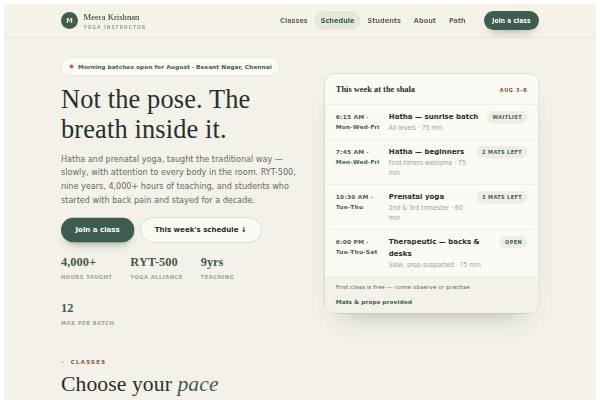
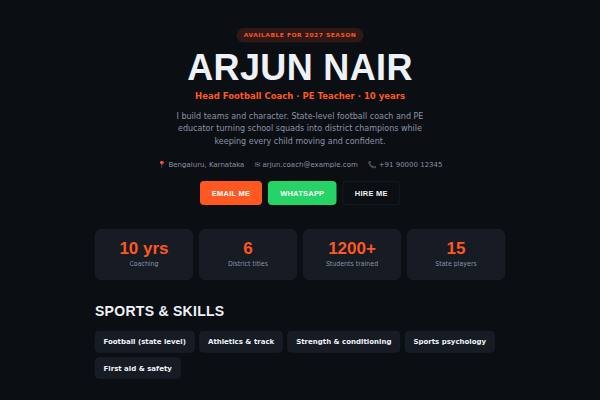
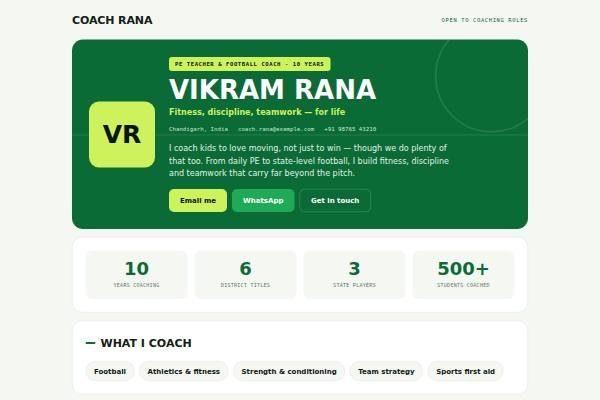
See a live demo of a fitness trainer website

Real designs filled in for a sample person (not a real profile). Open one, scroll it like a visitor would, then make yours free.

Before and after

Same person, same details — as a PDF and as a website.

Before: the resume Sample fitness trainer resume, page 1 of the PDF
Page 1 of the PDF
After: the website
The live demo website · Open it →

Does a fitness trainer need a personal website?

Yes — a fitness trainer gains from a personal website, especially when moving beyond one gym’s walk-ins. It shows your certifications, the kind of client you train best and how sessions are structured, so people can judge suitability and book a trial without relying on a gym counter or a crowded Instagram feed.

Why Fitness Trainers choose a personal site

Everything a fitness trainer needs, in one link

Certifications that reassure

Show your fitness certifications and specialisations so clients know they’re in safe hands.

Programmes, clearly packaged

Personal training, online coaching and group batches listed with what each includes.

Trial sessions on request

An enquiry form captures goals, experience and preferred timings before you call.

Before you publish

What to put on your fitness trainer website

Tick off each item as you add it — and why each one matters to the people who read your site.

Page outline

How to lay out a fitness trainer website

  1. Who you train Be specific: beginners returning after a break, working professionals with 45-minute windows, older adults building strength, or athletes preparing for a sport. It helps the right people self-select.
  2. Certifications and first aid List each fitness certification with the issuing body and level, plus current CPR or first-aid training, which clients and corporate buyers increasingly ask about.
  3. How a first month works Describe the intake conversation, movement assessment, how you set training frequency, and how you track progress through strength, mobility and consistency rather than promises about the body.
  4. Formats and pricing Separate one-to-one sessions at a gym or home, small-group batches, online coaching and corporate sessions, with duration, frequency and a fee range for each.
  5. Client stories with consent Share a few written accounts of what clients worked on — a pain-free deadlift, a first 5 km run — with permission, avoiding before-and-after body claims.
  6. Trial and health screening Offer a trial slot and include a pre-exercise questionnaire, asking clients to get medical clearance where they have conditions, so safety is visible from the first click.
Templates

Website templates for fitness trainers

What fitness trainers in India should know before going online

There is no statutory licence for personal trainers in India, so clients rely on certifications, gym reputation and referrals. Because the field has no gatekeeper, be precise about what you are qualified to do: training and general healthy-habit guidance, not diagnosing, treating or promising weight loss. India’s advertising self-regulation code and consumer protection law treat misleading health and fitness claims seriously, so describe your service, not guaranteed outcomes. Clients discover trainers on Instagram and YouTube, through Google Maps listings of gyms, and in residential society groups where home training is common in larger cities. Corporate wellness programmes often ask for certificates and insurance details. Offering sessions in Hindi or a regional language, and early-morning slots, matters for many clients.

Common website mistakes fitness trainers make

  • Leading with shirtless transformation photos and “lose 10 kg in 30 days” style lines; replace them with what you teach, your method and consented client accounts without body claims.
  • Giving detailed diet charts or advice on medical conditions beyond your qualification; offer general habits only and refer clients to doctors, physiotherapists or dietitians.
  • Not stating where you train — which gyms, home visits in which areas, or online only — so enquiries arrive from places you cannot reach.
  • Listing ten certificates without saying which one is your core qualification; lead with your main certification and specialisations such as strength training or senior fitness.
  • Posting batch timings once and never updating them; keep the schedule current or replace it with “ask for current slots”.
Real sites

Websites built by Fitness Trainers

Real sites published by members — open one for ideas.

How it works

From nothing to a live site in three steps

1

Pick a template

Start from a design built for professionals like you.

2

Make it yours

Add your details, work and photo — no code, no designer.

3

Go live and share

Publish to your own link and put it everywhere that matters.

Plans from Rs.499 a month · See plans

One place for your job

Everything for fitness trainers

FAQ

Questions from Fitness Trainers

Only with the client’s written consent, and present them as individual journeys rather than promised results. Adding the timeframe and a short note on the training approach makes them more credible.

Yes. Online clients can’t see you on the gym floor, so a site with your credentials, coaching method and an enquiry form helps them trust you before paying for a plan.

Offer general guidance only within your certification’s scope. For medical conditions or detailed diet plans, mention that you work alongside or refer clients to qualified dietitians.

Yes. Add group classes with days, times and location, and update them whenever the schedule changes. Clients can request a slot through the enquiry form.

Most come from referrals and visibility on the gym floor. A website with your programmes, package prices or ranges and a trial-session form helps turn conversations and social media views into paying clients.

Usually a short assessment call, a plan sent by app or PDF, live or recorded sessions and regular check-ins. Explain on your site what equipment is needed and how you track progress.

Made for you

Personal websites for every profession

All professions →

Your name, your site, your callback

Join the Fitness Trainers who let their own site do the talking.

● Live in 5 minutes · free to start · no auto-renew

Chat on WhatsApp