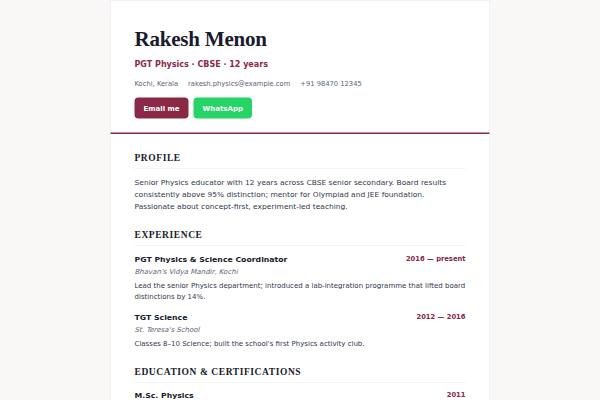
 Faculty Résumé
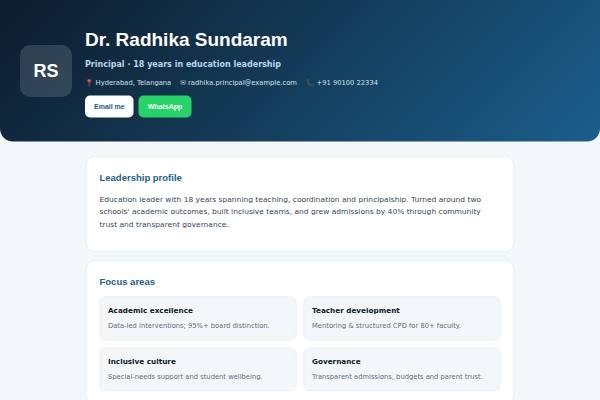 School Leader
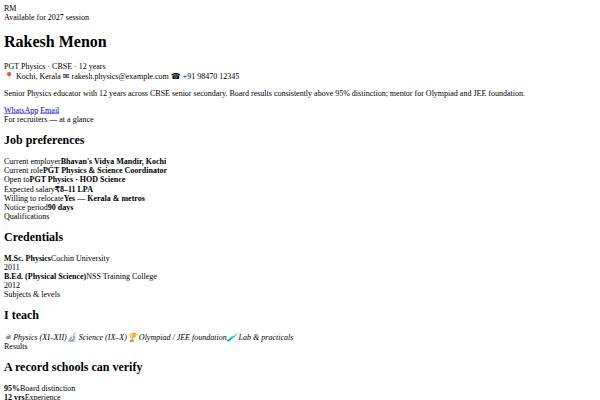 Recruit CV

What psychologists in India should know before going online
In India, practising as a clinical psychologist requires registration with the Rehabilitation Council of India, and the Mental Healthcare Act recognises RCI-registered clinical psychologists as mental health professionals. Psychologists with an MA or MSc in counselling or applied psychology can counsel but should not call themselves clinical psychologists or offer diagnosis unless qualified and registered. State your exact qualification and registration. Avoid cure language, promised improvement and client reviews, which also risk confidentiality. People often find therapists through Instagram mental-health content, referrals from psychiatrists, physicians and school counsellors, and search; many read the website privately several times first. Offering sessions in Hindi, Tamil, Bengali, Marathi or another first language is a real draw, and online sessions let you see clients in smaller towns, within your professional guidelines.
Common website mistakes psychologists make
- Using “clinical psychologist” without RCI registration. It misleads clients and can breach the law; use your actual title, such as counselling psychologist, and state your qualification.
- Promising to “fix anxiety in eight sessions”. Therapy outcomes vary; describe your approach and how progress is reviewed together, without timelines or cure claims.
- A contact form that asks for detailed history. Ask only for name, contact and preferred time, and gather sensitive information in session under proper consent.
- Stock images of people crying or clutching their head. They feel heavy to someone already struggling; choose calm, neutral imagery or a warm photo of yourself.
- No mention of fees until the first session. Uncertainty stops people from reaching out; list fees and cancellation terms clearly on the site.