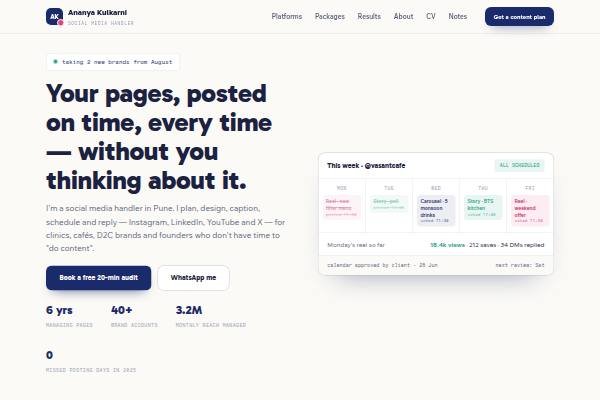
 Social Media Handler
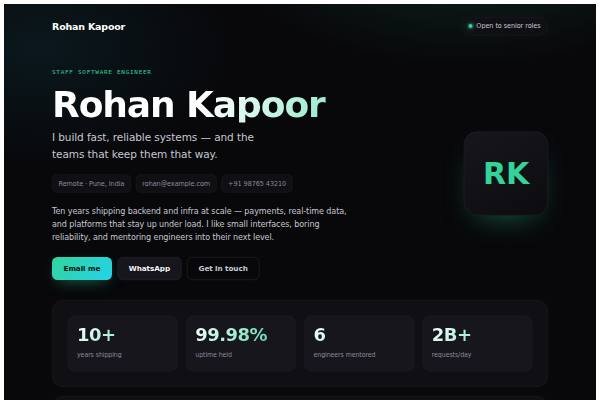 Nocturne
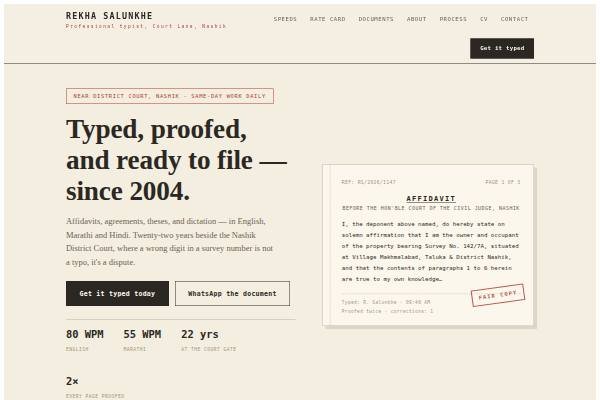 The Typed Page

What digital marketers in India should know before going online
Digital marketers in India are not licensed, but the ads they run are covered by the ASCI Code, and claims for health, education, finance and food products get close scrutiny. If you manage influencer campaigns, ASCI’s influencer disclosure guidelines apply to the creators you brief. The Digital Personal Data Protection Act also matters for lead forms, CRM exports and remarketing lists, so describe your data handling carefully. Hiring happens through Naukri, LinkedIn and agency networks, and clients often find freelancers through Google search and referrals from other small businesses. Much of India’s growth sits in Tier-2 and Tier-3 towns and regional languages, so experience running Hindi, Tamil or Marathi campaigns, or vernacular search and video, is worth highlighting clearly.
Common website mistakes digital marketers make
- Showing reach and impressions only. Lead with business outcomes such as cost per lead, qualified leads or revenue, and explain the funnel behind them.
- A slow, image-heavy portfolio site. Compress images and keep the page light; a marketer’s own site loading slowly on mobile data undermines every claim.
- Client dashboard screenshots with brand names visible. Anonymise the business and share relative improvements unless the client has agreed in writing.
- Listing every platform ever touched. Pick the two or three channels you are strongest in and show depth, so the right roles and clients find you.
- No tracking on your own site. Set up analytics and a conversion goal on your enquiry form; interviewers sometimes ask what your own site data shows.