🩺 Personal website for Doctors

A trusted online presence for your practice

Patients research their doctor before they book. A professional site puts your credentials, specialties and appointment details up front — and builds trust before the first visit.

Claim your name: digitalcvmaker.com/

● Live in 5 minutes · free to start · no auto-renew · हिंदी में पढ़ें

See it live

See a live demo of a doctor website

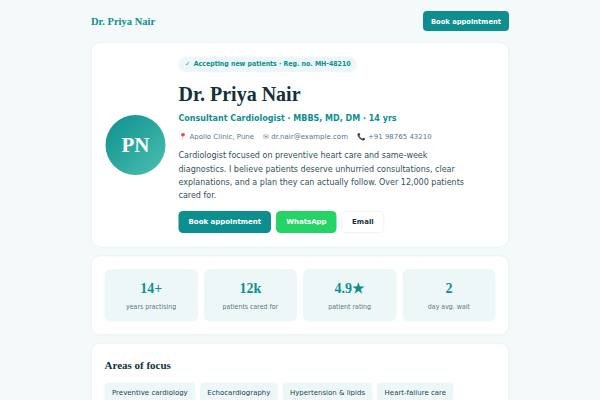
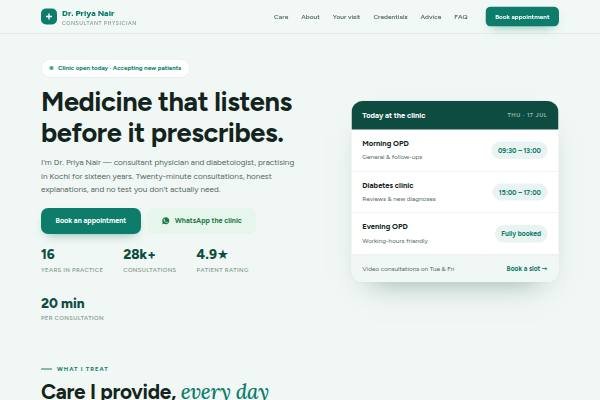
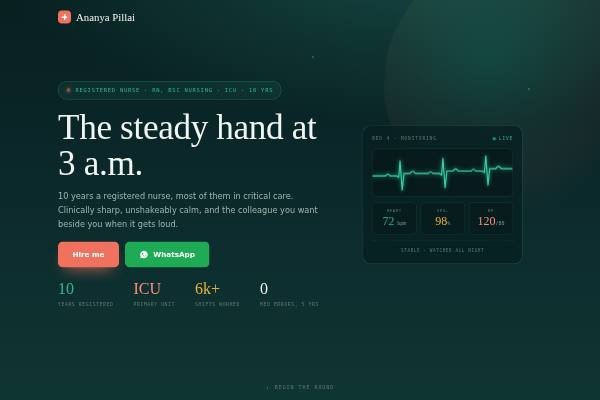
Real designs filled in for a sample person (not a real profile). Open one, scroll it like a visitor would, then make yours free.

Before and after

Same person, same details — as a PDF and as a website.

Before: the resume Sample doctor resume, page 1 of the PDF
Page 1 of the PDF
After: the website
The live demo website · Open it →

Does a doctor need a personal website?

Yes — a doctor benefits from a simple, factual website, mainly so patients can confirm who you are and where to find you. Listing qualifications, registration number, specialty, clinic addresses and consulting hours answers routine questions and helps patients verify you, while staying within medical council rules that restrict advertising.

Why Doctors choose a personal site

Everything a doctor needs, in one link

Credentials front and centre

Qualifications, registrations and areas of focus laid out clearly for patients and referrers.

Easy appointments

A booking or enquiry section that turns a search result into a scheduled visit.

Reassure at a glance

A calm, professional site signals a practice patients can trust with their health.

Before you publish

What to put on your doctor website

Tick off each item as you add it — and why each one matters to the people who read your site.

Page outline

How to lay out a doctor website

  1. Name, qualifications and registration Show your full name, degrees with awarding universities, specialty and medical council registration number with the council’s name, so patients and referring doctors can verify you.
  2. Areas of practice List conditions and procedures you routinely manage in plain factual terms, such as “diabetes and thyroid disorders”, without words like “best”, “guaranteed” or “painless cure”.
  3. Consulting locations and hours Give each clinic or hospital with address, days, OPD timings and whether you see patients by appointment or walk-in, updated whenever your schedule changes.
  4. Appointment information Explain how to book, whom to call, what documents or previous reports to bring, and a clear line that the website is not for emergencies.
  5. Patient information Neutral, educational notes on preparing for procedures or common tests, written in plain language and, where useful, in the local language of your patients.
  6. Contact and directions Clinic phone numbers, a map, parking or landmark details and accessibility notes such as lift or wheelchair access.
Templates

Website templates for doctors

What doctors in India should know before going online

The National Medical Commission’s professional-conduct regulations restrict how registered medical practitioners in India may advertise. In practice, keep your website factual: name, qualifications, registration number, specialty, clinic addresses, timings and contact details. Avoid patient testimonials, before-and-after photographs, claims of superiority or guaranteed results, and anything that reads as soliciting patients; check the current regulations and your State Medical Council’s guidance before publishing. Patients in India commonly search Google Maps for clinics near them, check online doctor directories and ask on WhatsApp family groups, so keep your name, address and timings identical everywhere. Mention languages you consult in, as that matters in cities with mixed populations. Patient privacy obligations also apply: never publish identifiable case details or images without consent.

Common website mistakes doctors make

  • Publishing patient testimonials or thank-you videos. These can breach NMC conduct rules; remove them and let verified qualifications and clear clinic information do the work.
  • Leaving old OPD timings online after moving hospitals. Patients travel on that information, so update every location, day and time the same week your schedule changes.
  • Using words like “best”, “top” or “100% cure” in headings. Replace them with neutral descriptions of the conditions you treat and procedures you perform.
  • Missing the registration number and council name. Add them next to your qualifications so patients and referring doctors can verify your registration themselves.
  • Inviting patients to describe symptoms in the website form. Limit the form to appointment requests and state clearly that it is not for emergencies or medical advice.
How it works

From nothing to a live site in three steps

1

Pick a template

Start from a design built for professionals like you.

2

Make it yours

Add your details, work and photo — no code, no designer.

3

Go live and share

Publish to your own link and put it everywhere that matters.

Plans from Rs.499 a month · See plans

One place for your job

Everything for doctors

FAQ

Questions from Doctors

Many doctors list their registration number and council alongside qualifications because it lets patients verify credentials. Keep all content factual and within your medical council’s guidelines on professional conduct and advertising.

Never publish patient names, photos or case details without clear written consent. Use the enquiry form only for booking requests and ask patients not to share detailed medical history through it.

Patients can send an appointment request through the built-in enquiry form with their preferred date and time. You or your front desk then confirm the slot by phone or message.

Yes. Add each consulting location with its address, days and timings, so patients know where to find you on a given day. Update timings quickly whenever your schedule changes.

Doctors can share factual information such as qualifications, registration, specialties and consulting hours. Medical ethics rules discourage self-promotion, testimonials and claims of results, so keep the site informative rather than promotional and check the current guidelines from your council.

Your name, qualifications, registration details, areas of practice, where and when you consult, how to book and how patients can reach the clinic. Patient education pages are helpful if they stay general and accurate.

Made for you

Personal websites for every profession

All professions →

Your name, your site, your callback

Join the Doctors who let their own site do the talking.

● Live in 5 minutes · free to start · no auto-renew

Chat on WhatsApp