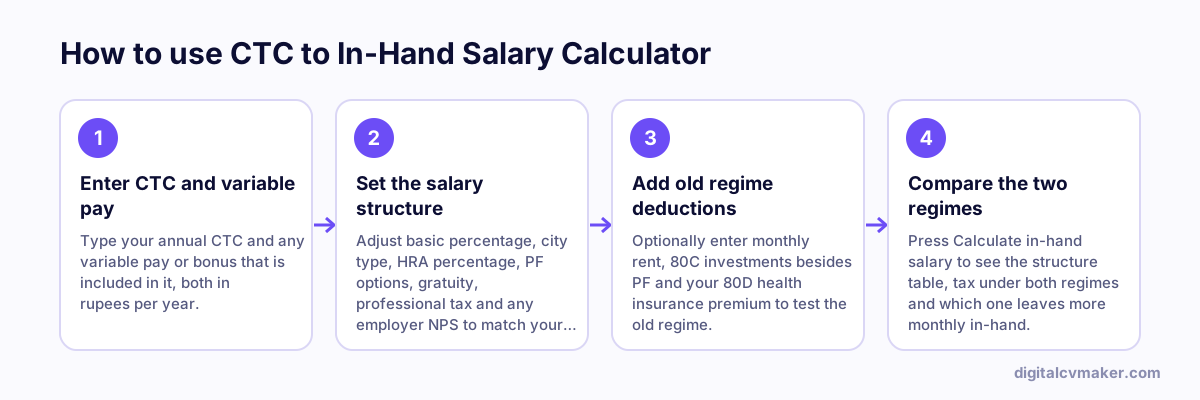
How CTC turns into in-hand salary
An offer letter lists cost to company, not take-home pay. This calculator follows the usual order an Indian payroll team uses:
- Variable pay is set aside, and basic salary is worked out as a percentage of the fixed part. Most companies use 40% to 50%.
- HRA is a percentage of basic. Employer PF, gratuity and employer NPS come out of CTC but never reach your account each month.
- Whatever is left becomes special allowance. Basic, HRA and special allowance together make your gross fixed salary.
- Employee PF (12% of the PF wage), professional tax and income tax are deducted from gross salary to give your monthly in-hand.
New regime or old regime?
The new regime is the default and suits most people with few investments: lower slab rates, a higher standard deduction and a rebate that brings tax to zero up to a set income. The old regime allows HRA exemption, 80C and 80D, so it can win when rent and investments are high. Salaried employees can usually pick a regime each year when declaring investments to the employer, so re-check when your salary or rent changes.
- Ask HR for the salary structure annexure; it shows your real basic and HRA percentages.
- Check whether PF is on full basic or on the statutory wage ceiling — it changes both in-hand pay and retirement savings.
- Keep rent receipts and investment proofs ready; the employer needs them before it reduces TDS under the old regime.
Comparing a raise? Try the salary hike calculator, put two offers side by side with the job offer comparison calculator, prepare your ask with a salary negotiation script, and plan your joining date with the notice period calculator.