🤝 Free tool · no signup

Free Salary Negotiation Script

Get word-for-word salary negotiation scripts and a follow-up email, built from your current pay, the offer and your target — free, in your browser. The suggested ask sits 5% to 10% above your real target, rounded to a figure you can say out loud, so there is room to settle near what you want.

Written in your browser — nothing you type is sent or saved. The numbers are suggestions, not advice on what you will be offered.

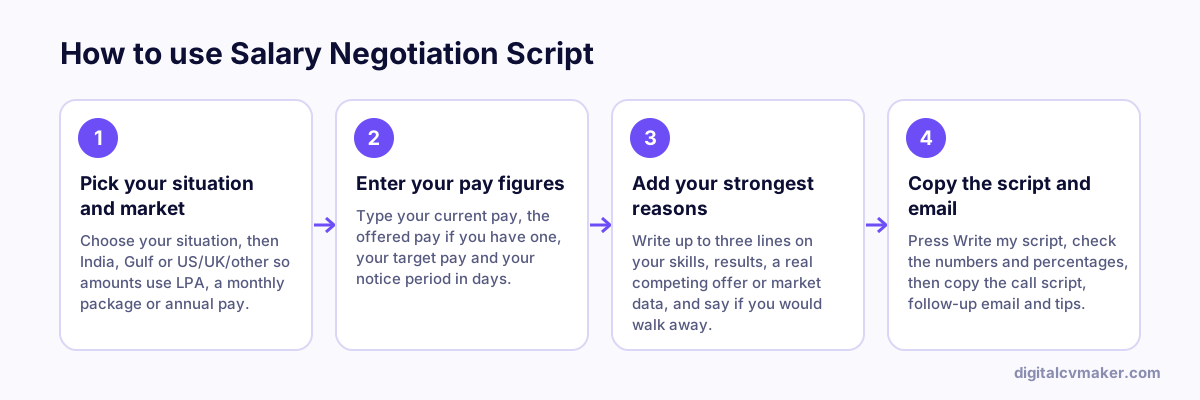
How to use Salary Negotiation Script: 1. Pick your situation and market, 2. Enter your pay figures, 3. Add your strongest reasons, 4. Copy the script and email.
How to use the Salary Negotiation Script, step by step.

How the suggested ask is worked out

Negotiations usually settle somewhere below the first number put on the table, so the script asks for slightly more than you actually want. The cushion is kept small so the figure still sounds reasonable:

  • Ready to walk away: about 10% above your target. Not sure: about 7%. Not ready to walk away: about 5%.
  • The result is rounded to a figure people say out loud — half a lakh in India, 500 for Gulf monthly packages, 1,000 for annual salaries — without going over 10% above target.
  • If your target is already at or below the offer, the script stops pushing the salary and asks for extras instead.

Prepare before the call

  1. Know your in-hand number. A CTC figure hides PF, gratuity and variable pay — check it with the CTC to in-hand calculator.
  2. Know the real hike. Work out the percentage over your current pay with the salary hike calculator.
  3. If you hold two offers, compare bonus, commute and joining costs in the job offer comparison calculator before you name a number.
  4. Write down your walk-away number and do not share it.

After the conversation

Send the follow-up email the same day so the numbers discussed are on record. If the answer is a revised offer, check the new letter line by line before you resign. Planning your exit? Work out your last day with the notice period calculator.

Worked example

An offer below what the role should pay

What goes in

Situation: I have an offer and want more Market: India, offer 9 lakh per annum, target 10 lakh Willing to walk away: Not sure

What you get

With “Not sure” selected the anchor factor is 1.07, so 10 lakh × 1.07 = 10.7 lakh, rounded to the nearest half lakh: an ask of 10.5 lakh. That keeps the ask between 5% and 10% above the real target, leaving room to settle near 10 lakh without sounding unreasonable. The script thanks the recruiter, restates interest, gives up to three reasons from the candidate’s own notes and then states 10.5 lakh as a single figure rather than a range. A follow-up email repeats the same number in writing.

Common mistakes

  • Giving a range such as “10 to 12 lakh”, which invites the employer to settle at the bottom number you just offered them.
  • Comparing only the CTC figure and ignoring how much of it is variable pay, joining bonus or employer contributions that never reach your bank account monthly.
  • Claiming a competing offer you do not have; if the recruiter asks for proof or calls your bluff, the negotiation and your credibility both suffer.
  • Accepting on the call before seeing the revised offer in writing, so details like joining date and variable pay terms are never confirmed.

When to use it: Use the negotiation script once you have a number to respond to; to judge whether two offers are worth it overall, use the offer comparison calculator first.

FAQ

Frequently asked questions

If you can, ask for the budgeted range first. When HR insists, give one specific number that is a little above your real target, backed by a reason, rather than a wide range. A specific figure sounds researched, and the small cushion leaves room to settle close to what you actually want.

This tool suggests an ask about 5% to 10% above your real target: nearer 10% if you are ready to walk away, nearer 5% if you are not. Going much higher without evidence can make you look out of touch with the role, so pair the number with market data, results or a competing offer.

Ask what flexibility exists outside fixed pay: a joining bonus, a notice period buyout, relocation support, a written salary review after six months, or a higher level or title. Get anything agreed on the call confirmed by email or in the revised offer letter before you resign or accept.

Yes, if it is real. Say the amount plainly and explain why you would still prefer this company. Never invent or inflate an offer — recruiters may ask for the offer letter, and being caught can cost you both the offer and your reputation with that recruiter.

Recruiters Google you before the interview

Get a page that shows up: your experience, projects and contact details at your own link. Live in minutes.

Start free
Chat on WhatsApp