⚖️ Free tool · no signup

Free Job Offer Comparison Calculator

Compare two job offers — and your current job — on fixed pay, bonus, stock, commute and joining costs to see first-year and yearly value. Recurring annual value adds fixed pay, variable pay at the expected payout, stock and benefits, then subtracts twelve months of commute cost.

Enter yearly amounts unless the label says per month. Leave a box empty for zero.

Offer A
Offer B

Calculated in your browser. Your inputs are remembered on this device only, and Reset clears them.

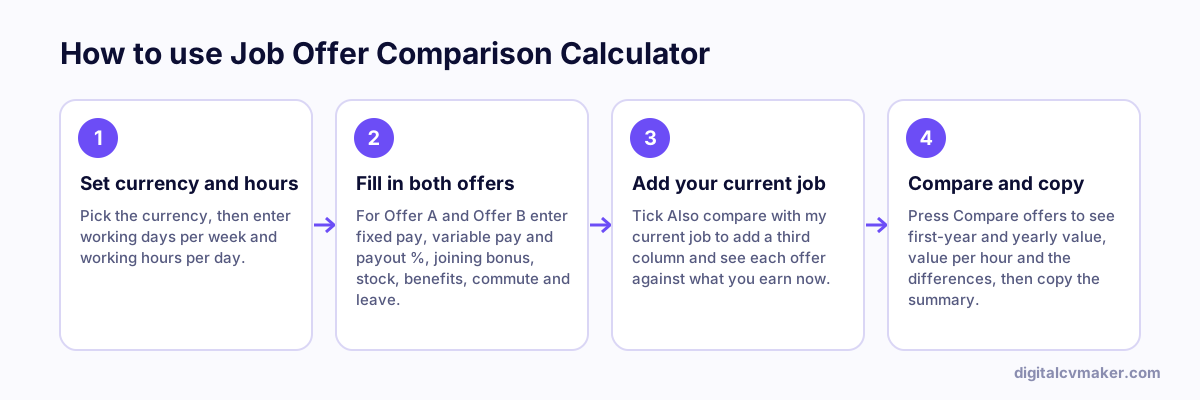
How to use Job Offer Comparison Calculator: 1. Set currency and hours, 2. Fill in both offers, 3. Add your current job, 4. Compare and copy.
How to use the Job Offer Comparison Calculator, step by step.

How the comparison works

  • Recurring annual value = fixed pay + variable × expected payout % + stock value + benefits − commute cost × 12.
  • First-year total value = recurring value + joining bonus − relocation cost − notice buyout you pay.
  • Value per hour = recurring value ÷ (working days per week × 46 weeks × hours per day + office days × 46 × commute time).
  • Differences are shown in money and as a percentage of the first column you compare against.

What to check before you choose

  1. Convert CTC to take-home pay. Employer PF, gratuity and insurance sit inside CTC but not in your bank account — use the CTC to in-hand calculator.
  2. Look at how variable pay was actually paid out in past years, if the recruiter will tell you, and use a cautious payout %.
  3. Read the joining bonus clawback and notice period clauses in each letter.
  4. Check the hike each offer represents with the salary hike calculator.

Use the gap to negotiate

If you prefer the lower offer, the difference shown here is a concrete figure to ask for — as fixed pay, a joining bonus or a notice buyout. Get the words for that call from the salary negotiation script, and plan your exit date with the notice period calculator.

Worked example

A higher salary against a shorter commute

What goes in

Offer A: fixed ₹12,00,000, variable ₹1,00,000 at 80%, benefits ₹25,000, commute ₹3,000 a month, 90 minutes a day, 5 office days Offer B: fixed ₹11,50,000, no variable, benefits ₹25,000, commute ₹1,000 a month, 40 minutes a day, 2 office days Both: 5 days a week, 9 hours a day

What you get

Recurring value for A is 12,00,000 + 80,000 + 25,000 − 36,000 commute = ₹12,69,000; for B it is 11,50,000 + 25,000 − 12,000 = ₹11,63,000. A looks better by ₹1,06,000 a year. But over 46 working weeks A needs about 2,415 hours including travel, against about 2,131 for B, so value per hour is roughly ₹525 for A and ₹546 for B. The calculator shows that the bigger number on the offer letter buys you about 284 more hours of commuting a year.

Common mistakes

  • Counting variable pay at 100% when the company has historically paid out less; enter the payout you can reasonably expect, not the target.
  • Adding a joining bonus to yearly value without checking the clawback clause, which may require repayment if you leave within twelve months.
  • Valuing stock or ESOPs at the figure on the offer letter, when vesting schedules and the company’s future make that number uncertain.
  • Comparing CTC only and ignoring hours spent commuting, which changes the real hourly rate of an office-every-day job.

When to use it: Use the offer comparison when you are choosing between two offers or an offer and your current job; for one salary’s monthly take-home, use the CTC calculator.

FAQ

Frequently asked questions

Compare both, but decide on what you actually receive. Two offers with the same CTC can differ a lot once you split fixed from variable pay and count employer PF, insurance and one-off items. This calculator separates recurring value from first-year extras so a large joining bonus does not hide a lower salary.

Treat them as uncertain. Enter a cautious yearly value — for example the grant value divided by the vesting years, reduced if the company is unlisted. The summary tells you when stock alone decides which offer is ahead, so you can see whether the choice depends on something that may not pay out.

Hours spent travelling are unpaid but still part of your working day. Adding them gives a value per hour that shows the real difference between an office five days a week and a hybrid or remote role. The figure assumes 46 working weeks a year to allow for leave and holidays.

Many joining bonuses must be paid back, fully or in part, if you leave within a set period such as 12 months. Enter the clawback months so the summary reminds you of it. Read the exact clause in the offer letter, as some companies recover the full amount and others a share.

Planning your next job? Get your own website

A personal page with your experience and contact details, ready to share with recruiters. Live in minutes.

Start free
Chat on WhatsApp