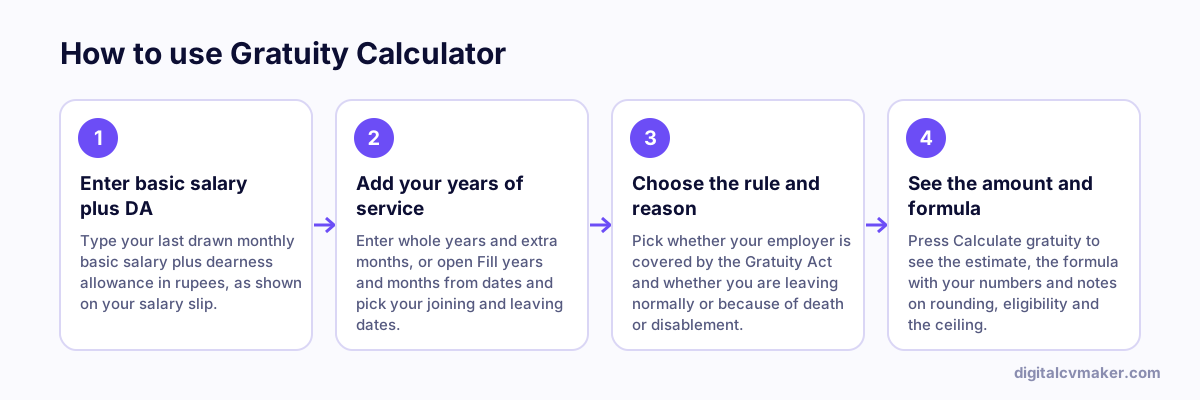
How gratuity is calculated
Gratuity is a lump sum your employer pays when you leave after long service. For employers covered by the Payment of Gratuity Act — those with ten or more employees — the formula is:
Gratuity = 15 × last drawn monthly (basic + DA) × years of service ÷ 26
- 15 is fifteen days of wages for each year of service; 26 is the number of working days the Act assumes in a month.
- Years of service are rounded: a part year above six months counts as a full year. Five years and seven months counts as six; five years and six months counts as five.
- Example: basic plus DA of ₹50,000 and five years seven months of service gives 15 ÷ 26 × 50,000 × 6 = ₹1,73,077.
- The amount payable under the Act is capped at ₹20,00,000.
If your employer is not covered by the Act
Smaller employers may still pay gratuity under a contract or policy. Many use 15 ÷ 30 × the average salary of the last ten months × completed years, without the six-month rounding. Your appointment letter or HR policy has the final word.
Before you plan your exit
- Gratuity is normally payable only after five years of continuous service, except on death or disablement.
- The employer should pay within 30 days of it becoming due; ask HR to include it in your full and final settlement statement.
- Labour law reforms can change the rules — for example for fixed-term employees — so check the current position with HR.
Planning your exit? Find your last day with the notice period calculator, project your provident fund with the PF calculator, see your new take-home pay with the CTC to in-hand calculator and write your resignation letter.