⚖️ Personal website for Lawyers

Win the client’s trust before the first consultation

Clients vet a lawyer’s reputation online first. A professional site states your practice areas, credentials and how to reach you — clearly, and without the noise of a directory listing.

Claim your name: digitalcvmaker.com/

● Live in 5 minutes · free to start · no auto-renew · हिंदी में पढ़ें

See it live

See a live demo of a lawyer website

Real designs filled in for a sample person (not a real profile). Open one, scroll it like a visitor would, then make yours free.

Before and after

Same person, same details — as a PDF and as a website.

Before: the resume Sample lawyer resume, page 1 of the PDF
Page 1 of the PDF
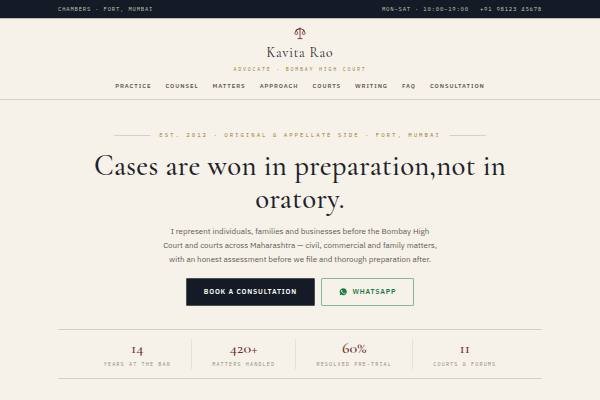
After: the website
The live demo website · Open it →

Does a lawyer need a personal website?

It helps most when kept strictly informational. An advocate in India may publish limited factual details under Bar Council of India rules, and a simple website lets prospective clients confirm your enrolment, practice areas, courts and chamber address, without the solicitation or self-praise that the rules prohibit.

Why Lawyers choose a personal site

Everything a lawyer needs, in one link

Practice areas up front

Make it obvious what you handle so the right clients reach out and the wrong ones don’t.

Signal credibility

Bar admissions, experience and results presented with the gravity the profession expects.

Direct line

A consultation request form that skips the middle-man directory and comes straight to you.

Before you publish

What to put on your lawyer website

Tick off each item as you add it — and why each one matters to the people who read your site.

Page outline

How to lay out a lawyer website

  1. Name and enrolment details Your name, enrolment number, date of enrolment, the State Bar Council where you first enrolled and where your name currently stands on the roll.
  2. Qualifications Law degree with university, any LLM or diplomas, and relevant professional qualifications, stated plainly without rankings or superlatives.
  3. Areas of practice A neutral list of fields you practise in, such as civil, matrimonial, property, consumer or criminal matters, with no claims of expertise or success.
  4. Courts and forums The courts, tribunals and commissions you regularly appear before, which helps visitors understand where you practise without describing results.
  5. Chamber address and contact Office or chamber address, telephone, email and hours when you meet clients, with a map link for visitors.
  6. Disclaimer and declaration A note that the site is for information only, is not solicitation or legal advice, and that the details published are accurate.
Templates

Website templates for lawyers

What lawyers in India should know before going online

Rule 36 of the Bar Council of India Rules bars advocates from soliciting work or advertising, directly or indirectly. After an amendment, advocates may run websites carrying limited information: name, address, telephone numbers, email, enrolment number, date of enrolment, the State Bar Council of original enrolment and current roll, professional and academic qualifications, and areas of practice. Keep to that list and avoid testimonials, case outcomes, fee comparisons, photographs with clients or claims of being the best. Many advocates add a disclaimer page that visitors must accept. In India, clients usually find lawyers through referrals from relatives, chartered accountants and other advocates, then check the name online before calling. Mention the languages you appear and consult in, since district-court work often happens in the local language.

Common website mistakes lawyers make

  • Listing won cases, client names or “successful track record” claims. These go beyond the factual information Rule 36 permits; remove them and describe practice areas neutrally.
  • Adding client testimonials or star ratings. Even genuine praise can be read as solicitation, so leave reviews off the site and let referrals happen offline.
  • Missing the enrolment number and State Bar Council. Include both exactly as they appear on your enrolment certificate so visitors can verify your standing.
  • Using “top”, “leading” or “expert” in headings and page titles. Replace them with plain descriptions such as “practice areas: property and succession matters”.
  • Inviting detailed case facts through the contact form. Ask only for name, contact and general nature of the matter, and state that no advocate-client relationship is formed.
How it works

From nothing to a live site in three steps

1

Pick a template

Start from a design built for professionals like you.

2

Make it yours

Add your details, work and photo — no code, no designer.

3

Go live and share

Publish to your own link and put it everywhere that matters.

Plans from Rs.499 a month · See plans

One place for your job

Everything for lawyers

FAQ

Questions from Lawyers

Rules on advocates advertising are strict, so keep your site informational: name, enrolment, qualifications, practice areas and contact details. Keep content factual and within your professional body’s guidelines, and check the current rules if you are unsure.

Be cautious. Claims about outcomes or client praise can be seen as solicitation. A safer approach is to describe your areas of practice, courts you appear before and your experience in neutral terms.

Yes, the enquiry form lets a visitor share a brief outline and contact details. Ask people not to send confidential documents through the form; discuss specifics once you’ve agreed to take the matter.

Your enrolment details, years of practice, courts and tribunals you appear before, languages you speak and a clear office address. A calm layout without flashy claims usually works best for legal professionals.

Yes, within limits. Bar Council rules allow advocates to share basic information such as name, contact details, enrolment, qualifications and areas of practice, but not to advertise or solicit work. Keep the site factual and include a disclaimer.

Avoid success rates, client testimonials, comparisons with other lawyers, fee discounts and anything that reads as soliciting work. Do not share confidential client details or case files.

Made for you

Personal websites for every profession

All professions →

Your name, your site, your callback

Join the Lawyers who let their own site do the talking.

● Live in 5 minutes · free to start · no auto-renew

Chat on WhatsApp