⚙️ Personal website for Operations Managers

Show how you keep teams, processes and costs under control

Operations roles are filled by people who can show a before and after. A personal site describes the sites, teams and processes you have run, the improvements you made to turnaround time, cost or quality, and the systems you rely on, so leadership can see the scale you are ready for.

Claim your name: digitalcvmaker.com/

● Live in 5 minutes · free to start · no auto-renew

See it live

See a live demo of an operations manager website

Real designs filled in for a sample person (not a real profile). Open one, scroll it like a visitor would, then make yours free.

Before and after

Same person, same details — as a PDF and as a website.

Before: the resume Sample operations manager resume, page 1 of the PDF
Page 1 of the PDF
After: the website
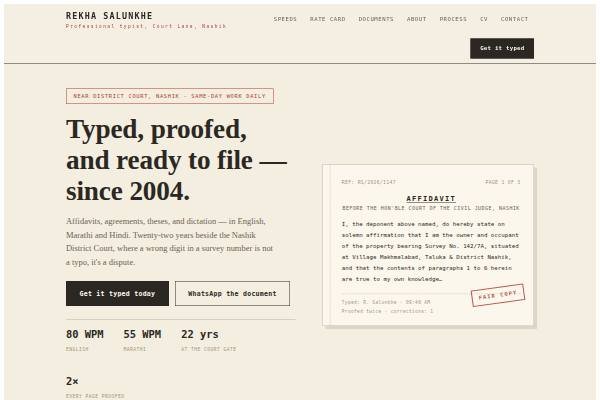
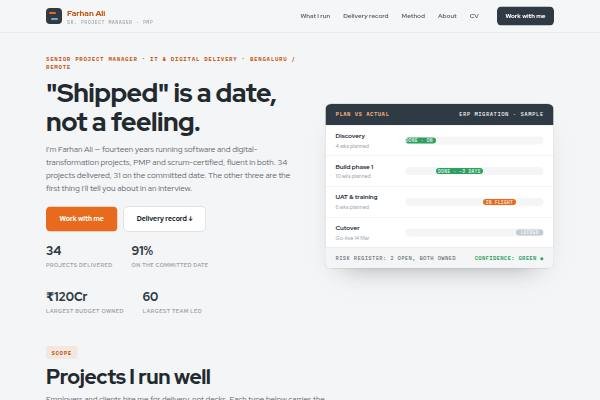
The live demo website · Open it →

Does an operations manager need a personal website?

Yes — an operations manager benefits from a personal website, because the role is about running processes, teams and costs that a résumé turns into broad claims. A site lets you show a process you redesigned, the teams and sites you managed and the measures you track, giving hiring managers a clear view of how you run operations.

Why Operations Managers choose a personal site

Everything an operations manager needs, in one link

Scale at a glance

Headcount, locations, shifts and volume ranges you have been responsible for.

Improvements with a before and after

Process changes, SOPs and automation that reduced delays, rework or cost, with your role spelled out.

Cross-industry clarity

Useful when moving between manufacturing, logistics, BPO, healthcare or retail operations.

Before you publish

What to put on your operations manager website

Tick off each item as you add it — and why each one matters to the people who read your site.

Page outline

How to lay out an operations manager website

  1. Scope line Name your sector and scale, such as “warehouse and last-mile operations, three sites” or “back-office operations for a bank”.
  2. Process improvement stories Describe a bottleneck, how you mapped it, the change you made and how you measured the improvement.
  3. Team and site management Explain team sizes, shift structures, hiring and training you led, and how you handled attrition.
  4. Metrics and reviews List the KPIs you track, such as turnaround time, error rate or cost per unit, and how you run daily and weekly reviews.
  5. Tools and methods Mention ERP systems, dashboards, lean or Six Sigma training, SOP writing and audit preparation.
  6. Contact and role preference State the industry, seniority, locations and notice period, plus an email and phone.
Templates

Website templates for operations managers

What operations managers in India should know before going online

Operations managers in India work in manufacturing, warehousing and logistics, e-commerce, banking and financial back offices, BPOs, healthcare and retail chains, and each sector uses its own vocabulary. Large teams with shift work are common, so experience managing contract staff, labour compliance and attrition is valuable to describe. Lean and Six Sigma training are widely recognised in manufacturing and services, while e-commerce firms focus on speed and cost metrics. Recruiters for senior roles often rely on referrals and search firms, so a clear site makes your profile easier to pass on. Keep internal numbers, client names and site addresses off the site; describe results in relative terms. If you have opened new sites or handled festival season peaks, describe what you did.

Common website mistakes operations managers make

  • Using vague phrases like “managed day-to-day operations”. Describe the process, scale and the change you made.
  • Publishing confidential cost, volume or client data. Use relative change or ranges instead.
  • Ignoring people management. Operations hiring weighs team leadership, training and handling attrition.
  • Listing every certification without application. Show where you applied lean or Six Sigma tools and what changed.
  • Hiding your sector. Operations roles differ widely, so make the industry clear in the first line.
How it works

From nothing to a live site in three steps

1

Pick a template

Start from a design built for professionals like you.

2

Make it yours

Add your details, work and photo — no code, no designer.

3

Go live and share

Publish to your own link and put it everywhere that matters.

Plans from Rs.499 a month · See plans

One place for your job

Everything for operations managers

FAQ

Questions from Operations Managers

Give ranges: number of people, shifts, locations and the volume handled, whether orders, calls, patients or units produced. That tells a reader what size of operation you can take on without revealing confidential figures.

State the problem, how you measured it, what you changed and what moved, such as turnaround time or rework. Mention the method if you used one, like lean, Six Sigma or a simple root cause analysis, and credit the team.

Describe the SOPs and training material you created and how they were rolled out. Don’t publish internal documents; a short outline with headings is enough to show your approach.

Yes. Highlight budget ownership, hiring, vendor management and cross-functional projects. These show you can handle the wider responsibilities general managers carry.

The operations you ran, team size, sites, KPIs, improvements in percentage terms, systems used and certifications such as Six Sigma.

Take ownership of a process in your current role, lead improvements, track results and manage people where you can. Show that evidence on a profile site.

Made for you

Personal websites for every profession

All professions →

Your name, your site, your callback

Join the Operations Managers who let their own site do the talking.

● Live in 5 minutes · free to start · no auto-renew

Chat on WhatsApp