♾️ Personal website for DevOps Engineers

Show the pipelines and platforms that keep releases boring

DevOps interviews probe how you build, deploy and recover, not which cloud logos sit on your CV. A personal site describes the pipelines you automated, the infrastructure you codified and the incidents you handled, so platform leads can see your depth before the technical round.

Claim your name: digitalcvmaker.com/

● Live in 5 minutes · free to start · no auto-renew

See it live

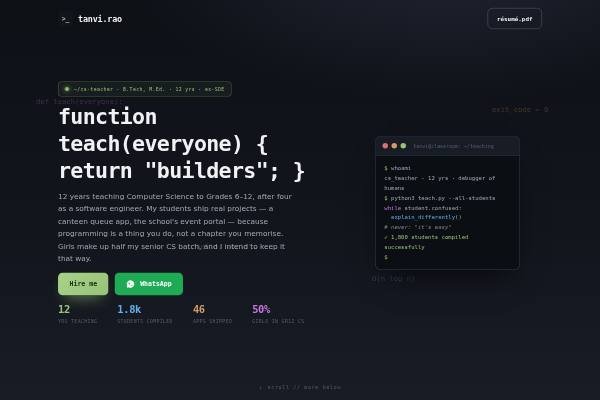
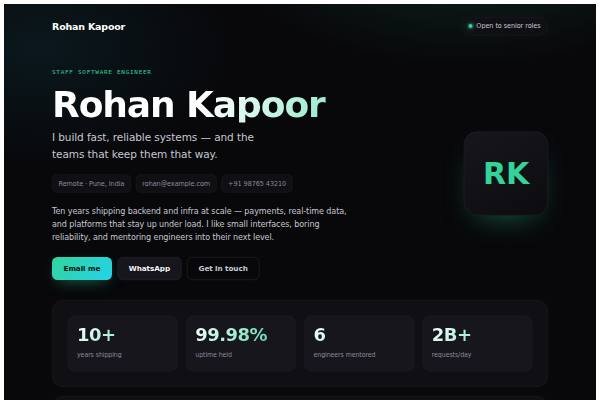
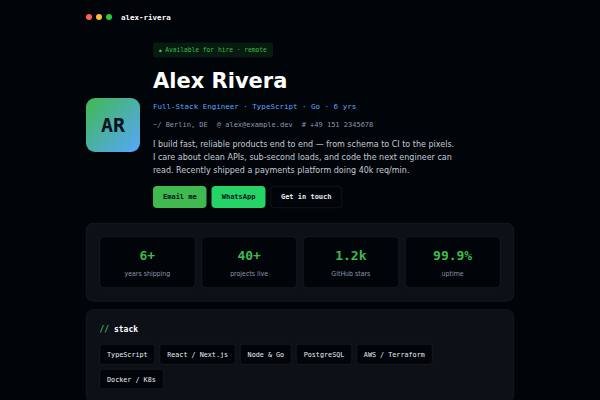
See a live demo of a DevOps engineer website

Real designs filled in for a sample person (not a real profile). Open one, scroll it like a visitor would, then make yours free.

Before and after

Same person, same details — as a PDF and as a website.

Before: the resume Sample DevOps engineer resume, page 1 of the PDF
Page 1 of the PDF
After: the website
The live demo website · Open it →

Does a DevOps engineer need a personal website?

Yes — a DevOps engineer benefits from a personal website, since the work lives in pipelines, infrastructure and incidents that a résumé turns into a list of tool names. A site lets you describe the systems you run, the deployment flow you built and an outage you handled, which shows depth to hiring managers.

Why DevOps Engineers choose a personal site

Everything a DevOps engineer needs, in one link

Pipelines explained

Build, test and deploy flows in Jenkins, GitHub Actions or GitLab CI, with the manual steps you removed.

Infrastructure as code

Terraform, Ansible and Kubernetes work described with environment size and how changes were reviewed.

Incident stories

Blameless write-ups of outages you helped resolve, and the monitoring you added afterwards.

Before you publish

What to put on your DevOps engineer website

Tick off each item as you add it — and why each one matters to the people who read your site.

Page outline

How to lay out a DevOps engineer website

  1. Role and platform line State your focus, such as “Kubernetes platform and CI/CD for fintech, AWS”, so readers know your cloud and scope.
  2. Infrastructure stories Describe a migration, a pipeline rebuild or a cost reduction: starting state, design, rollout plan and how you measured the result.
  3. Incident write-ups One blameless post-incident review with timeline, root cause and fixes shows calm judgement under pressure.
  4. Tooling map Terraform, Ansible, Docker, Kubernetes, Jenkins, GitHub Actions, Prometheus and Grafana, grouped by daily use and past use.
  5. Certifications List cloud and Kubernetes certifications with level and status, such as AWS, Azure, GCP or CKA.
  6. On-call and contact Mention on-call experience, shift preferences, notice period and an email for recruiters.
Templates

Website templates for DevOps engineers

What DevOps engineers in India should know before going online

DevOps and SRE roles in India sit in product startups, SaaS firms, banks modernising their systems, IT services companies and global capability centres. Job titles vary from DevOps engineer to cloud engineer, platform engineer and SRE, so mention the titles you fit. Many services roles involve supporting overseas clients across time zones, so say whether you have handled night or weekend on-call and how rotations worked. Cloud certifications are commonly used as filters by recruiters, but interviewers dig into real incidents and design choices. Banks and regulated companies follow strict change control and data localisation needs, which is worth noting if you have worked under them. Never publish internal hostnames, IP ranges, keys or architecture diagrams that reveal a real employer’s setup.

Common website mistakes DevOps engineers make

  • Listing thirty tools with no context. Show two or three systems you built or ran and what changed after your work.
  • Publishing real infrastructure details such as account IDs, internal URLs or diagrams. Redraw a generic version and keep secrets out of repositories.
  • Skipping reliability numbers you are allowed to share. Deployment frequency, rollback time or alert noise reduced, described honestly, shows impact.
  • Ignoring the people side. Mention how you worked with developers on pipelines, documentation and runbooks, not only tools.
  • Leaving old demo clusters or links that expose dashboards. Shut them down and replace them with screenshots.
How it works

From nothing to a live site in three steps

1

Pick a template

Start from a design built for professionals like you.

2

Make it yours

Add your details, work and photo — no code, no designer.

3

Go live and share

Publish to your own link and put it everywhere that matters.

Plans from Rs.499 a month · See plans

One place for your job

Everything for DevOps engineers

FAQ

Questions from DevOps Engineers

Two or three write-ups covering a pipeline you built, an infrastructure setup you codified and an incident you handled. Add a simple architecture diagram for each, the tools involved and what changed afterwards, such as fewer failed deploys or faster rollbacks.

Share code from personal or open-source projects freely. For employer work, describe the approach and publish a cleaned-up sample module you wrote yourself, with no account IDs, secrets or internal hostnames.

List current ones from AWS, Azure, Google Cloud or the CNCF, such as CKA, with the date earned. Pair them with hands-on examples, because interviewers quickly test whether the certificate matches real experience.

Lead with automation you have already done: scripts that replaced manual tasks, monitoring you set up or servers you moved to configuration management. Add a home lab project with containers and a CI pipeline to show the newer stack.

Share sanitised pipeline configs, infrastructure-as-code examples, architecture diagrams and short incident or migration write-ups. Explain your role and the outcome for each.

Yes, many DevOps engineers start in sysadmin or support roles. Learn scripting, CI/CD, cloud and containers, automate tasks in your current job, and document that work on a portfolio site.

Made for you

Personal websites for every profession

All professions →

Your name, your site, your callback

Join the DevOps Engineers who let their own site do the talking.

● Live in 5 minutes · free to start · no auto-renew

Chat on WhatsApp