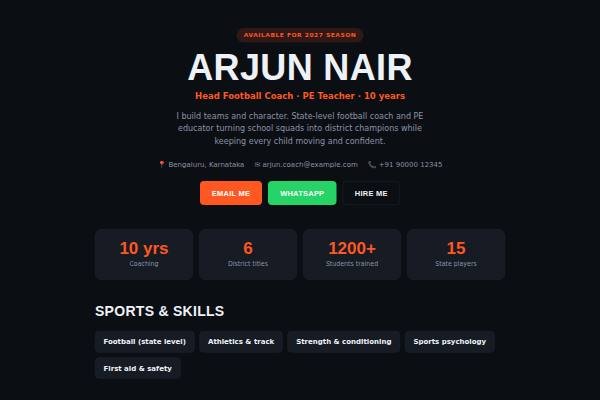
 Coach Pro
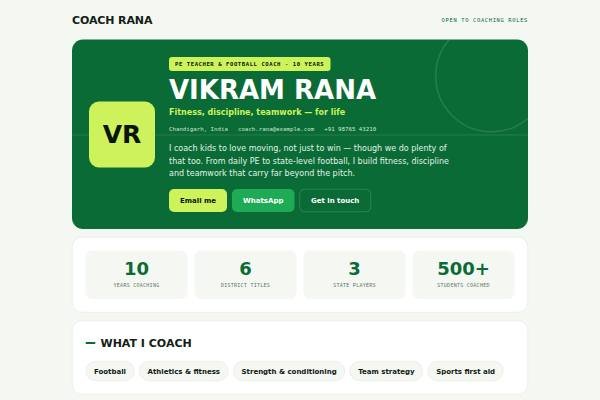 Touchline
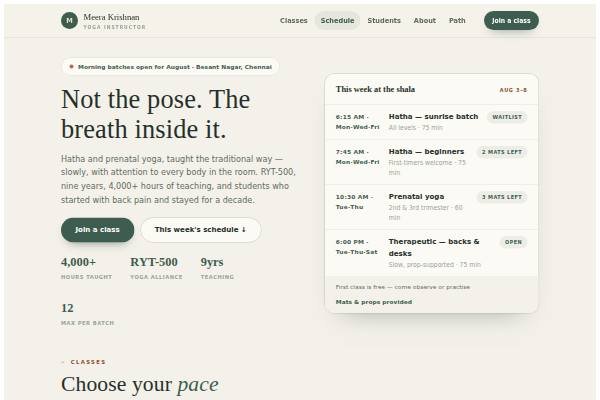 Serene

What coaches in India should know before going online
Coaching is not regulated in India: there is no statutory licence, and anyone can use the title. That makes verifiable training — a credential from an international coaching body with logged hours, certifications in psychometric tools — and a visible professional background your main trust signals. Corporate buyers usually find executive and leadership coaches through LinkedIn and referrals from HR heads, then open the website to check seniority and fit; individual clients more often arrive from YouTube or Instagram. If you are GST-registered, say that invoices include GST, since companies expect it. Many clients are more comfortable speaking partly in Hindi or a regional language, so list the languages you coach in. Because coaching is not therapy, state that you refer people facing depression, anxiety or trauma to a qualified mental health professional.
Common website mistakes coaches make
- Claiming to coach “anyone who wants to grow”. A vague niche attracts nobody; name one or two client types and the specific transition you help them through.
- Promising outcomes like “double your salary in 90 days”. Individuals and companies distrust it; describe your process and let genuine, consented testimonials speak.
- Hiding every price behind “DM for details”. Give at least a starting range or package structure so corporate buyers can budget and individuals can self-qualify.
- Blurring coaching and therapy. Without clinical training, avoid words like “heal” or “treat anxiety”; state your scope and when you refer someone to a psychologist.
- Testimonials carrying only a first name and no context. Add the client’s role or situation, with permission, so a reader can judge whether the result is relevant to them.