At a glance
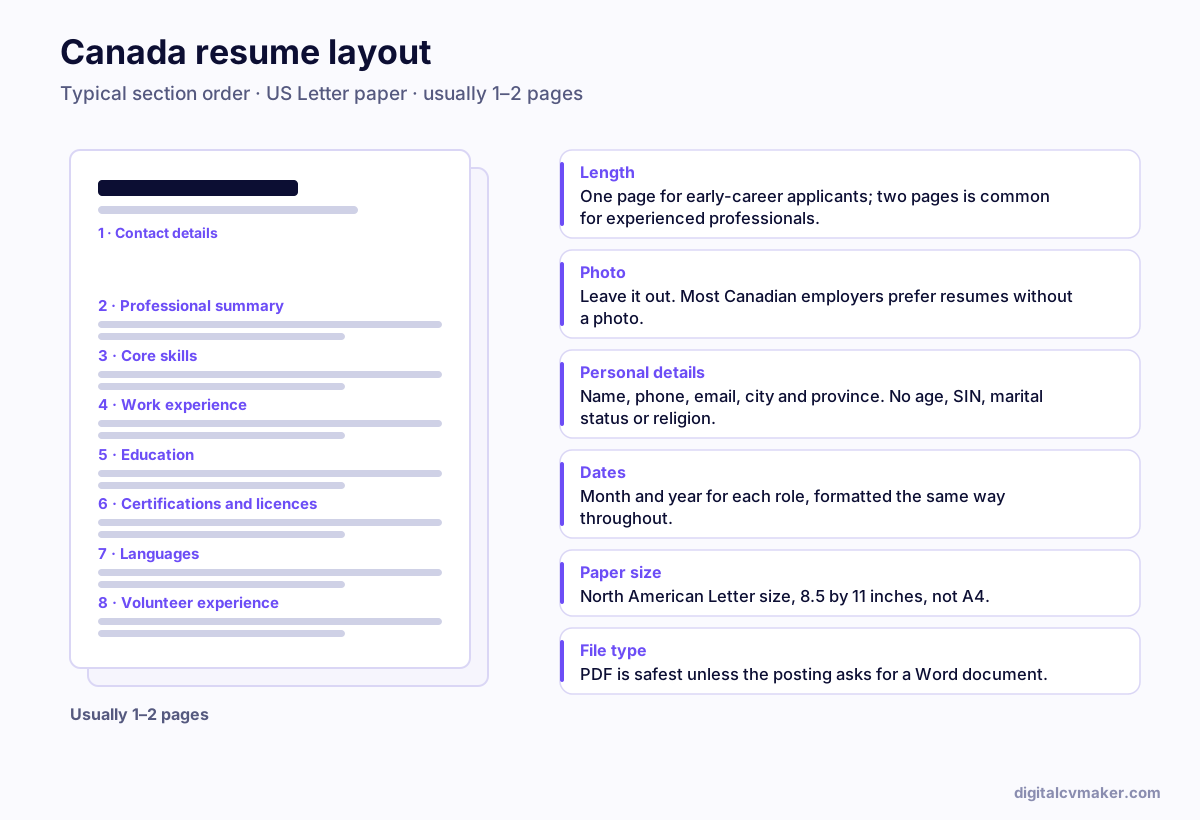
| Length | One page for early-career applicants; two pages is common for experienced professionals. |
|---|---|
| Photo | Leave it out. Most Canadian employers prefer resumes without a photo. |
| Personal details | Name, phone, email, city and province. No age, SIN, marital status or religion. |
| Dates | Month and year for each role, formatted the same way throughout. |
| Paper size | North American Letter size, 8.5 by 11 inches, not A4. |
| Spelling | Canadian spelling: colour, centre, labour, but organize and analyze. |
| File type | PDF is safest unless the posting asks for a Word document. |
Free Canada resume template
Already laid out the Canada way: section order, US Letter page size and placeholders to replace. No signup.
Usual section order
- Contact details
- Professional summary
- Core skills
- Work experience
- Education
- Certifications and licences
- Languages
- Volunteer experience
Keep it to one or two pages
Canadian recruiters generally expect a resume they can skim quickly. Students, recent graduates and people with only a few years of work usually fit everything on a single page. Once you have a longer track record, a second page is normal and rarely held against you, as long as every line earns its place. Three pages or more is uncommon outside academic, medical and some senior technical roles, where a longer curriculum vitae may be requested instead. If you are trimming, cut older roles to one or two lines, remove duties that any holder of the job would have performed, and keep the detail for the last ten or so years of experience.
What personal information to leave off
Human rights legislation in Canada, including the Canadian Human Rights Act and each province’s human rights code, prohibits hiring decisions based on grounds such as age, sex, religion, marital or family status, ethnic origin and disability. Because of this, Canadian resumes normally omit a photo, date of birth, gender, marital status, number of children, religion and nationality. Your Social Insurance Number should never appear on a resume; it is only shared with an employer after you are hired. Contact details are usually limited to your name, phone number, a professional email address, your city and province, and optionally a LinkedIn profile or personal website link.
Write a short professional summary
Most Canadian resumes open with a three to four line professional summary rather than an objective statement. It should name your field, your level of experience, two or three strengths that match the posting and one concrete result. Write it in a neutral voice without “I” and avoid vague self-praise that a recruiter cannot verify. Tailor the summary for each application by echoing the job title and a few key terms from the posting, which also helps with applicant tracking systems that many medium and large employers use to screen applications before a person reads them.
Show achievements, not just duties
List work experience in reverse-chronological order, with the job title, employer, city and province, and month-and-year dates. Under each role, use three to six bullet points that start with an action verb and describe what changed because of your work. Numbers help when you have them: time saved, volume handled, error rates reduced, customers served or budgets managed. If you gained experience outside Canada, include it with the country named, and explain the scale of the organization in a few words, since Canadian hiring managers may not recognize the employer. Short gaps can simply be left as they are; longer ones can be explained briefly in your cover letter.
Education, credentials and licences
Put education after experience unless you are a student or recent graduate. Give the credential, institution, city and country, and the year of completion if you are comfortable sharing it. If your degree was earned outside Canada, many applicants add a short note that it has been assessed as equivalent to a Canadian credential, when that is true. Regulated professions such as nursing, engineering, teaching and accounting require a provincial licence or registration, so state your licence status clearly. Use the Canadian spelling “licence” for the noun, and list relevant certifications with the issuing body and the date obtained or renewed.
Languages and volunteer work
Canada has two official languages, so language skills can matter more than in many other markets. Roles in Quebec, in the federal public service, in parts of New Brunswick and Ontario, and in customer-facing national jobs may require or prefer French. List each language with an honest level such as fluent, professional working proficiency or basic. Volunteer experience is also widely valued by Canadian employers, particularly for newcomers and early-career applicants. Treat meaningful volunteer roles like jobs, with a title, organization, dates and one or two achievements, rather than a single line at the bottom of the page.
What to include
- Your city and province, so employers can see you are local or willing to relocate for the role.
- Keywords from the job posting, used naturally in your summary, skills list and experience bullet points.
- Measurable results for each recent role, such as volumes, percentages, time saved or budgets you managed.
- Language skills with an honest proficiency level, especially French for roles in Quebec or the federal government.
- Professional licences, registrations or credential assessments that show your qualifications are recognized in Canada.
What to leave out
- A photo, date of birth, gender or marital status, since these invite bias under Canadian human rights laws.
- Your Social Insurance Number, which is only given to an employer after a job offer is accepted.
- The line “references available on request”; employers assume it and will ask for referees later.
- Your full street address, since a city and province is enough and protects your privacy.
- Salary history or expectations, unless the posting specifically asks you to provide them in your application.
Sample professional summary
Operations coordinator with six years of experience in logistics and customer service across Ontario and British Columbia. Reorganized inbound scheduling for a regional distribution centre, cutting average truck wait times by a third. Skilled in inventory software, vendor communication and training new staff. Bilingual in English and French, with a record of clear reporting to senior management.
Adding a personal website link
Canadian recruiters routinely check a LinkedIn profile, and many will click a personal website or online portfolio if you include one. Place the link in your resume header next to your email and phone number, using a short, clean web address. Make sure the site matches your resume, uses Canadian spelling, loads quickly on a phone and shows real work samples or case studies. Leave off personal details you would not put on the resume.
How Canada compares
| Country | Length | Photo | Paper size |
|---|---|---|---|
| 🇮🇳 India | One page for freshers; two pages for most experienced candidates; senior profiles occasionally longer. | Optional; a plain professional headshot is acceptable but rarely required by private employers. | A4 size, with margins of roughly 2 cm on each side. |
| 🇺🇸 US | One page under about ten years of experience; two pages for senior roles. | No photo. Most US employers prefer not to see one. | US Letter size (8.5 × 11 inches), not A4. |
| 🇬🇧 UK | Two sides of A4 is the norm; one page suits graduates and school leavers. | No photo, except for acting, modelling or presenting roles. | A4 paper size with sensible margins, not US Letter. |
| 🇦🇪 UAE | Two pages is typical; three can suit senior or highly technical profiles. | Common and often expected: a plain, professional head-and-shoulders photo. | A4 size when printed. |
| 🇨🇦 Canada | One page for early-career applicants; two pages is common for experienced professionals. | Leave it out. Most Canadian employers prefer resumes without a photo. | North American Letter size, 8.5 by 11 inches, not A4. |
| 🇦🇺 Australia | Two to three pages is usual; graduates and school leavers can keep to one or two. | Leave it out; most employers prefer no photo, except for acting or modelling roles. | A4 paper size, the standard for printed documents in Australia. |
| 🇸🇬 Singapore | One to two A4 pages; senior specialists sometimes stretch to three. | Optional and less common than before; leave it out unless requested. | A4 with modest margins, the standard size in Singapore offices. |
| 🇮🇪 Ireland | Two A4 pages for most candidates; one page can work for school leavers. | Leave the photo off unless the job is in acting, modelling or presenting. | A4 page size with even margins, never US Letter. |
| 🇩🇪 Germany | One to two pages of A4; experienced specialists occasionally use three. | Optional; still common, but many employers no longer expect one. | A4 with a tidy, consistent grid and generous margins. |
| 🇪🇸 Spain | One A4 page early in your career; two pages once you have several roles. | Commonly included as a small headshot, but optional and never required. | A4, with a simple layout that survives printing and portal uploads. |
| 🇫🇷 France | One page for most early-career applicants; two pages for senior profiles. | Optional; still seen, but many candidates and employers now leave it out. | A4 with compact margins and a clear visual hierarchy. |
| 🇮🇹 Italy | One or two A4 pages; graduates usually fit everything on one. | Commonly included as a small headshot; optional, not required by law. | A4 with a sober layout; muted colours suit most sectors. |
| 🇵🇹 Portugal | One or two A4 pages; one page is common for graduates. | Often included as a small headshot, but not required. | A4, with a clean layout and readable font size. |
| 🇧🇷 Brazil | One page for most candidates; two pages for senior professionals. | Not expected; leave it off unless the advert asks for one. | A4, with a simple layout that reads well on a phone screen. |
Applying to Canada from India?
Registration steps, what to change in an Indian-style resume and sample bullets for: