At a glance
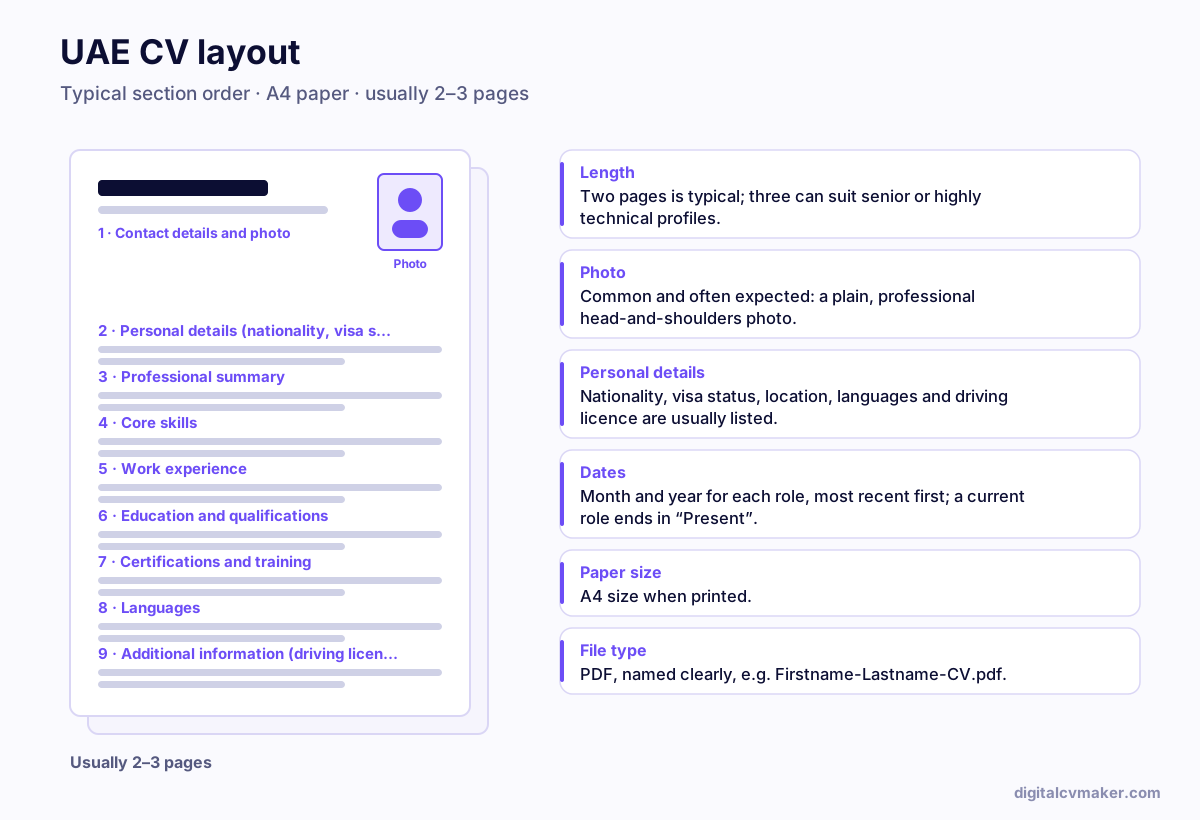
| Length | Two pages is typical; three can suit senior or highly technical profiles. |
|---|---|
| Photo | Common and often expected: a plain, professional head-and-shoulders photo. |
| Personal details | Nationality, visa status, location, languages and driving licence are usually listed. |
| Dates | Month and year for each role, most recent first; a current role ends in “Present”. |
| Paper size | A4 size when printed. |
| Spelling | British English: organise, colour, programme, licence. |
| File type | PDF, named clearly, e.g. Firstname-Lastname-CV.pdf. |
Free UAE CV template
Already laid out the UAE way: section order, A4 page size and placeholders to replace. No signup.
Usual section order
- Contact details and photo
- Personal details (nationality, visa status, location)
- Professional summary
- Core skills
- Work experience
- Education and qualifications
- Certifications and training
- Languages
- Additional information (driving licence, notice period)
Personal details recruiters in the UAE look for
Because most of the workforce is expatriate, recruiters use a short personal block to judge how simple a hire will be. List your nationality, your current visa status (for example employment visa, residence visa through a spouse or parent, visit visa, or Golden Visa), the emirate you live in, and the languages you speak. UAE nationals often state this clearly, as many employers run Emiratisation programmes. Date of birth and marital status are still seen on some CVs, but they are optional, and many international firms prefer you leave them off. Never include a passport number or Emirates ID number.
Should you add a photo?
A photo is common on CVs in the UAE and across the Gulf, and many recruiters expect one, especially for client-facing, hospitality, sales and aviation roles. Use a recent, well-lit head-and-shoulders shot in business attire against a plain background. Keep it small, in the top corner beside your name. Holiday snaps, selfies and cropped group photos look careless. Some multinational employers and their applicant tracking systems ignore photos altogether, so a photo will not harm you, but it will not replace strong content either. If a job advert asks you not to send one, follow the advert.
Visa status and notice period
Two practical details often decide whether you get a call. The first is your visa position: someone already resident on a transferable visa can usually start sooner and costs the employer less to hire than someone overseas. The second is your notice period. Many UAE contracts carry a notice period of one to three months, and recruiters plan around it. State both plainly, for example “UAE residence visa (spouse-sponsored), available on one month’s notice”. If you are applying from abroad, say when you could relocate. Clear answers here save a screening call.
Writing the work experience section
List roles in reverse chronological order with job title, employer, city and country, and month-and-year dates. Recruiters in Dubai and Abu Dhabi read many CVs from candidates who have worked in several countries, so give one line of context for employers they may not know: sector, size or region covered. Use three to six bullet points per recent role, starting each with an action verb and showing a measurable outcome where you have one. Mention regional exposure, such as GCC clients, multicultural teams or Arabic-speaking markets, because it is valued across the Gulf.
Education, certifications and attestation
Give each qualification with the degree, subject, institution, country and year of completion. For many roles, and for most government, education and healthcare jobs, employers will later ask for your degree certificate to be attested, meaning it is verified in the country of issue and then in the UAE. You do not need to explain this on the CV, but noting “degree attested” can help if it is already done. Professional certifications such as project management, accounting or IT credentials carry real weight here, so give them their own section.
Tone, length and layout
Keep the layout clean, with one or two fonts, clear headings and consistent spacing. Two pages usually covers a mid-level career; very junior candidates can manage with one, and senior leaders sometimes go to three. Avoid dense paragraphs, tables that break when parsed, and graphics that carry key information, since larger employers and recruitment agencies use applicant tracking systems. Write in the first person without the pronoun, in British English. The tone is formal and factual; overstated claims are common in the market, so specific numbers stand out.
What to include
- Nationality, current visa status and the emirate you live in, placed near your name and contact details.
- A mobile number with the country code, such as +971, plus a professional email address and LinkedIn profile.
- Your notice period and earliest start date, so recruiters can plan interviews and onboarding around it.
- Languages with a realistic level for each, since Arabic, Hindi, Urdu, Tagalog or French can be real advantages.
- A UAE driving licence if you hold one, as many field, sales and managerial roles expect you to drive.
What to leave out
- Passport number, Emirates ID number and visa file numbers, which can be misused and are never needed at application stage.
- Current or expected salary, unless the advert specifically asks for it; discuss package details at interview instead.
- Religion and detailed family information, which are not relevant to your ability to do the job.
- Copies of certificates, passports or reference letters attached to the CV; send these only when the employer requests them.
- Long lists of hobbies or generic soft skills that take space away from achievements and relevant experience.
Sample professional summary
Operations coordinator with seven years’ experience in logistics and facilities across the UAE and India. Currently managing supplier schedules and a team of six for a Dubai-based distribution firm, cutting late deliveries by a fifth in one year. Skilled in SAP, vendor negotiation and multicultural team leadership. UAE residence visa, valid UAE driving licence, available on one month’s notice.
Adding a personal website link
A personal website or online portfolio is useful in the UAE, especially for design, marketing, technology and architecture roles, and for candidates applying from abroad. Place the link in your CV header next to your email and LinkedIn profile, and mention it once in your cover letter. Recruiters typically check that it loads quickly on a phone, shows recent work with your role clearly explained, and matches the dates and titles on your CV.
How UAE compares
| Country | Length | Photo | Paper size |
|---|---|---|---|
| 🇮🇳 India | One page for freshers; two pages for most experienced candidates; senior profiles occasionally longer. | Optional; a plain professional headshot is acceptable but rarely required by private employers. | A4 size, with margins of roughly 2 cm on each side. |
| 🇺🇸 US | One page under about ten years of experience; two pages for senior roles. | No photo. Most US employers prefer not to see one. | US Letter size (8.5 × 11 inches), not A4. |
| 🇬🇧 UK | Two sides of A4 is the norm; one page suits graduates and school leavers. | No photo, except for acting, modelling or presenting roles. | A4 paper size with sensible margins, not US Letter. |
| 🇦🇪 UAE | Two pages is typical; three can suit senior or highly technical profiles. | Common and often expected: a plain, professional head-and-shoulders photo. | A4 size when printed. |
| 🇨🇦 Canada | One page for early-career applicants; two pages is common for experienced professionals. | Leave it out. Most Canadian employers prefer resumes without a photo. | North American Letter size, 8.5 by 11 inches, not A4. |
| 🇦🇺 Australia | Two to three pages is usual; graduates and school leavers can keep to one or two. | Leave it out; most employers prefer no photo, except for acting or modelling roles. | A4 paper size, the standard for printed documents in Australia. |
| 🇸🇬 Singapore | One to two A4 pages; senior specialists sometimes stretch to three. | Optional and less common than before; leave it out unless requested. | A4 with modest margins, the standard size in Singapore offices. |
| 🇮🇪 Ireland | Two A4 pages for most candidates; one page can work for school leavers. | Leave the photo off unless the job is in acting, modelling or presenting. | A4 page size with even margins, never US Letter. |
| 🇩🇪 Germany | One to two pages of A4; experienced specialists occasionally use three. | Optional; still common, but many employers no longer expect one. | A4 with a tidy, consistent grid and generous margins. |
| 🇪🇸 Spain | One A4 page early in your career; two pages once you have several roles. | Commonly included as a small headshot, but optional and never required. | A4, with a simple layout that survives printing and portal uploads. |
| 🇫🇷 France | One page for most early-career applicants; two pages for senior profiles. | Optional; still seen, but many candidates and employers now leave it out. | A4 with compact margins and a clear visual hierarchy. |
| 🇮🇹 Italy | One or two A4 pages; graduates usually fit everything on one. | Commonly included as a small headshot; optional, not required by law. | A4 with a sober layout; muted colours suit most sectors. |
| 🇵🇹 Portugal | One or two A4 pages; one page is common for graduates. | Often included as a small headshot, but not required. | A4, with a clean layout and readable font size. |
| 🇧🇷 Brazil | One page for most candidates; two pages for senior professionals. | Not expected; leave it off unless the advert asks for one. | A4, with a simple layout that reads well on a phone screen. |
Applying to UAE from India?
Registration steps, what to change in an Indian-style CV and sample bullets for: