At a glance
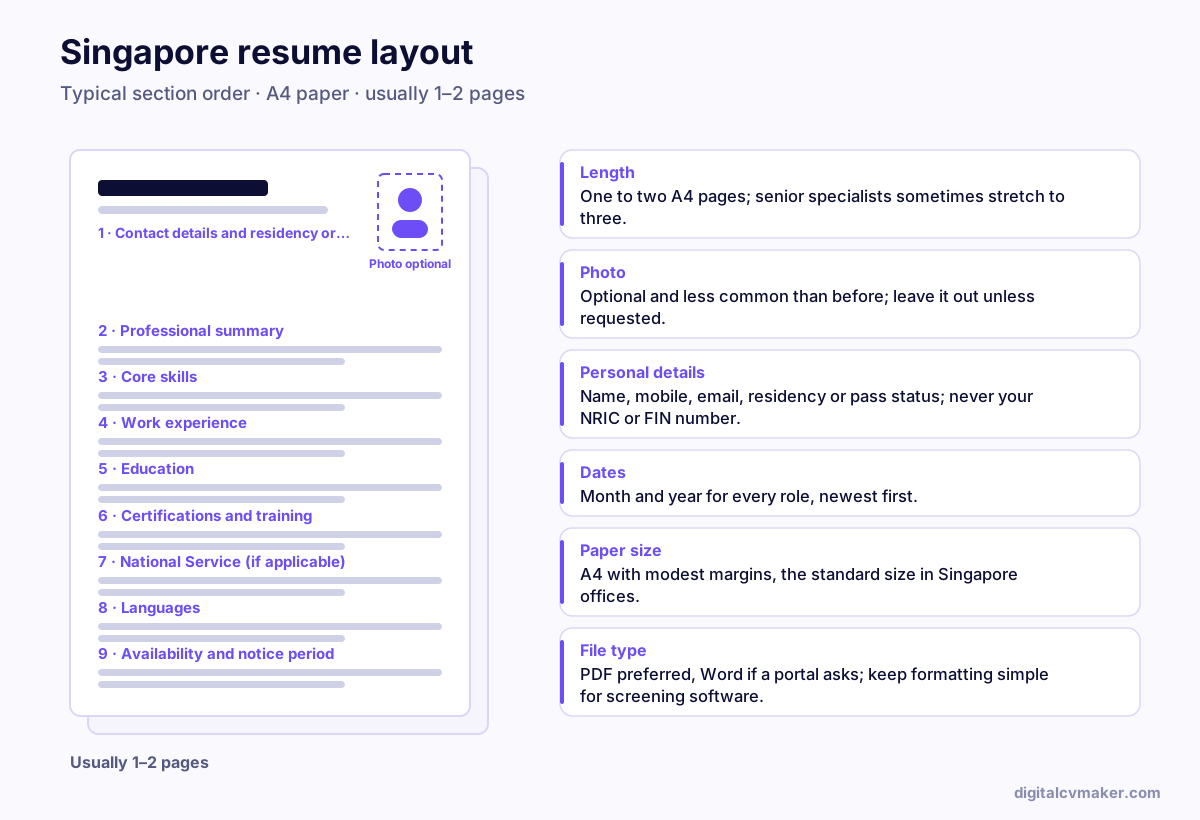
| Length | One to two A4 pages; senior specialists sometimes stretch to three. |
|---|---|
| Photo | Optional and less common than before; leave it out unless requested. |
| Personal details | Name, mobile, email, residency or pass status; never your NRIC or FIN number. |
| Dates | Month and year for every role, newest first. |
| Paper size | A4 with modest margins, the standard size in Singapore offices. |
| Spelling | British English: organise, programme, centre, with resume and CV both acceptable. |
| File type | PDF preferred, Word if a portal asks; keep formatting simple for screening software. |
Free Singapore resume template
Already laid out the Singapore way: section order, A4 page size and placeholders to replace. No signup.
Usual section order
- Contact details and residency or pass status
- Professional summary
- Core skills
- Work experience
- Education
- Certifications and training
- National Service (if applicable)
- Languages
- Availability and notice period
Contact details, residency and work pass status
Start with your full name, a Singapore mobile number, a professional email address and a LinkedIn or portfolio link. A district or nearest MRT area is enough for location; a full street address is rarely needed. Directly beneath, state whether you are a Singapore Citizen, a Singapore Permanent Resident or the holder of a particular pass, such as an Employment Pass or S Pass. Employers need this early because foreign hires involve a pass application with its own eligibility rules. If you would need sponsorship, say so plainly rather than leaving the recruiter to guess.
Personal data, NRIC and fair employment
Older Singapore resumes often listed age, race, religion, marital status and an identity card number. Current practice has moved away from this. The Tripartite Guidelines on Fair Employment Practices encourage employers to select on merit and to avoid asking for details such as age, race, religion or family status unless the job genuinely requires them. Separately, guidance under the Personal Data Protection Act discourages organisations from collecting full NRIC numbers without a real need. Keep your NRIC or FIN, date of birth and family details off the resume and supply them only when an offer or background check calls for them.
Work experience with measurable results
List roles from newest to oldest, each with job title, organisation, city or country and the start and end month. Singapore employers often hire across the region, so note the markets you covered, such as Southeast Asia or Greater China, where relevant. Use four to six bullet points per role and lead each with an action verb and an outcome: revenue handled, headcount managed, processes improved or audits passed. Contract, freelance and agency roles are normal here; label them as such so short stints are not mistaken for job hopping. Summarise older positions in a line each.
Education, certifications and local qualifications
Give the institution, qualification, field of study and completion month and year. Local recruiters recognise GCE O Level and A Level results, polytechnic diplomas, ITE certificates and university degrees; once you hold a degree, school-level results can shrink to a single line or disappear. If you studied overseas, add the country and a brief note on the award so the reader can judge it quickly. Professional certifications carry real weight in finance, technology, engineering and healthcare, so list them with the awarding body. Include SkillsFuture or other short courses only when they are directly relevant.
National Service, languages and notice period
Male citizens and permanent residents commonly add a short National Service line with their vocation and status, for example that full-time service is completed. Employers find this helpful because reservist call-ups can affect scheduling. Languages deserve their own short list with honest levels, since many roles involve regional clients who use Mandarin, Malay, Tamil, Bahasa Indonesia or other languages. Close with your availability or notice period; one to three months is typical for permanent staff, and recruiters often ask about it at the first call, so stating it saves time.
Salary information and referees
Recruiters in Singapore frequently ask for last drawn and expected salary, but this belongs in the application form, the recruiter conversation or the cover email rather than on the resume itself. Putting figures on the document can anchor negotiations too early. Referee details are usually requested after interviews, so a separate list of two referees, ideally former supervisors, is more practical than names on the resume. A closing line saying references are available on request is harmless but optional.
What to include
- Your citizenship, permanent residency or current pass type near the top, so eligibility is clear immediately.
- Quantified achievements for each role, including the markets or countries you covered across the region.
- Your notice period or earliest start date, since Singapore recruiters ask about availability at an early stage.
- Recognised professional certifications with the issuing body, especially for finance, technology and engineering roles.
- Languages with an honest proficiency level, which matters for regional sales, service and operations roles.
What to leave out
- Your NRIC or FIN number, because personal data guidance discourages sharing it before an offer or check.
- Race, religion, marital status and date of birth, which fair employment guidelines treat as irrelevant to merit.
- Salary figures, both last drawn and expected, which fit better in the application form or conversation.
- A casual or heavily edited photograph; if you choose to add one, keep it plain and professional.
- Every school exam grade once you have a degree or several years of full-time work.
Sample professional summary
Operations executive with six years’ experience in regional logistics, supporting distribution across Singapore, Malaysia and Indonesia. Skilled in vendor management, inventory planning and process documentation, with a track record of shortening delivery lead times and tightening stock accuracy. Singapore Permanent Resident, fluent in English and Mandarin, available on one month’s notice and looking to grow into a supply chain management role.
Adding a personal website link
Singapore recruiters commonly look up LinkedIn before shortlisting, and a personal website or online portfolio helps most in technology, design, marketing, communications and consulting. Place the link in your resume header beside your email and, if it adds evidence, mention it in the cover letter. Reviewers usually check that job titles and dates match your resume, skim a few recent projects and note whether the site loads quickly and looks professional on a phone.
How Singapore compares
| Country | Length | Photo | Paper size |
|---|---|---|---|
| 🇮🇳 India | One page for freshers; two pages for most experienced candidates; senior profiles occasionally longer. | Optional; a plain professional headshot is acceptable but rarely required by private employers. | A4 size, with margins of roughly 2 cm on each side. |
| 🇺🇸 US | One page under about ten years of experience; two pages for senior roles. | No photo. Most US employers prefer not to see one. | US Letter size (8.5 × 11 inches), not A4. |
| 🇬🇧 UK | Two sides of A4 is the norm; one page suits graduates and school leavers. | No photo, except for acting, modelling or presenting roles. | A4 paper size with sensible margins, not US Letter. |
| 🇦🇪 UAE | Two pages is typical; three can suit senior or highly technical profiles. | Common and often expected: a plain, professional head-and-shoulders photo. | A4 size when printed. |
| 🇨🇦 Canada | One page for early-career applicants; two pages is common for experienced professionals. | Leave it out. Most Canadian employers prefer resumes without a photo. | North American Letter size, 8.5 by 11 inches, not A4. |
| 🇦🇺 Australia | Two to three pages is usual; graduates and school leavers can keep to one or two. | Leave it out; most employers prefer no photo, except for acting or modelling roles. | A4 paper size, the standard for printed documents in Australia. |
| 🇸🇬 Singapore | One to two A4 pages; senior specialists sometimes stretch to three. | Optional and less common than before; leave it out unless requested. | A4 with modest margins, the standard size in Singapore offices. |
| 🇮🇪 Ireland | Two A4 pages for most candidates; one page can work for school leavers. | Leave the photo off unless the job is in acting, modelling or presenting. | A4 page size with even margins, never US Letter. |
| 🇩🇪 Germany | One to two pages of A4; experienced specialists occasionally use three. | Optional; still common, but many employers no longer expect one. | A4 with a tidy, consistent grid and generous margins. |
| 🇪🇸 Spain | One A4 page early in your career; two pages once you have several roles. | Commonly included as a small headshot, but optional and never required. | A4, with a simple layout that survives printing and portal uploads. |
| 🇫🇷 France | One page for most early-career applicants; two pages for senior profiles. | Optional; still seen, but many candidates and employers now leave it out. | A4 with compact margins and a clear visual hierarchy. |
| 🇮🇹 Italy | One or two A4 pages; graduates usually fit everything on one. | Commonly included as a small headshot; optional, not required by law. | A4 with a sober layout; muted colours suit most sectors. |
| 🇵🇹 Portugal | One or two A4 pages; one page is common for graduates. | Often included as a small headshot, but not required. | A4, with a clean layout and readable font size. |
| 🇧🇷 Brazil | One page for most candidates; two pages for senior professionals. | Not expected; leave it off unless the advert asks for one. | A4, with a simple layout that reads well on a phone screen. |