At a glance
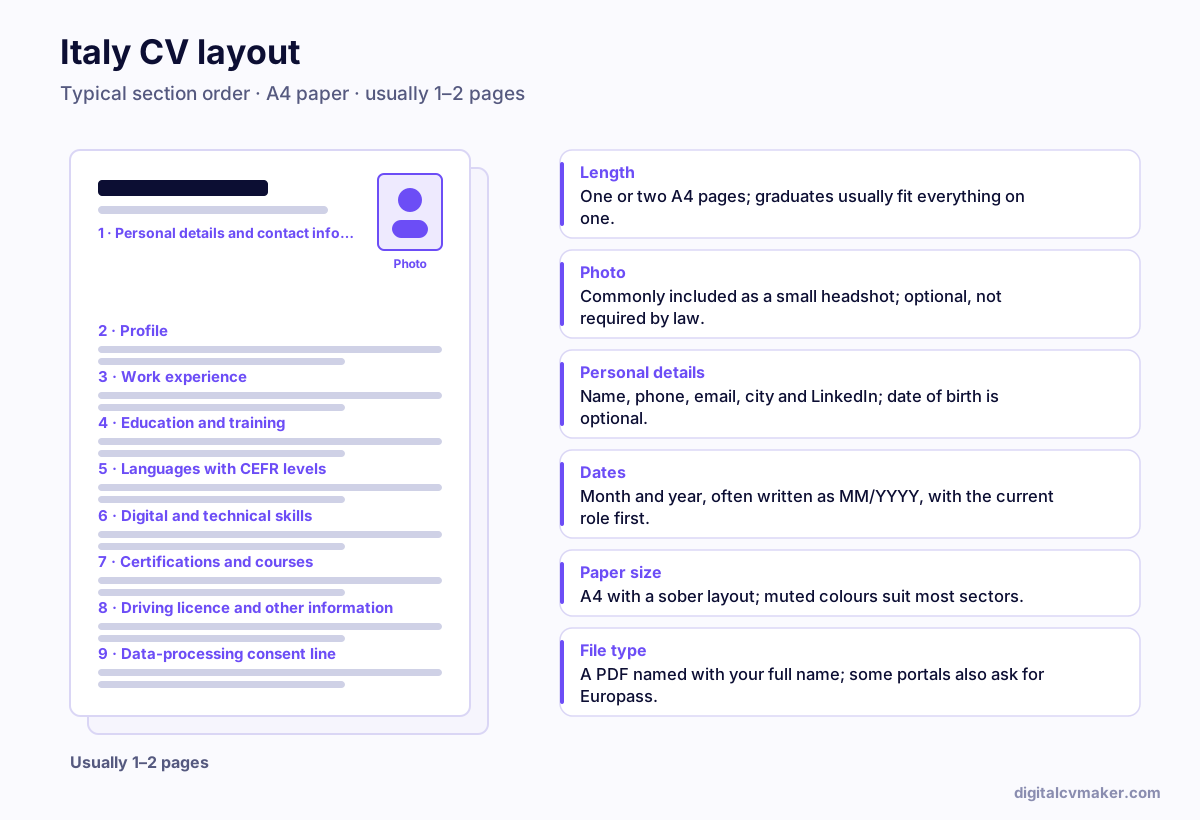
| Length | One or two A4 pages; graduates usually fit everything on one. |
|---|---|
| Photo | Commonly included as a small headshot; optional, not required by law. |
| Personal details | Name, phone, email, city and LinkedIn; date of birth is optional. |
| Dates | Month and year, often written as MM/YYYY, with the current role first. |
| Paper size | A4 with a sober layout; muted colours suit most sectors. |
| Spelling | British or American English used consistently; keep Italian degree names. |
| File type | A PDF named with your full name; some portals also ask for Europass. |
Free Italy CV template
Already laid out the Italy way: section order, A4 page size and placeholders to replace. No signup.
Usual section order
- Personal details and contact information
- Profile
- Work experience
- Education and training
- Languages with CEFR levels
- Digital and technical skills
- Certifications and courses
- Driving licence and other information
- Data-processing consent line
Layout and length
Italian recruiters expect a tidy, sober document. One page is enough for students and recent graduates; two pages suit candidates with several roles or a long technical career. Use reverse chronological order for both experience and education, with clear headings and consistent dates. Italian employers in traditional sectors such as banking, law and public administration tend to prefer a restrained design, while agencies, start-ups and creative studios accept more visual layouts. In every case, the content should be easy to scan and the file small enough to upload to any portal.
Photo and personal details
Many Italian candidates place a small, professional photo at the top of the CV, and recruiters are used to seeing one. It is still optional, and employers must not select candidates on the basis of personal characteristics protected by law. If you include a photo, choose a neutral headshot with a plain background. Date of birth and nationality are often listed on Italian CVs but are not required; marital status is usually left out in modern practice. Your tax code, the codice fiscale, is only needed when you are hired, so keep it off the CV.
The data-processing consent line
A typical Italian CV ends with a short sentence authorising the employer to process the personal data in the document, usually starting “Autorizzo il trattamento dei miei dati personali…” and referring to the Italian privacy code and the EU General Data Protection Regulation. Under the GDPR, an employer’s lawful basis for handling a CV is not only consent, so the line is a widespread convention rather than a strict legal requirement. Many recruiters still look for it, however, and some portals remind applicants to add it. Including it in Italian, at the foot of the CV, is a simple way to meet expectations.
Education, degrees and recognition
Italian employers pay close attention to education. Give the full name of each degree, the institution, the city and the dates, and include your final grade where it is strong, since Italian degrees are graded and the mark is often discussed. A laurea triennale is the three-year first degree and a laurea magistrale the master’s level. If your qualification was earned abroad, explain its level in plain words. For regulated professions or public competitions, formal recognition may be required, and statements of comparability are available from CIMEA, the Italian centre for academic recognition.
Europass and the European format
The Europass CV, promoted by the European Union, is particularly familiar in Italy, where many people still call it the formato europeo. Public bodies, universities and some calls for applications may ask for it explicitly, so read the advert carefully. Private companies generally accept any clear format and may find a concise custom CV easier to read than a long Europass document. If you use Europass, remove empty fields, keep descriptions short and make sure the language and digital skills sections reflect your real level.
Languages, digital skills and work status
Rate every language on the Common European Framework of Reference from A1 to C2 and add official certificates where you have them. Italian is the everyday working language in most organisations, so state your Italian level even when applying for an English-language role. Digital skills are often listed in a separate section, from office tools to specialist software. Applicants who are not citizens of the EU, the European Economic Area or Switzerland should state their residence permit status, the permesso di soggiorno, so the employer understands whether a work authorisation process is needed.
What to include
- A data-processing consent line in Italian at the foot of the CV, as Italian recruiters commonly expect.
- Your final degree grade where it is strong, since Italian employers often consider it.
- Language levels on the European A1 to C2 scale, with your current Italian level stated honestly.
- A driving licence line where the job involves travel, which is a common detail on Italian CVs.
- Your residence permit or EU citizenship status, so the employer can plan the hiring process.
What to leave out
- Your codice fiscale, ID card or passport number, which are requested only at the hiring stage.
- Marital status, children and religious beliefs, which have no place in a selection decision.
- Empty Europass fields and self-ratings that make the document longer without adding information.
- Holiday pictures or heavily edited portraits in place of a plain professional headshot.
- Every school certificate before your highest qualification, unless the advert asks for a full record.
Sample professional summary
Mechanical engineer with five years’ experience in product design and testing for industrial machinery. Uses CAD and simulation tools daily and works closely with suppliers and production teams to move designs into manufacturing. Master’s degree in mechanical engineering with top marks. English C1, Italian C2, German B1. Based in Bologna and open to travel.
Adding a personal website link
Italian recruiters regularly check LinkedIn, and a personal website or online portfolio is especially useful in design, fashion, architecture, communication and software. Add the link to your CV header and refer to relevant work in the cover letter. Keep the details consistent with your CV, and if you publish in English, a short Italian summary on the home page makes the site more accessible to local employers.
How Italy compares
| Country | Length | Photo | Paper size |
|---|---|---|---|
| 🇮🇳 India | One page for freshers; two pages for most experienced candidates; senior profiles occasionally longer. | Optional; a plain professional headshot is acceptable but rarely required by private employers. | A4 size, with margins of roughly 2 cm on each side. |
| 🇺🇸 US | One page under about ten years of experience; two pages for senior roles. | No photo. Most US employers prefer not to see one. | US Letter size (8.5 × 11 inches), not A4. |
| 🇬🇧 UK | Two sides of A4 is the norm; one page suits graduates and school leavers. | No photo, except for acting, modelling or presenting roles. | A4 paper size with sensible margins, not US Letter. |
| 🇦🇪 UAE | Two pages is typical; three can suit senior or highly technical profiles. | Common and often expected: a plain, professional head-and-shoulders photo. | A4 size when printed. |
| 🇨🇦 Canada | One page for early-career applicants; two pages is common for experienced professionals. | Leave it out. Most Canadian employers prefer resumes without a photo. | North American Letter size, 8.5 by 11 inches, not A4. |
| 🇦🇺 Australia | Two to three pages is usual; graduates and school leavers can keep to one or two. | Leave it out; most employers prefer no photo, except for acting or modelling roles. | A4 paper size, the standard for printed documents in Australia. |
| 🇸🇬 Singapore | One to two A4 pages; senior specialists sometimes stretch to three. | Optional and less common than before; leave it out unless requested. | A4 with modest margins, the standard size in Singapore offices. |
| 🇮🇪 Ireland | Two A4 pages for most candidates; one page can work for school leavers. | Leave the photo off unless the job is in acting, modelling or presenting. | A4 page size with even margins, never US Letter. |
| 🇩🇪 Germany | One to two pages of A4; experienced specialists occasionally use three. | Optional; still common, but many employers no longer expect one. | A4 with a tidy, consistent grid and generous margins. |
| 🇪🇸 Spain | One A4 page early in your career; two pages once you have several roles. | Commonly included as a small headshot, but optional and never required. | A4, with a simple layout that survives printing and portal uploads. |
| 🇫🇷 France | One page for most early-career applicants; two pages for senior profiles. | Optional; still seen, but many candidates and employers now leave it out. | A4 with compact margins and a clear visual hierarchy. |
| 🇮🇹 Italy | One or two A4 pages; graduates usually fit everything on one. | Commonly included as a small headshot; optional, not required by law. | A4 with a sober layout; muted colours suit most sectors. |
| 🇵🇹 Portugal | One or two A4 pages; one page is common for graduates. | Often included as a small headshot, but not required. | A4, with a clean layout and readable font size. |
| 🇧🇷 Brazil | One page for most candidates; two pages for senior professionals. | Not expected; leave it off unless the advert asks for one. | A4, with a simple layout that reads well on a phone screen. |