At a glance
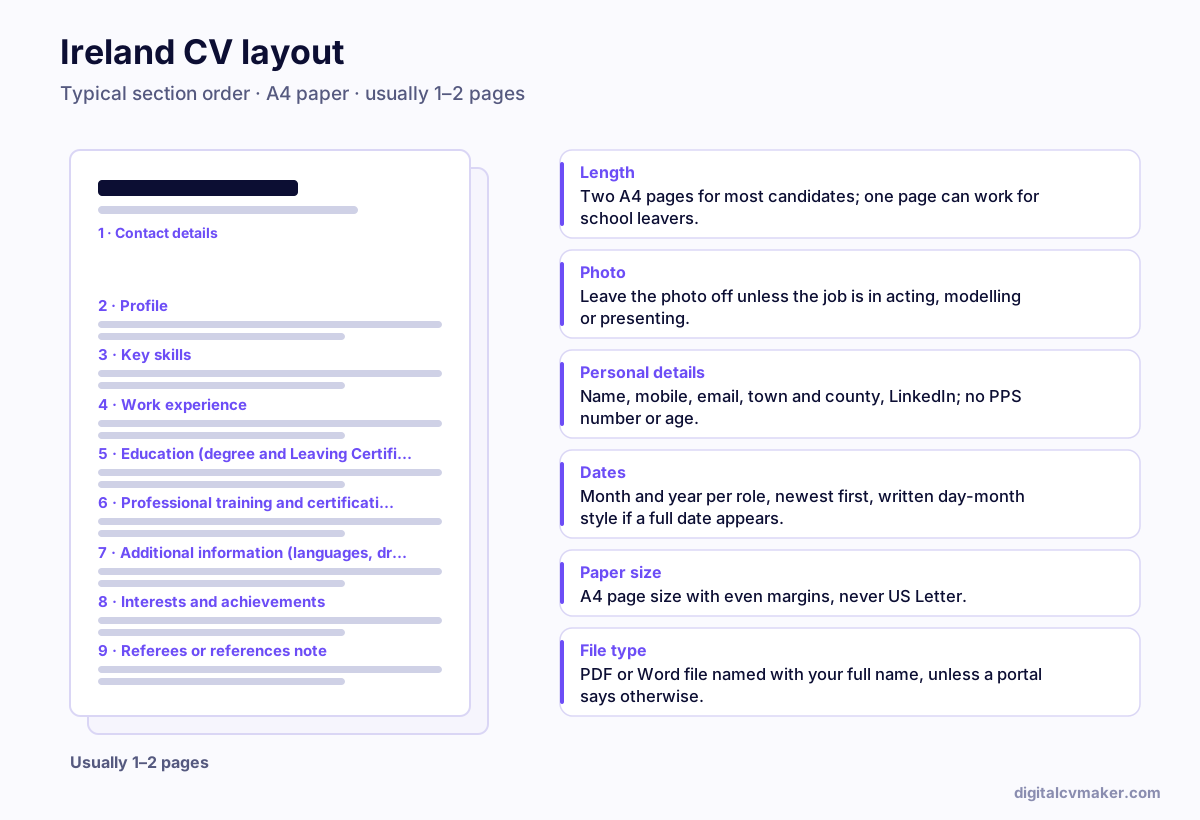
| Length | Two A4 pages for most candidates; one page can work for school leavers. |
|---|---|
| Photo | Leave the photo off unless the job is in acting, modelling or presenting. |
| Personal details | Name, mobile, email, town and county, LinkedIn; no PPS number or age. |
| Dates | Month and year per role, newest first, written day-month style if a full date appears. |
| Paper size | A4 page size with even margins, never US Letter. |
| Spelling | Irish and British English: organise, colour, programme, licence, and always “CV”. |
| File type | PDF or Word file named with your full name, unless a portal says otherwise. |
Free Ireland CV template
Already laid out the Ireland way: section order, A4 page size and placeholders to replace. No signup.
Usual section order
- Contact details
- Profile
- Key skills
- Work experience
- Education (degree and Leaving Certificate)
- Professional training and certifications
- Additional information (languages, driving licence, work permission)
- Interests and achievements
- Referees or references note
Contact details for an Irish CV
Start with your name as the heading of the page; a title such as “Curriculum Vitae” adds nothing. Below it, give a mobile number, a sensible email address, your town and county, and a LinkedIn or portfolio link. Irish recruiters rarely need your full postal address or Eircode at the application stage. Your PPS number, date of birth, marital status, nationality and number of children should stay off the page. The Employment Equality Acts prohibit discrimination on grounds such as age, family status, civil status, religion and race, so most employers would rather not receive this information before shortlisting.
Writing a profile that Irish readers trust
The profile is a short paragraph of about three to five lines that sits beneath your contact details. It should say what you do, the level you work at and the kind of role you want next. Irish readers tend to respond well to a plain, grounded tone, so describe concrete strengths rather than large claims about yourself. Many people write it without “I”, for example “Accounts assistant with four years’ experience in payroll and supplier payments”. Rewrite it for each application so the job title and two or three requirements from the advert appear naturally.
Work experience, achievements and gaps
List roles from the most recent backwards, giving the job title, employer, location and start and end months. Under each, add four to six bullet points that focus on outcomes: processes improved, customers served, targets met or people trained. Numbers help when they are accurate and easy to verify. Older or unrelated jobs, such as part-time retail or hospitality work during college, can be grouped into a single short entry that shows reliability and customer skills. A time out for emigration, caring, travel or study only needs a brief, neutral line, since recruiters in Ireland are used to career breaks.
Degree results and the Leaving Certificate
Give each qualification with the college or university, the award, the subject and the completion month and year. Degree results are normally stated as First Class Honours, Second Class Honours Grade 1 (2.1) or Grade 2 (2.2). Mentioning the level on the National Framework of Qualifications, such as a Level 8 honours degree, can help employers compare awards. Graduates and school leavers usually list their Leaving Certificate points or key subjects and grades. Once you have a degree and a few years of work, one line on the Leaving Certificate is enough. Overseas applicants can add a short note on how their qualification compares.
Stamp 4, employment permits and work permission
Irish and other EEA citizens, as well as Swiss and UK citizens, can generally work in Ireland without a permit. Other candidates often need an employment permit, such as a Critical Skills or General Employment Permit, or they may already hold an immigration permission such as Stamp 4 that allows them to work without one. Because an employer may need to support a permit application, state your position plainly in an additional information section, for example “Stamp 4, no permit required” or “Will require an employment permit”. Leaving it unclear can cause a recruiter to set your CV aside.
Interests, Irish language skills and referees
An interests section is more common on Irish CVs than on many others, and it can show teamwork, leadership or community involvement when it is specific. Coaching a local club, volunteering or organising events says more than “reading and music”. If you speak Irish, state your level honestly, because it can matter for teaching and some public service roles. Many Irish CVs end with two referees, often a recent manager and one other professional contact, while others simply say references are available on request. Either approach is accepted, but always ask referees for permission before naming them.
What to include
- A short profile tailored to the job title and the main requirements listed in the advert.
- Clear work permission details, such as Stamp 4 or the need for an employment permit, when your eligibility is not obvious.
- Your degree classification and NFQ level, plus Leaving Certificate results if you graduated recently.
- Specific achievements under each role, backed by numbers only where you can explain them at interview.
- Relevant certifications, professional memberships and any Garda vetting already completed for roles working with children or vulnerable adults.
What to leave out
- A photograph, because Irish employers seldom request one and it invites judgements unrelated to the job.
- Date of birth, marital or family status and religion, all grounds covered by Irish equality law.
- Your PPS number, bank details and full postal address, which are only needed once you accept an offer.
- Current salary and salary history, unless the application form asks you for them directly.
- Generic hobbies and personal slogans that take up space without showing any useful skill or interest.
Sample professional summary
Customer operations specialist with six years’ experience in contact centre and account management roles for software and financial services companies. Skilled in resolving complex queries, training new starters and improving support processes using customer feedback data. Fluent in English and conversational in Irish, with Stamp 4 permission to work. Seeking a team lead role in a growing organisation.
Adding a personal website link
Recruiters and hiring managers in Ireland commonly check LinkedIn before an interview, and a personal website or online portfolio is a sensible addition for software, design, marketing, writing and research roles. Place the link in your CV header beside your email address and mention it once in the cover letter if it shows relevant work. Reviewers typically check that job titles and dates match your CV, look at a few recent pieces and notice whether it is tidy and current.
How Ireland compares
| Country | Length | Photo | Paper size |
|---|---|---|---|
| 🇮🇳 India | One page for freshers; two pages for most experienced candidates; senior profiles occasionally longer. | Optional; a plain professional headshot is acceptable but rarely required by private employers. | A4 size, with margins of roughly 2 cm on each side. |
| 🇺🇸 US | One page under about ten years of experience; two pages for senior roles. | No photo. Most US employers prefer not to see one. | US Letter size (8.5 × 11 inches), not A4. |
| 🇬🇧 UK | Two sides of A4 is the norm; one page suits graduates and school leavers. | No photo, except for acting, modelling or presenting roles. | A4 paper size with sensible margins, not US Letter. |
| 🇦🇪 UAE | Two pages is typical; three can suit senior or highly technical profiles. | Common and often expected: a plain, professional head-and-shoulders photo. | A4 size when printed. |
| 🇨🇦 Canada | One page for early-career applicants; two pages is common for experienced professionals. | Leave it out. Most Canadian employers prefer resumes without a photo. | North American Letter size, 8.5 by 11 inches, not A4. |
| 🇦🇺 Australia | Two to three pages is usual; graduates and school leavers can keep to one or two. | Leave it out; most employers prefer no photo, except for acting or modelling roles. | A4 paper size, the standard for printed documents in Australia. |
| 🇸🇬 Singapore | One to two A4 pages; senior specialists sometimes stretch to three. | Optional and less common than before; leave it out unless requested. | A4 with modest margins, the standard size in Singapore offices. |
| 🇮🇪 Ireland | Two A4 pages for most candidates; one page can work for school leavers. | Leave the photo off unless the job is in acting, modelling or presenting. | A4 page size with even margins, never US Letter. |
| 🇩🇪 Germany | One to two pages of A4; experienced specialists occasionally use three. | Optional; still common, but many employers no longer expect one. | A4 with a tidy, consistent grid and generous margins. |
| 🇪🇸 Spain | One A4 page early in your career; two pages once you have several roles. | Commonly included as a small headshot, but optional and never required. | A4, with a simple layout that survives printing and portal uploads. |
| 🇫🇷 France | One page for most early-career applicants; two pages for senior profiles. | Optional; still seen, but many candidates and employers now leave it out. | A4 with compact margins and a clear visual hierarchy. |
| 🇮🇹 Italy | One or two A4 pages; graduates usually fit everything on one. | Commonly included as a small headshot; optional, not required by law. | A4 with a sober layout; muted colours suit most sectors. |
| 🇵🇹 Portugal | One or two A4 pages; one page is common for graduates. | Often included as a small headshot, but not required. | A4, with a clean layout and readable font size. |
| 🇧🇷 Brazil | One page for most candidates; two pages for senior professionals. | Not expected; leave it off unless the advert asks for one. | A4, with a simple layout that reads well on a phone screen. |