At a glance
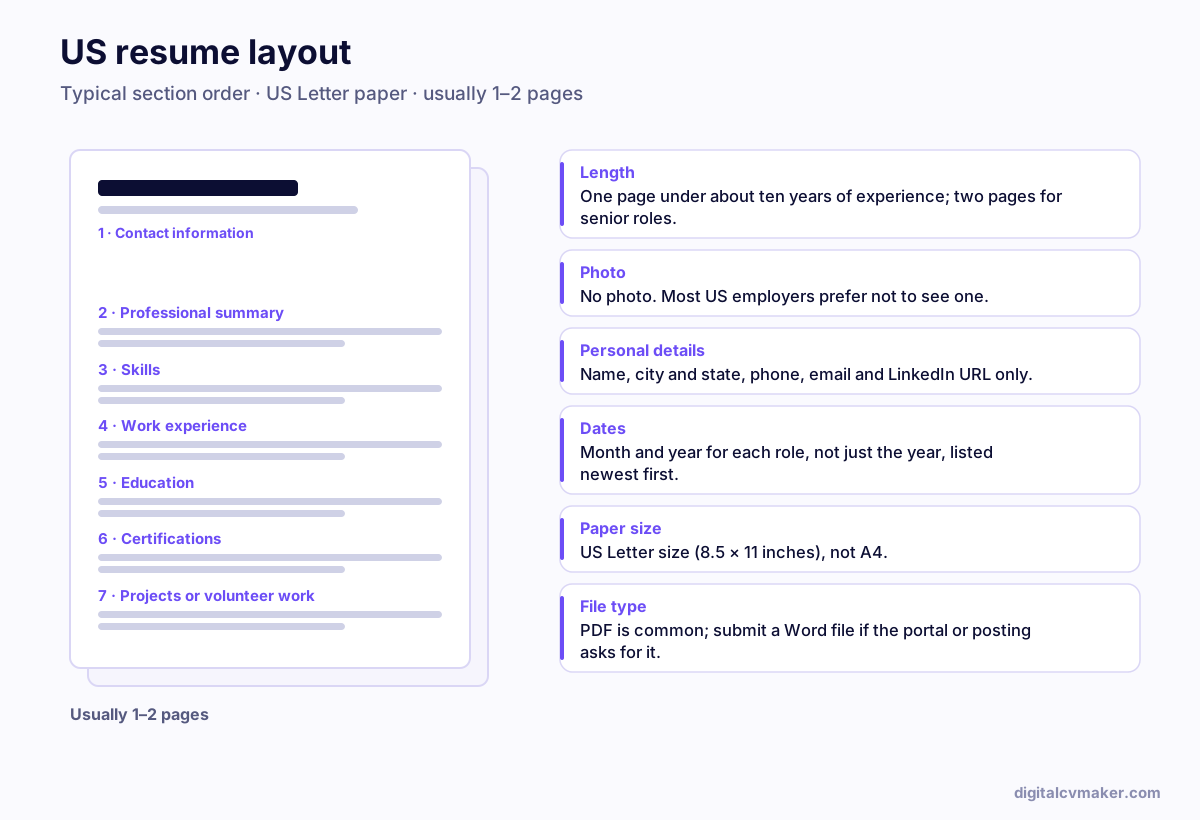
| Length | One page under about ten years of experience; two pages for senior roles. |
|---|---|
| Photo | No photo. Most US employers prefer not to see one. |
| Personal details | Name, city and state, phone, email and LinkedIn URL only. |
| Dates | Month and year for each role, not just the year, listed newest first. |
| Paper size | US Letter size (8.5 × 11 inches), not A4. |
| Spelling | American English: organize, color, center, résumé usually written as resume. |
| File type | PDF is common; submit a Word file if the portal or posting asks for it. |
Free US resume template
Already laid out the US way: section order, US Letter page size and placeholders to replace. No signup.
Usual section order
- Contact information
- Professional summary
- Skills
- Work experience
- Education
- Certifications
- Projects or volunteer work
Keep it to one page unless you have the depth
Hiring managers in the US usually skim a resume quickly before deciding whether to read it properly, so brevity is treated as a skill. If you are a student, a recent graduate or have fewer than about ten years of experience, one page is the common expectation. Senior professionals, managers and technical specialists can go to two pages when every line earns its place. Longer documents are usually reserved for academic, medical and federal government applications, which follow their own conventions. Trim older roles to a line or two, cut duties that anyone in the job would perform, and let recent, relevant work take most of the space.
Why personal details stay off a US resume
Federal law, including Title VII of the Civil Rights Act and the Age Discrimination in Employment Act, bars employers from making hiring decisions based on race, color, religion, sex, national origin or age. EEOC guidance encourages employers not to collect information that could suggest bias. As a result, many companies prefer resumes without a photo, date of birth, marital status, nationality, religion or number of children, and some screen out resumes that include them. Your full street address is also unnecessary; city and state are enough. If you need visa sponsorship, the application form will normally ask, so the resume itself can stay focused on your work.
Write bullets that show results, not duties
American recruiters look for evidence of impact. Start each bullet with a strong past-tense verb such as led, built, reduced or launched, then say what changed because of your work. Numbers help when they are real: revenue, time saved, customers served, error rates, budget size or team size. Aim for three to six bullets per recent role and fewer for older ones. Avoid first-person pronouns; the convention is to drop “I” and write in clipped phrases. Keep verb tense consistent, using present tense only for the job you currently hold.
Format for applicant tracking systems
Many mid-size and large US employers receive applications through an applicant tracking system, which parses your resume into fields before a person reads it. Simple formatting parses most reliably: a single column, standard section headings such as Work Experience and Education, and plain fonts at a readable size. Tables, text boxes, icons, and headers or footers holding key information can confuse some systems. Mirror the exact wording of skills and job titles used in the posting where it truthfully describes your background, because recruiters often search the database for those terms.
Tailor the summary and skills to each posting
A short professional summary of two to four lines at the top has largely replaced the old objective statement. It should name your role, your level of experience and the strengths most relevant to the job. The skills section below it works best as a tight list of tools, methods and technical abilities rather than personality traits. Most applicants keep a master resume and adjust the summary, skills and bullet order for each application. That tailoring matters more in the US market than decorative design, because both software and people are matching you against a specific job description.
Education, certifications and what to skip
Place education after experience once you have a few years of work behind you; recent graduates can put it first. List the degree, school, city and state, and graduation month and year, though experienced candidates often omit the year. A GPA is usually included only if it is strong and you graduated recently. High school details can go once you have a college degree. Add licenses and certifications that the role asks for. References are not listed, and the line “references available upon request” is considered unnecessary because employers assume it.
What to include
- A professional email address, phone number, city and state, and a LinkedIn or portfolio URL at the top.
- A two to four line professional summary tailored to the specific job title you are applying for.
- Measurable results in your bullets, such as percentages, dollar amounts, volumes or time saved, wherever the numbers are accurate.
- Keywords and skills taken from the job posting, placed naturally in your summary, skills list and experience bullets.
- Relevant licenses, certifications, security clearances or work authorization notes when the posting specifically asks for them.
What to leave out
- A photo, because many US employers avoid them to reduce the risk of discrimination claims under federal law.
- Date of birth, age, marital status, religion or number of children; these invite bias and are not relevant to the job.
- Your full street address and Social Security number, which create privacy risks and are not needed at the application stage.
- Salary history, since a growing number of states and cities restrict employers from asking about past pay.
- An objective statement and the phrase “references available upon request,” both of which now read as outdated filler.
Sample professional summary
Operations analyst with six years of experience improving supply chain processes for mid-size retail and distribution companies. Skilled in SQL, Excel modeling and Tableau reporting. Reduced order fulfillment time by 18% through a warehouse slotting redesign and built weekly dashboards used by regional leadership. Looking to bring process improvement and data analysis skills to a growing logistics team.
Adding a personal website link
US recruiters commonly check a candidate’s LinkedIn profile, and a personal website or online portfolio is a useful addition, especially for design, marketing, writing, engineering and product roles. Put the short URL in your resume header next to your email, and many application forms have a dedicated field for it. Recruiters typically look for real work samples, a clear summary of what you do and details that match your resume, so keep dates and job titles consistent across both.
How US compares
| Country | Length | Photo | Paper size |
|---|---|---|---|
| 🇮🇳 India | One page for freshers; two pages for most experienced candidates; senior profiles occasionally longer. | Optional; a plain professional headshot is acceptable but rarely required by private employers. | A4 size, with margins of roughly 2 cm on each side. |
| 🇺🇸 US | One page under about ten years of experience; two pages for senior roles. | No photo. Most US employers prefer not to see one. | US Letter size (8.5 × 11 inches), not A4. |
| 🇬🇧 UK | Two sides of A4 is the norm; one page suits graduates and school leavers. | No photo, except for acting, modelling or presenting roles. | A4 paper size with sensible margins, not US Letter. |
| 🇦🇪 UAE | Two pages is typical; three can suit senior or highly technical profiles. | Common and often expected: a plain, professional head-and-shoulders photo. | A4 size when printed. |
| 🇨🇦 Canada | One page for early-career applicants; two pages is common for experienced professionals. | Leave it out. Most Canadian employers prefer resumes without a photo. | North American Letter size, 8.5 by 11 inches, not A4. |
| 🇦🇺 Australia | Two to three pages is usual; graduates and school leavers can keep to one or two. | Leave it out; most employers prefer no photo, except for acting or modelling roles. | A4 paper size, the standard for printed documents in Australia. |
| 🇸🇬 Singapore | One to two A4 pages; senior specialists sometimes stretch to three. | Optional and less common than before; leave it out unless requested. | A4 with modest margins, the standard size in Singapore offices. |
| 🇮🇪 Ireland | Two A4 pages for most candidates; one page can work for school leavers. | Leave the photo off unless the job is in acting, modelling or presenting. | A4 page size with even margins, never US Letter. |
| 🇩🇪 Germany | One to two pages of A4; experienced specialists occasionally use three. | Optional; still common, but many employers no longer expect one. | A4 with a tidy, consistent grid and generous margins. |
| 🇪🇸 Spain | One A4 page early in your career; two pages once you have several roles. | Commonly included as a small headshot, but optional and never required. | A4, with a simple layout that survives printing and portal uploads. |
| 🇫🇷 France | One page for most early-career applicants; two pages for senior profiles. | Optional; still seen, but many candidates and employers now leave it out. | A4 with compact margins and a clear visual hierarchy. |
| 🇮🇹 Italy | One or two A4 pages; graduates usually fit everything on one. | Commonly included as a small headshot; optional, not required by law. | A4 with a sober layout; muted colours suit most sectors. |
| 🇵🇹 Portugal | One or two A4 pages; one page is common for graduates. | Often included as a small headshot, but not required. | A4, with a clean layout and readable font size. |
| 🇧🇷 Brazil | One page for most candidates; two pages for senior professionals. | Not expected; leave it off unless the advert asks for one. | A4, with a simple layout that reads well on a phone screen. |