At a glance
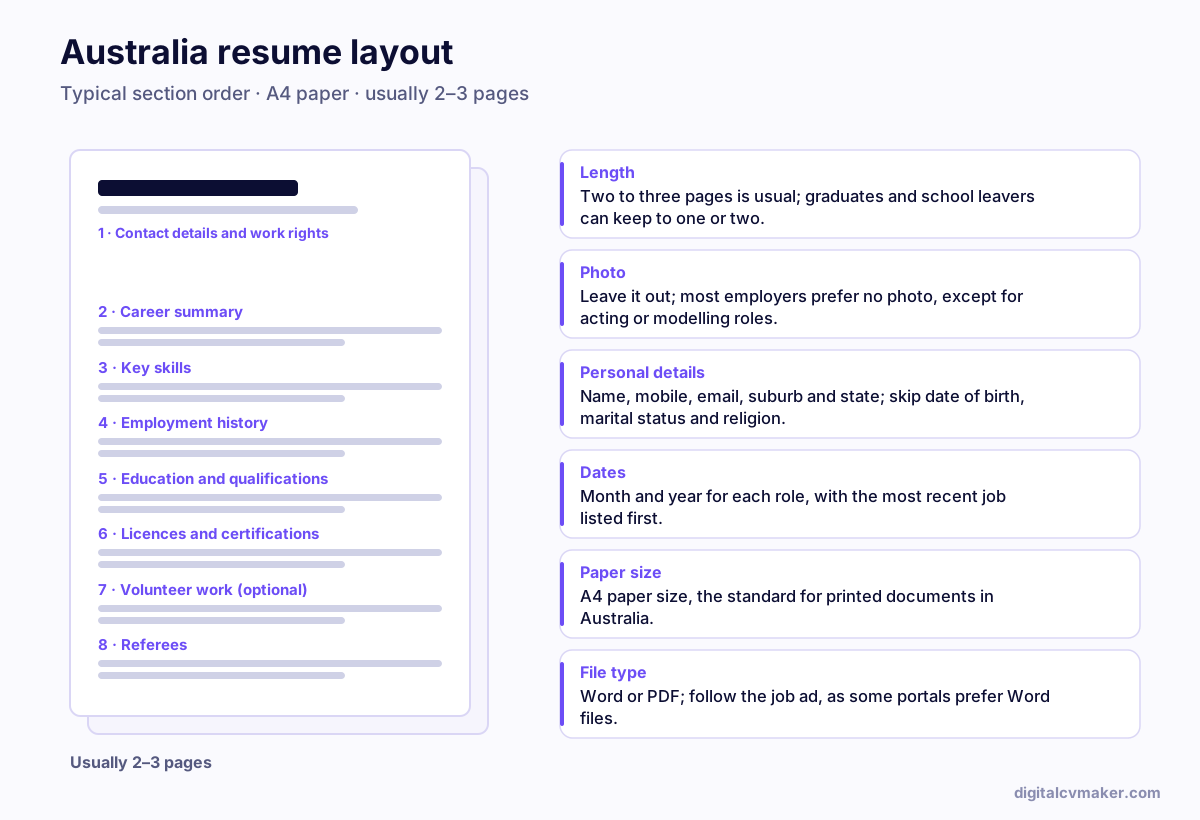
| Length | Two to three pages is usual; graduates and school leavers can keep to one or two. |
|---|---|
| Photo | Leave it out; most employers prefer no photo, except for acting or modelling roles. |
| Personal details | Name, mobile, email, suburb and state; skip date of birth, marital status and religion. |
| Dates | Month and year for each role, with the most recent job listed first. |
| Paper size | A4 paper size, the standard for printed documents in Australia. |
| Spelling | Australian English, close to British spelling: organise, colour, centre, licence. |
| File type | Word or PDF; follow the job ad, as some portals prefer Word files. |
Free Australia resume template
Already laid out the Australia way: section order, A4 page size and placeholders to replace. No signup.
Usual section order
- Contact details and work rights
- Career summary
- Key skills
- Employment history
- Education and qualifications
- Licences and certifications
- Volunteer work (optional)
- Referees
Why Australian resumes run to two or three pages
Recruiters in Australia generally expect more detail than the single page common in the United States. Two to three pages gives room for a short summary, a key skills list and several bullet points of achievements under each recent role. Length should come from substance, not padding: a graduate with one internship should not stretch to three pages, and a senior manager with a long career can summarise older roles in a line or two. Keep margins sensible, use one clean font at 10 to 12 points and let headings do the navigation. If a recruiter can find your latest title, employer and strongest results in a quick scan of the first page, the length is working for you.
Contact details and work rights
Put your full name at the top, followed by a mobile number, a professional email address and your suburb and state, for example Parramatta NSW. A full street address is no longer expected. Add a link to an online profile or personal website if it is current. Because employers must confirm that candidates are legally allowed to work, many applicants add a short line such as “Australian citizen”, “Permanent resident” or their visa type and its work conditions. This saves the recruiter a question and stops your application being set aside while they check. If you are overseas and relocating, say when you will be available to start in Australia.
Writing a career summary that fits the role
Most Australian resumes open with a career summary of three to five lines, sometimes called a profile. It should state your current or target role, your years of experience, the sector you know best and one or two strengths the job ad asks for. Write in a plain, confident voice and drop personal pronouns where you can; “Payroll officer with six years’ experience” reads better than “I am a payroll officer”. Tailor the summary for each application, echoing the language of the ad without copying it. School leavers and graduates often use a career objective instead, explaining the kind of role they want and what they bring from study, part-time work or volunteering.
Employment history: duties plus achievements
List roles in reverse-chronological order with job title, employer, location and month-and-year dates. Under each, add a one-line description of the organisation or team if it is not widely known, then three to six bullet points. Australian hiring managers look for evidence, so pair duties with outcomes: what you improved, delivered, saved or supported, and at what scale. Numbers help when they are genuine and you can explain them at interview. Casual, contract and part-time work is common in Australia and worth including when relevant; label each role clearly so gaps or overlaps make sense. For roles older than ten to fifteen years, a single line with title and employer is usually enough.
Referees: the Australian norm
Australian resumes often finish with a Referees section naming two professional contacts, usually recent managers or supervisors. Give each person’s name, job title, organisation, phone number and email, and state how they know you. Always ask permission first and brief them on the role so they are ready for the call, because many employers phone referees before making an offer. If you would rather not share their details on a public job board, write “Referees available on request” and keep the list ready to send. Avoid friends or family as referees; for a first job, a teacher, sports coach or volunteer coordinator is a better choice.
Key selection criteria for government roles
Jobs in the Australian Public Service and in state and local government often ask for more than a resume. Many advertise key selection criteria or request a statement of claims, a written response showing how you meet each requirement. A common approach is the STAR method: describe the situation, task, action and result, keeping each example concise. Some agencies now ask for a one- or two-page pitch instead of criterion-by-criterion responses, so read the application kit closely and respect its word or page limit exactly. Your resume should still be tailored to match, because assessors compare it with your written claims.
What to include
- Your work rights or visa status in one line near your contact details, so recruiters do not need to ask.
- Relevant licences and checks, such as a driver licence, White Card or Working with Children Check, when the role requires them.
- Achievements under each role that show outcomes, scope and the tools or systems you used day to day.
- A key skills section that mirrors the terms in the job ad, helping both applicant tracking systems and human readers.
- Two referees with current contact details, or a clear note that referee details are available on request.
What to leave out
- A photo, because most employers prefer to assess candidates without one and it can invite unconscious bias.
- Date of birth, age, marital status, religion or health details; anti-discrimination law means employers should not weigh these.
- Your full street address, since suburb and state are enough and protect your privacy on job boards.
- Salary history or expectations, unless the job ad or application form asks for them directly.
- Your tax file number, bank details or passport number, which are only needed after you accept an offer.
Sample professional summary
Operations coordinator with seven years’ experience in logistics and customer service across metropolitan and regional sites. Skilled in rostering, supplier liaison and process improvement, most recently leading a stock-control change that reduced picking errors and overtime. Known for clear communication with drivers, warehouse staff and clients alike. Australian citizen seeking a full-time role in Brisbane or the Gold Coast.
Adding a personal website link
Australian recruiters commonly look at an applicant’s online presence before shortlisting, so a personal website or portfolio link can help when it is kept current. Put the link in your resume header beside your email, and mention a relevant project in your cover letter. Make sure the site matches your resume dates and job titles, loads quickly on mobile and leaves out details such as your date of birth or home address.
How Australia compares
| Country | Length | Photo | Paper size |
|---|---|---|---|
| 🇮🇳 India | One page for freshers; two pages for most experienced candidates; senior profiles occasionally longer. | Optional; a plain professional headshot is acceptable but rarely required by private employers. | A4 size, with margins of roughly 2 cm on each side. |
| 🇺🇸 US | One page under about ten years of experience; two pages for senior roles. | No photo. Most US employers prefer not to see one. | US Letter size (8.5 × 11 inches), not A4. |
| 🇬🇧 UK | Two sides of A4 is the norm; one page suits graduates and school leavers. | No photo, except for acting, modelling or presenting roles. | A4 paper size with sensible margins, not US Letter. |
| 🇦🇪 UAE | Two pages is typical; three can suit senior or highly technical profiles. | Common and often expected: a plain, professional head-and-shoulders photo. | A4 size when printed. |
| 🇨🇦 Canada | One page for early-career applicants; two pages is common for experienced professionals. | Leave it out. Most Canadian employers prefer resumes without a photo. | North American Letter size, 8.5 by 11 inches, not A4. |
| 🇦🇺 Australia | Two to three pages is usual; graduates and school leavers can keep to one or two. | Leave it out; most employers prefer no photo, except for acting or modelling roles. | A4 paper size, the standard for printed documents in Australia. |
| 🇸🇬 Singapore | One to two A4 pages; senior specialists sometimes stretch to three. | Optional and less common than before; leave it out unless requested. | A4 with modest margins, the standard size in Singapore offices. |
| 🇮🇪 Ireland | Two A4 pages for most candidates; one page can work for school leavers. | Leave the photo off unless the job is in acting, modelling or presenting. | A4 page size with even margins, never US Letter. |
| 🇩🇪 Germany | One to two pages of A4; experienced specialists occasionally use three. | Optional; still common, but many employers no longer expect one. | A4 with a tidy, consistent grid and generous margins. |
| 🇪🇸 Spain | One A4 page early in your career; two pages once you have several roles. | Commonly included as a small headshot, but optional and never required. | A4, with a simple layout that survives printing and portal uploads. |
| 🇫🇷 France | One page for most early-career applicants; two pages for senior profiles. | Optional; still seen, but many candidates and employers now leave it out. | A4 with compact margins and a clear visual hierarchy. |
| 🇮🇹 Italy | One or two A4 pages; graduates usually fit everything on one. | Commonly included as a small headshot; optional, not required by law. | A4 with a sober layout; muted colours suit most sectors. |
| 🇵🇹 Portugal | One or two A4 pages; one page is common for graduates. | Often included as a small headshot, but not required. | A4, with a clean layout and readable font size. |
| 🇧🇷 Brazil | One page for most candidates; two pages for senior professionals. | Not expected; leave it off unless the advert asks for one. | A4, with a simple layout that reads well on a phone screen. |