At a glance
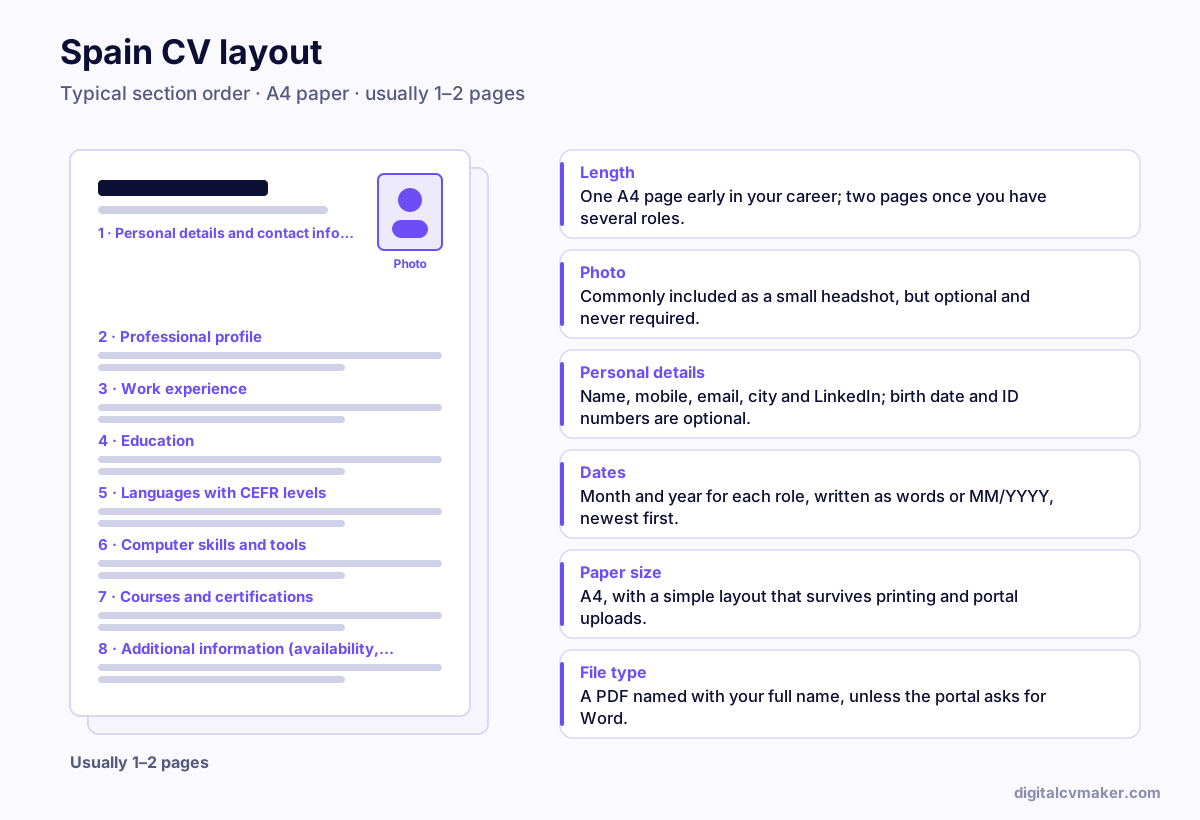
| Length | One A4 page early in your career; two pages once you have several roles. |
|---|---|
| Photo | Commonly included as a small headshot, but optional and never required. |
| Personal details | Name, mobile, email, city and LinkedIn; birth date and ID numbers are optional. |
| Dates | Month and year for each role, written as words or MM/YYYY, newest first. |
| Paper size | A4, with a simple layout that survives printing and portal uploads. |
| Spelling | Either British or American English, kept consistent from start to finish. |
| File type | A PDF named with your full name, unless the portal asks for Word. |
Free Spain CV template
Already laid out the Spain way: section order, A4 page size and placeholders to replace. No signup.
Usual section order
- Personal details and contact information
- Professional profile
- Work experience
- Education
- Languages with CEFR levels
- Computer skills and tools
- Courses and certifications
- Additional information (availability, mobility)
What a Spanish recruiter expects to see first
The top third of a Spanish CV carries most of the weight. Put your name, phone number with the country code, email, city and a LinkedIn link in a compact header, then a short professional profile of three or four lines. The profile should name your field, your level of experience and the kind of role you want. Spanish recruiters often receive many applications through online job boards and company portals, so a clean, single-column layout with clear headings helps your CV get read rather than skimmed past. Decorative graphics and skill bars add little and can confuse applicant tracking systems.
Photo and personal details
Adding a photo is still a widespread habit in Spain, and many recruiters are used to seeing one in the top corner. It remains your choice: employers cannot make hiring decisions on appearance, and a CV without a photo is perfectly acceptable, particularly in international companies. If you include one, use a recent, neutral headshot with a plain background. Date of birth, marital status and number of children were once standard but are now usually left out. There is no need to add your DNI, NIE or passport number; that information is requested later, when a contract is prepared.
Experience, internships and training courses
List experience in reverse chronological order with job title, organisation, city and dates, then three to five bullet points that show what you achieved. Internships, known in Spain as prácticas, are valued, especially for recent graduates, so include them with the same care as paid roles. Spanish employers also pay attention to continuing training, so short courses, official certificates and postgraduate programmes deserve their own section. Give the name of the course, the organisation and, where useful, the number of hours, because hours are a common way of describing course length in Spain.
Languages and the CEFR scale
Language skills are a key selling point in Spain, particularly for roles in tourism, export, customer service and international teams. Rate every language using the Common European Framework of Reference, from A1 to C2, and mention any official certificate you hold. Spanish is the working language in most companies, so if you are learning it, give your honest current level and say that you are improving it. In regions with a co-official language, such as Catalonia, the Basque Country or Galicia, knowledge of that language can be an advantage for public-sector and customer-facing roles.
Europass and other CV formats
Spain takes part in the Europass initiative run by the European Union, and its online editor lets you build a CV in a standard European layout. Europass is free and widely recognised, but it is optional; private employers rarely require it, and many recruiters find a concise, custom CV easier to read. It can be useful for public programmes, research grants, mobility schemes and applications to other EU countries. If you use it, delete empty fields, keep the descriptions short and check that the result still fits on one or two pages.
Work authorisation and foreign qualifications
Citizens of the EU, the European Economic Area and Switzerland can work in Spain without a permit, so a short note such as “EU citizen” removes doubt for the employer. Other applicants should state their residence and work status plainly, because recruiters want to know early whether a visa process is involved. If your degree was earned outside Spain, give the original title and country. For regulated professions such as medicine, nursing, law or teaching, formal recognition of the qualification, known as homologación, is usually needed before you can practise, so mention whether it is complete or in progress.
What to include
- A three- or four-line professional profile that names your field, experience level and the role you are applying for.
- Every language rated from A1 to C2 on the European scale, plus any official certificate you hold.
- Internships and training courses with the organisation, dates and number of hours where relevant.
- A clear statement of your work status, such as EU citizen or holder of a residence and work permit.
- Your availability to start and, if relevant, willingness to relocate or travel within Spain.
What to leave out
- ID or passport numbers, which employers only need when a contract is being drawn up.
- Marital status, number of children and religion, which have no bearing on your ability to do the job.
- Skill bars and star ratings for software, which say little and confuse applicant tracking systems.
- Long lists of every short course ever taken; keep the training that relates to the role.
- A casual photo cropped from a group picture, if you choose to include a photo at all.
Sample professional summary
Marketing coordinator with four years’ experience in digital campaigns for consumer brands, covering paid social, email and content planning. Coordinated launches with agencies and sales teams and improved reporting through shared dashboards. Bachelor’s degree in business administration. English C2, Spanish C1, French B1. EU citizen based in Valencia and open to relocating to Madrid.
Adding a personal website link
Recruiters in Spain commonly look at a candidate’s LinkedIn profile, and a personal website or online portfolio is especially useful in design, marketing, architecture, communication and software development. Add the link to your CV header and mention it in the cover letter when it shows relevant work. Keep the content consistent with your CV, and if you publish your portfolio in English, consider adding a short Spanish summary for local employers.
How Spain compares
| Country | Length | Photo | Paper size |
|---|---|---|---|
| 🇮🇳 India | One page for freshers; two pages for most experienced candidates; senior profiles occasionally longer. | Optional; a plain professional headshot is acceptable but rarely required by private employers. | A4 size, with margins of roughly 2 cm on each side. |
| 🇺🇸 US | One page under about ten years of experience; two pages for senior roles. | No photo. Most US employers prefer not to see one. | US Letter size (8.5 × 11 inches), not A4. |
| 🇬🇧 UK | Two sides of A4 is the norm; one page suits graduates and school leavers. | No photo, except for acting, modelling or presenting roles. | A4 paper size with sensible margins, not US Letter. |
| 🇦🇪 UAE | Two pages is typical; three can suit senior or highly technical profiles. | Common and often expected: a plain, professional head-and-shoulders photo. | A4 size when printed. |
| 🇨🇦 Canada | One page for early-career applicants; two pages is common for experienced professionals. | Leave it out. Most Canadian employers prefer resumes without a photo. | North American Letter size, 8.5 by 11 inches, not A4. |
| 🇦🇺 Australia | Two to three pages is usual; graduates and school leavers can keep to one or two. | Leave it out; most employers prefer no photo, except for acting or modelling roles. | A4 paper size, the standard for printed documents in Australia. |
| 🇸🇬 Singapore | One to two A4 pages; senior specialists sometimes stretch to three. | Optional and less common than before; leave it out unless requested. | A4 with modest margins, the standard size in Singapore offices. |
| 🇮🇪 Ireland | Two A4 pages for most candidates; one page can work for school leavers. | Leave the photo off unless the job is in acting, modelling or presenting. | A4 page size with even margins, never US Letter. |
| 🇩🇪 Germany | One to two pages of A4; experienced specialists occasionally use three. | Optional; still common, but many employers no longer expect one. | A4 with a tidy, consistent grid and generous margins. |
| 🇪🇸 Spain | One A4 page early in your career; two pages once you have several roles. | Commonly included as a small headshot, but optional and never required. | A4, with a simple layout that survives printing and portal uploads. |
| 🇫🇷 France | One page for most early-career applicants; two pages for senior profiles. | Optional; still seen, but many candidates and employers now leave it out. | A4 with compact margins and a clear visual hierarchy. |
| 🇮🇹 Italy | One or two A4 pages; graduates usually fit everything on one. | Commonly included as a small headshot; optional, not required by law. | A4 with a sober layout; muted colours suit most sectors. |
| 🇵🇹 Portugal | One or two A4 pages; one page is common for graduates. | Often included as a small headshot, but not required. | A4, with a clean layout and readable font size. |
| 🇧🇷 Brazil | One page for most candidates; two pages for senior professionals. | Not expected; leave it off unless the advert asks for one. | A4, with a simple layout that reads well on a phone screen. |