At a glance
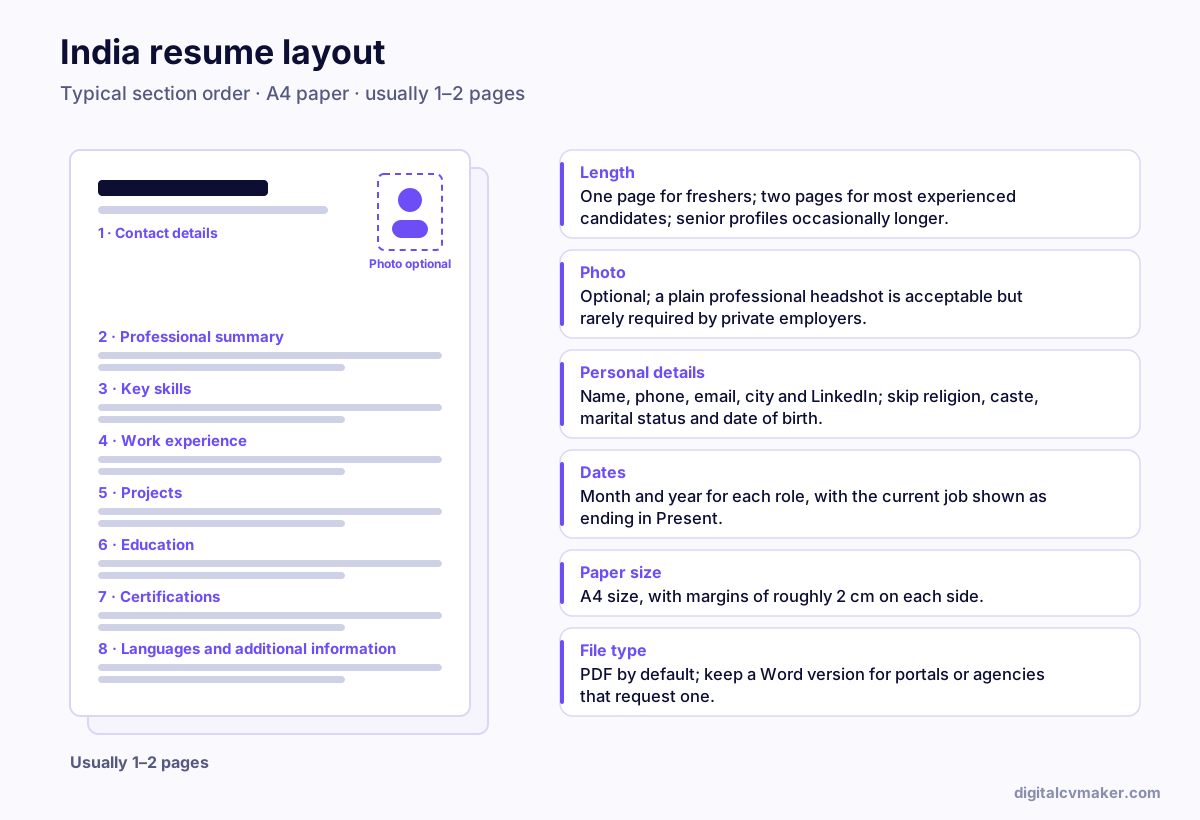
| Length | One page for freshers; two pages for most experienced candidates; senior profiles occasionally longer. |
|---|---|
| Photo | Optional; a plain professional headshot is acceptable but rarely required by private employers. |
| Personal details | Name, phone, email, city and LinkedIn; skip religion, caste, marital status and date of birth. |
| Dates | Month and year for each role, with the current job shown as ending in Present. |
| Paper size | A4 size, with margins of roughly 2 cm on each side. |
| Spelling | Indian English, which follows British spelling: colour, organise, programme. |
| File type | PDF by default; keep a Word version for portals or agencies that request one. |
Free India resume template
Already laid out the India way: section order, A4 page size and placeholders to replace. No signup.
Usual section order
- Contact details
- Professional summary
- Key skills
- Work experience
- Projects
- Education
- Certifications
- Languages and additional information
Photo and personal details: what has changed
Older Indian resumes often opened with a passport photo and a block of personal data: date of birth, gender, marital status, nationality, father’s name and hobbies. Most private employers, start-ups and multinationals no longer expect any of this, and leaving it out gives you room for achievements instead. A photo is still acceptable, and some candidates in client-facing, aviation or hospitality roles add one, but it is not a requirement. Government, public-sector and some academic applications are different: they usually have their own prescribed form, and you should follow that form exactly rather than adapting your private-sector resume.
Notice period and availability
Notice periods in India tend to be longer than in many other markets, and recruiters factor this into every shortlist. Mention your notice period briefly near the top, either in the summary line or in a short additional information section, for example “Notice period: 60 days, negotiable”. If you are serving notice already, give your last working day. If you can join immediately, say so plainly, because an early joining date can be a real advantage when a team needs someone quickly.
CTC and salary expectations
Recruiters in India commonly ask for current CTC and expected CTC, but these figures do not belong on the resume itself. Putting them there can anchor a negotiation before you have heard the role’s budget, and the number may be read differently depending on what is included in the package. Wait until an application form, job portal field or recruiter call asks for them. When you share them, be clear about fixed pay versus variable pay so the comparison is fair.
Key skills and job portals
Many Indian employers and consultancies search candidate databases on job portals and on LinkedIn using keywords, so a clear key skills section matters. List the tools, technologies and domain terms you actually use, matching the wording in job descriptions where it is honest to do so. Keep the list to around ten to fifteen items rather than a long block of every tool you have touched. Make sure the headline and skills on your portal profile match your resume, since recruiters often compare the two.
Freshers and campus applications
If you are a fresher, education and projects carry most of the weight, so place them above any internships and keep everything to one page. Include your degree, college, year of passing and marks as a CGPA or percentage, since many campus and entry-level screens still filter on this. Class 10 and 12 results can be added in one short line when an employer asks for them. Describe academic projects, internships and certifications with what you built or delivered, not just the course title.
Declaration, signature and references
The closing line “I hereby declare that the above information is true to the best of my knowledge”, followed by place, date and signature, is a traditional habit that most private employers skip past. You can safely remove it from a private-sector resume. Some government, PSU and institutional applications still ask for a signed declaration, and there you should include it. References are rarely listed on the page; employers usually request them at the offer stage, and background verification is common for larger firms.
What to include
- Your notice period or earliest joining date, since recruiters shortlist partly on how soon you can start.
- A key skills section using the same terms that appear in job descriptions and on your job portal profile.
- Numbers for your achievements, such as team size handled, targets met, turnaround time reduced or clients managed.
- Current city and willingness to relocate, because many roles are hiring for a specific metro or office location.
- Degree, institution and year of passing, with CGPA or percentage if you are a fresher or recent graduate.
What to leave out
- Date of birth, marital status, religion, caste and father’s name, which private employers do not need to assess you.
- Current and expected CTC, which are better shared only when a form or recruiter specifically asks.
- The signed declaration at the bottom, unless the employer is a government or public-sector body that requires it.
- A long objective statement about seeking a challenging position, which says little about what you offer.
- Full postal address and passport details; a city and state are enough until an offer is made.
Sample professional summary
Operations analyst with six years of experience in supply chain and vendor management for consumer goods businesses. Cut order processing time by 30% by redesigning approval workflows across three warehouses. Skilled in Excel, SQL and Power BI, and comfortable coordinating with finance and logistics teams. Based in Pune, open to relocating, with a notice period of 60 days.
Adding a personal website link
Indian recruiters mostly screen through job portals and LinkedIn, so a personal website works best as a supporting link rather than a replacement for either. Put the address in your resume header next to your LinkedIn URL and in your email signature. Designers, developers, writers and marketers benefit most, because a hiring manager can open real work samples in seconds. Keep it fast on mobile, since many recruiters check links on their phones.
How India compares
| Country | Length | Photo | Paper size |
|---|---|---|---|
| 🇮🇳 India | One page for freshers; two pages for most experienced candidates; senior profiles occasionally longer. | Optional; a plain professional headshot is acceptable but rarely required by private employers. | A4 size, with margins of roughly 2 cm on each side. |
| 🇺🇸 US | One page under about ten years of experience; two pages for senior roles. | No photo. Most US employers prefer not to see one. | US Letter size (8.5 × 11 inches), not A4. |
| 🇬🇧 UK | Two sides of A4 is the norm; one page suits graduates and school leavers. | No photo, except for acting, modelling or presenting roles. | A4 paper size with sensible margins, not US Letter. |
| 🇦🇪 UAE | Two pages is typical; three can suit senior or highly technical profiles. | Common and often expected: a plain, professional head-and-shoulders photo. | A4 size when printed. |
| 🇨🇦 Canada | One page for early-career applicants; two pages is common for experienced professionals. | Leave it out. Most Canadian employers prefer resumes without a photo. | North American Letter size, 8.5 by 11 inches, not A4. |
| 🇦🇺 Australia | Two to three pages is usual; graduates and school leavers can keep to one or two. | Leave it out; most employers prefer no photo, except for acting or modelling roles. | A4 paper size, the standard for printed documents in Australia. |
| 🇸🇬 Singapore | One to two A4 pages; senior specialists sometimes stretch to three. | Optional and less common than before; leave it out unless requested. | A4 with modest margins, the standard size in Singapore offices. |
| 🇮🇪 Ireland | Two A4 pages for most candidates; one page can work for school leavers. | Leave the photo off unless the job is in acting, modelling or presenting. | A4 page size with even margins, never US Letter. |
| 🇩🇪 Germany | One to two pages of A4; experienced specialists occasionally use three. | Optional; still common, but many employers no longer expect one. | A4 with a tidy, consistent grid and generous margins. |
| 🇪🇸 Spain | One A4 page early in your career; two pages once you have several roles. | Commonly included as a small headshot, but optional and never required. | A4, with a simple layout that survives printing and portal uploads. |
| 🇫🇷 France | One page for most early-career applicants; two pages for senior profiles. | Optional; still seen, but many candidates and employers now leave it out. | A4 with compact margins and a clear visual hierarchy. |
| 🇮🇹 Italy | One or two A4 pages; graduates usually fit everything on one. | Commonly included as a small headshot; optional, not required by law. | A4 with a sober layout; muted colours suit most sectors. |
| 🇵🇹 Portugal | One or two A4 pages; one page is common for graduates. | Often included as a small headshot, but not required. | A4, with a clean layout and readable font size. |
| 🇧🇷 Brazil | One page for most candidates; two pages for senior professionals. | Not expected; leave it off unless the advert asks for one. | A4, with a simple layout that reads well on a phone screen. |
Want wording for your field? Resume headline examples by profession and personal website guides for 64 professions.