At a glance
| Length | One page for most candidates; two pages for senior professionals. |
|---|---|
| Photo | Not expected; leave it off unless the advert asks for one. |
| Personal details | Name, mobile with area code, email, city and state, LinkedIn; no CPF or RG. |
| Dates | Month and year, commonly written as MM/YYYY, latest role first. |
| Paper size | A4, with a simple layout that reads well on a phone screen. |
| Spelling | American English is most familiar to Brazilian recruiters; stay consistent. |
| File type | A PDF named with your full name, uploaded to the portal or emailed. |
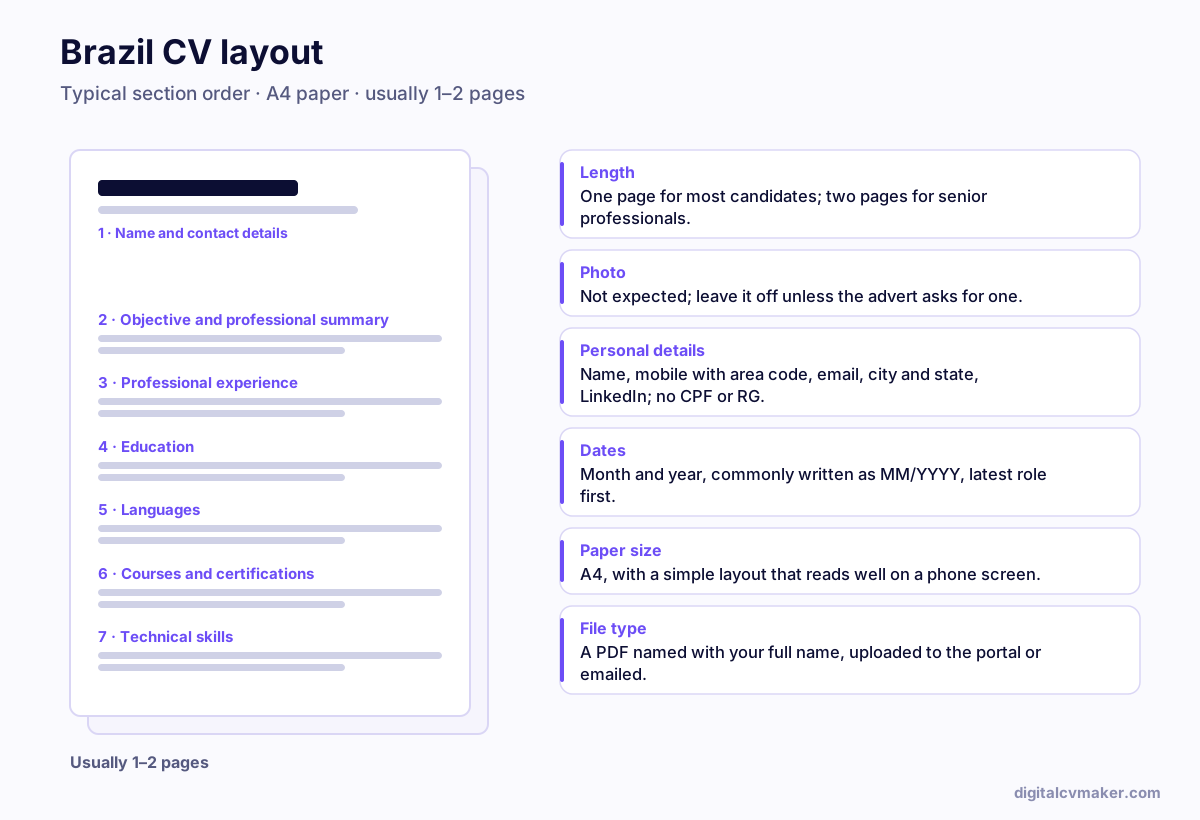
Free Brazil CV template
Already laid out the Brazil way: section order, A4 page size and placeholders to replace. No signup.
Usual section order
- Name and contact details
- Objective and professional summary
- Professional experience
- Education
- Languages
- Courses and certifications
- Technical skills
The objective line and summary
Many Brazilian CVs open with an objective, the objetivo profissional, a single line naming the role or area you are applying for, such as “Objective: Senior Data Analyst”. It helps recruiters sort applications quickly, especially at companies that receive many CVs for different positions. Follow it with a short summary of three or four lines covering your experience, specialism and main strengths. Keep both specific to the job advert; a generic objective that could apply to any role adds nothing and takes up valuable space at the top of the page.
Personal details: what to include and what to skip
Older Brazilian CVs often listed age, marital status, nationality, full address and identity numbers, but modern practice is much leaner. Give your name, mobile number with the area code (DDD), email, city and state, and a LinkedIn link. There is no need to include your CPF, RG or work card number; employers request those documents when you are hired. Brazil’s general data protection law, the LGPD, encourages companies to collect only the data they need, which is another reason to keep personal information to a minimum.
Photo and design
A photo is not expected on a Brazilian CV, and most career advice in Brazil recommends leaving it out unless the advert asks for one, as some roles in modelling, acting or customer-facing presentation may do. A clean, single-column design with clear headings works best, because many companies use online recruitment platforms and applicant tracking systems. Recruiters also read CVs on their phones, so use a legible font, short bullet points and enough white space. Graphics, skill bars and photos of logos rarely help and can make parsing less reliable.
Languages and English level
English is one of the most valued skills in the Brazilian job market, particularly in multinational companies, technology, finance and engineering. List each language with a clear level. Brazilian CVs often use terms such as basic, intermediate, advanced and fluent, and many recruiters also understand the A1 to C2 scale of the Common European Framework of Reference. Whichever system you use, be honest: interviews for roles that require English frequently include part of the conversation in English. Spanish is also useful for roles that cover other Latin American markets.
Courses, certifications and education
Brazilian recruiters give weight to continuing education, so short courses, certifications, MBA programmes and postgraduate specialisations deserve their own section. For each, give the name, institution and completion date, and add the course length in hours where it shows depth. List your degree with the full title, institution and dates. If you are still studying, write the expected completion date. Foreign degrees can be listed with their original titles; for regulated professions in Brazil, formal recognition of foreign qualifications, known as revalidação, is usually required before you can practise.
Employment types and salary expectations
Job adverts in Brazil often state the type of contract. CLT refers to formal employment under the national labour laws, with benefits such as paid holidays and an extra month’s salary, while PJ refers to working as a contractor through your own company. Some adverts ask for your salary expectation, the pretensão salarial. Include it only when requested, usually as a monthly gross figure, and base it on research for the role and city. Foreign applicants should also state their visa or residence status, since employers need to plan any authorisation process.
What to include
- A one-line objective naming the role or area you are applying for, directly under your name.
- A mobile number with the area code and, where you use it for work, a note that it takes WhatsApp messages.
- An honest English level, plus Spanish or other languages relevant to the role.
- Short courses, certifications and postgraduate programmes with the institution and course length.
- Your salary expectation as a monthly gross figure, but only when the advert asks for it.
What to leave out
- CPF, RG and work card numbers, which employers request only during the hiring process.
- A photo, unless the advert specifically asks for one.
- Age, marital status and full street address, which modern Brazilian CVs no longer include.
- A vague objective such as “seeking opportunities for growth”, which tells the recruiter nothing.
- Every job since your first internship; summarise or remove roles that do not support the application.
Sample professional summary
Objective: Senior Data Analyst. Data analyst with six years’ experience in retail banking and e-commerce, building dashboards and forecasting models in SQL, Python and Power BI. Worked with marketing and credit teams to improve campaign targeting and reporting accuracy. Postgraduate specialisation in data science. English advanced (C1), Spanish intermediate. Based in São Paulo, open to hybrid work.
Adding a personal website link
Brazilian recruiters frequently check LinkedIn, and many use it as their main sourcing tool, so keep your profile complete and consistent with your CV. A personal website or online portfolio is especially useful in design, marketing, communication, architecture and software development. Add the link to your CV header and email signature, and if your portfolio is in English, include a short Portuguese description for local employers.
How Brazil compares
| Country | Length | Photo | Paper size |
|---|---|---|---|
| 🇮🇳 India | One page for freshers; two pages for most experienced candidates; senior profiles occasionally longer. | Optional; a plain professional headshot is acceptable but rarely required by private employers. | A4 size, with margins of roughly 2 cm on each side. |
| 🇺🇸 US | One page under about ten years of experience; two pages for senior roles. | No photo. Most US employers prefer not to see one. | US Letter size (8.5 × 11 inches), not A4. |
| 🇬🇧 UK | Two sides of A4 is the norm; one page suits graduates and school leavers. | No photo, except for acting, modelling or presenting roles. | A4 paper size with sensible margins, not US Letter. |
| 🇦🇪 UAE | Two pages is typical; three can suit senior or highly technical profiles. | Common and often expected: a plain, professional head-and-shoulders photo. | A4 size when printed. |
| 🇨🇦 Canada | One page for early-career applicants; two pages is common for experienced professionals. | Leave it out. Most Canadian employers prefer resumes without a photo. | North American Letter size, 8.5 by 11 inches, not A4. |
| 🇦🇺 Australia | Two to three pages is usual; graduates and school leavers can keep to one or two. | Leave it out; most employers prefer no photo, except for acting or modelling roles. | A4 paper size, the standard for printed documents in Australia. |
| 🇸🇬 Singapore | One to two A4 pages; senior specialists sometimes stretch to three. | Optional and less common than before; leave it out unless requested. | A4 with modest margins, the standard size in Singapore offices. |
| 🇮🇪 Ireland | Two A4 pages for most candidates; one page can work for school leavers. | Leave the photo off unless the job is in acting, modelling or presenting. | A4 page size with even margins, never US Letter. |
| 🇩🇪 Germany | One to two pages of A4; experienced specialists occasionally use three. | Optional; still common, but many employers no longer expect one. | A4 with a tidy, consistent grid and generous margins. |
| 🇪🇸 Spain | One A4 page early in your career; two pages once you have several roles. | Commonly included as a small headshot, but optional and never required. | A4, with a simple layout that survives printing and portal uploads. |
| 🇫🇷 France | One page for most early-career applicants; two pages for senior profiles. | Optional; still seen, but many candidates and employers now leave it out. | A4 with compact margins and a clear visual hierarchy. |
| 🇮🇹 Italy | One or two A4 pages; graduates usually fit everything on one. | Commonly included as a small headshot; optional, not required by law. | A4 with a sober layout; muted colours suit most sectors. |
| 🇵🇹 Portugal | One or two A4 pages; one page is common for graduates. | Often included as a small headshot, but not required. | A4, with a clean layout and readable font size. |
| 🇧🇷 Brazil | One page for most candidates; two pages for senior professionals. | Not expected; leave it off unless the advert asks for one. | A4, with a simple layout that reads well on a phone screen. |