At a glance
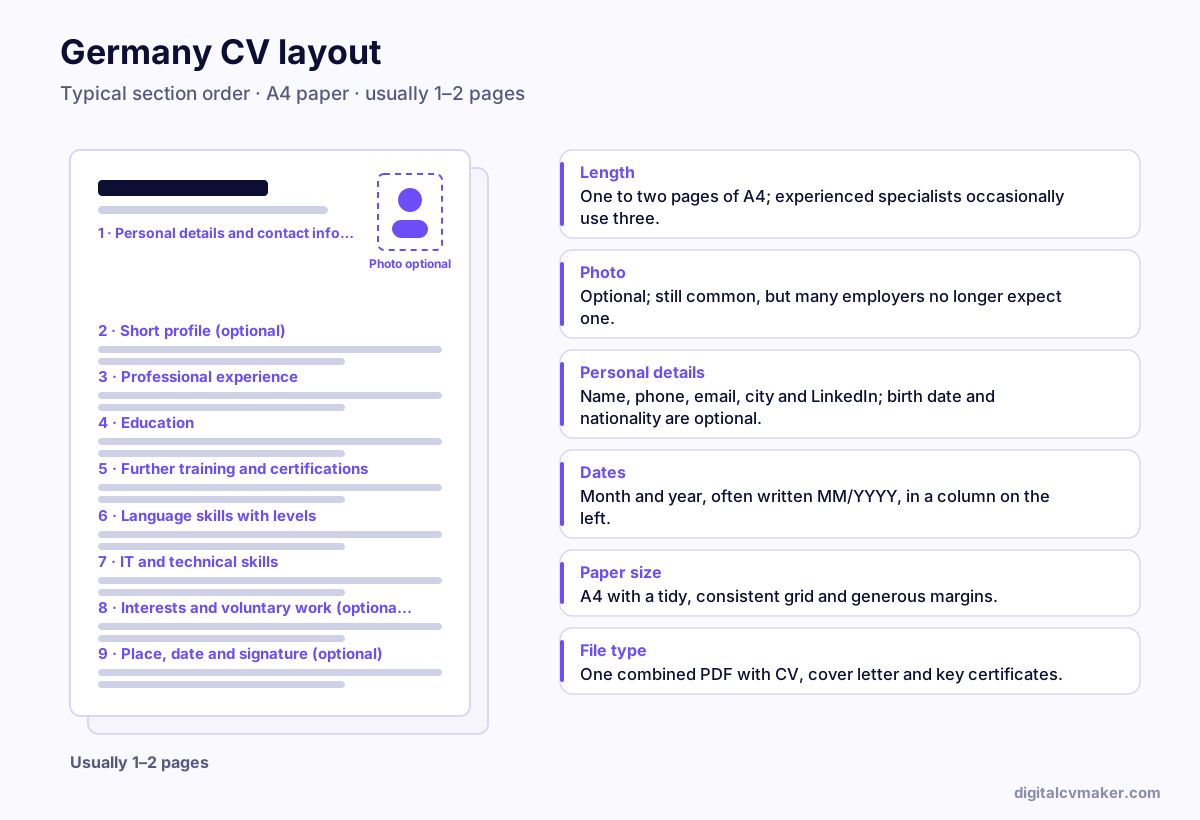
| Length | One to two pages of A4; experienced specialists occasionally use three. |
|---|---|
| Photo | Optional; still common, but many employers no longer expect one. |
| Personal details | Name, phone, email, city and LinkedIn; birth date and nationality are optional. |
| Dates | Month and year, often written MM/YYYY, in a column on the left. |
| Paper size | A4 with a tidy, consistent grid and generous margins. |
| Spelling | British or American English is fine if used consistently throughout. |
| File type | One combined PDF with CV, cover letter and key certificates. |
Free Germany CV template
Already laid out the Germany way: section order, A4 page size and placeholders to replace. No signup.
Usual section order
- Personal details and contact information
- Short profile (optional)
- Professional experience
- Education
- Further training and certifications
- Language skills with levels
- IT and technical skills
- Interests and voluntary work (optional)
- Place, date and signature (optional)
The tabular Lebenslauf layout
German recruiters are used to a very structured CV. Each entry sits on a two-column grid: the time period on the left, and the job title, employer, location and a few bullet points on the right. Headings are clear and consistent, fonts are plain and there is little decoration. Reverse chronological order is now standard, with the current role first. Aim for a document that can be scanned in seconds, because hiring teams often compare many applications side by side and value order and precision. A heavily designed, colourful template can look less serious to traditional employers, although start-ups tend to be more relaxed.
Photo, date of birth and the AGG
For many years a professional photo was a standard part of a German application. Since the General Equal Treatment Act (AGG) was introduced to protect applicants against discrimination, employers cannot insist on a photo, and many international firms actively prefer CVs without one. It is still common, however, so the choice is yours. If you include a photo, use a recent, professional headshot rather than a casual snapshot. Date of birth, nationality and marital status are likewise optional. Nationality can be useful for international applicants when it signals EU citizenship or helps explain your work permit status.
Explaining gaps and keeping the timeline complete
German employers tend to read a CV as a continuous timeline, so unexplained gaps of several months often raise questions. Fill them with a short, factual line: parental leave, caring for a relative, travel, job search, language course, relocation or illness. You do not need to give private details, and a neutral phrase such as “career break for family reasons” is enough. Military or civilian service, internships and longer periods of study abroad also belong in the timeline. Being honest and precise here builds trust, because the dates on your CV will often be compared with your certificates and references.
Certificates, references and the Arbeitszeugnis
A complete German application often includes copies of your university degree, transcripts and employment references, merged into the same PDF as the CV. German employees receive a formal written reference, the Arbeitszeugnis, when they leave a job, and recruiters are used to reading them. If you have worked abroad, attach any reference letters you received, translated into English or German where needed. Many employers now ask only for the CV at first and request certificates later, so check the advert. Where attachments are wanted, add only the most relevant ones and keep the file size manageable.
Foreign qualifications and recognition
If your degree or professional training was earned outside Germany, help the reader understand it. Give the original title, the institution’s country and, where you know it, a short note on the equivalent German level, such as Bachelor or Master. For regulated professions, including medicine, nursing, teaching, law and some engineering titles, formal recognition is usually required before you can practise. For many other roles, a Statement of Comparability from the Central Office for Foreign Education (ZAB) can reassure employers and support visa applications. Mention on your CV if recognition is complete or in progress.
Languages, skills and work authorisation
Language ability matters in Germany, even when the working language is English. List every language with a level from the Common European Framework of Reference, such as B1 or C1, and be honest, because interviewers may switch to German briefly to check. If you are learning German, say so and give your current level. Add a separate block for technical skills, tools and certifications. International applicants should also state their work status clearly, for example EU citizen, holder of a residence permit that allows work, or eligible for an EU Blue Card, so the employer can plan the hiring process.
What to include
- Precise month and year dates for every role and study period, so the timeline has no unexplained gaps.
- Language skills rated on the Common European Framework levels, including your current German level if you are learning.
- Your work authorisation status, such as EU citizenship, a residence permit or eligibility for an EU Blue Card.
- A short note on the German equivalent of foreign degrees, or the status of formal recognition where required.
- Copies of key degree certificates and references, merged into one PDF, when the advert asks for full documents.
What to leave out
- A casual or holiday photo; either use a professional headshot or leave the photo out entirely.
- Religion, political views and health details, which are not relevant and are protected under equal treatment law.
- Unexplained breaks in the timeline, since German recruiters often ask about any missing months.
- Long narrative paragraphs; the tabular layout works best with concise bullet points under each entry.
- Inflated language levels, because interviewers may test your German or English during the conversation.
Sample professional summary
Data analyst with six years’ experience in e-commerce and logistics, specialising in SQL, Python and dashboard reporting for operations teams. Built forecasting models that improved stock planning and reduced manual reporting work. Master’s degree in statistics, recognised as equivalent to a German Master. English C2, German B2. EU citizen, available to start after a three-month notice period.
Adding a personal website link
German recruiters commonly check LinkedIn and, particularly in the German-speaking market, XING profiles before an interview. A personal website is valued for tech, design, research and creative roles, where it can show projects, publications or code. Add the link to the contact block of your CV and mention it in the cover letter if it holds relevant work samples. Keep details consistent with your CV, and add a legal notice (Impressum) if the site has any business purpose.
How Germany compares
| Country | Length | Photo | Paper size |
|---|---|---|---|
| 🇮🇳 India | One page for freshers; two pages for most experienced candidates; senior profiles occasionally longer. | Optional; a plain professional headshot is acceptable but rarely required by private employers. | A4 size, with margins of roughly 2 cm on each side. |
| 🇺🇸 US | One page under about ten years of experience; two pages for senior roles. | No photo. Most US employers prefer not to see one. | US Letter size (8.5 × 11 inches), not A4. |
| 🇬🇧 UK | Two sides of A4 is the norm; one page suits graduates and school leavers. | No photo, except for acting, modelling or presenting roles. | A4 paper size with sensible margins, not US Letter. |
| 🇦🇪 UAE | Two pages is typical; three can suit senior or highly technical profiles. | Common and often expected: a plain, professional head-and-shoulders photo. | A4 size when printed. |
| 🇨🇦 Canada | One page for early-career applicants; two pages is common for experienced professionals. | Leave it out. Most Canadian employers prefer resumes without a photo. | North American Letter size, 8.5 by 11 inches, not A4. |
| 🇦🇺 Australia | Two to three pages is usual; graduates and school leavers can keep to one or two. | Leave it out; most employers prefer no photo, except for acting or modelling roles. | A4 paper size, the standard for printed documents in Australia. |
| 🇸🇬 Singapore | One to two A4 pages; senior specialists sometimes stretch to three. | Optional and less common than before; leave it out unless requested. | A4 with modest margins, the standard size in Singapore offices. |
| 🇮🇪 Ireland | Two A4 pages for most candidates; one page can work for school leavers. | Leave the photo off unless the job is in acting, modelling or presenting. | A4 page size with even margins, never US Letter. |
| 🇩🇪 Germany | One to two pages of A4; experienced specialists occasionally use three. | Optional; still common, but many employers no longer expect one. | A4 with a tidy, consistent grid and generous margins. |
| 🇪🇸 Spain | One A4 page early in your career; two pages once you have several roles. | Commonly included as a small headshot, but optional and never required. | A4, with a simple layout that survives printing and portal uploads. |
| 🇫🇷 France | One page for most early-career applicants; two pages for senior profiles. | Optional; still seen, but many candidates and employers now leave it out. | A4 with compact margins and a clear visual hierarchy. |
| 🇮🇹 Italy | One or two A4 pages; graduates usually fit everything on one. | Commonly included as a small headshot; optional, not required by law. | A4 with a sober layout; muted colours suit most sectors. |
| 🇵🇹 Portugal | One or two A4 pages; one page is common for graduates. | Often included as a small headshot, but not required. | A4, with a clean layout and readable font size. |
| 🇧🇷 Brazil | One page for most candidates; two pages for senior professionals. | Not expected; leave it off unless the advert asks for one. | A4, with a simple layout that reads well on a phone screen. |