At a glance
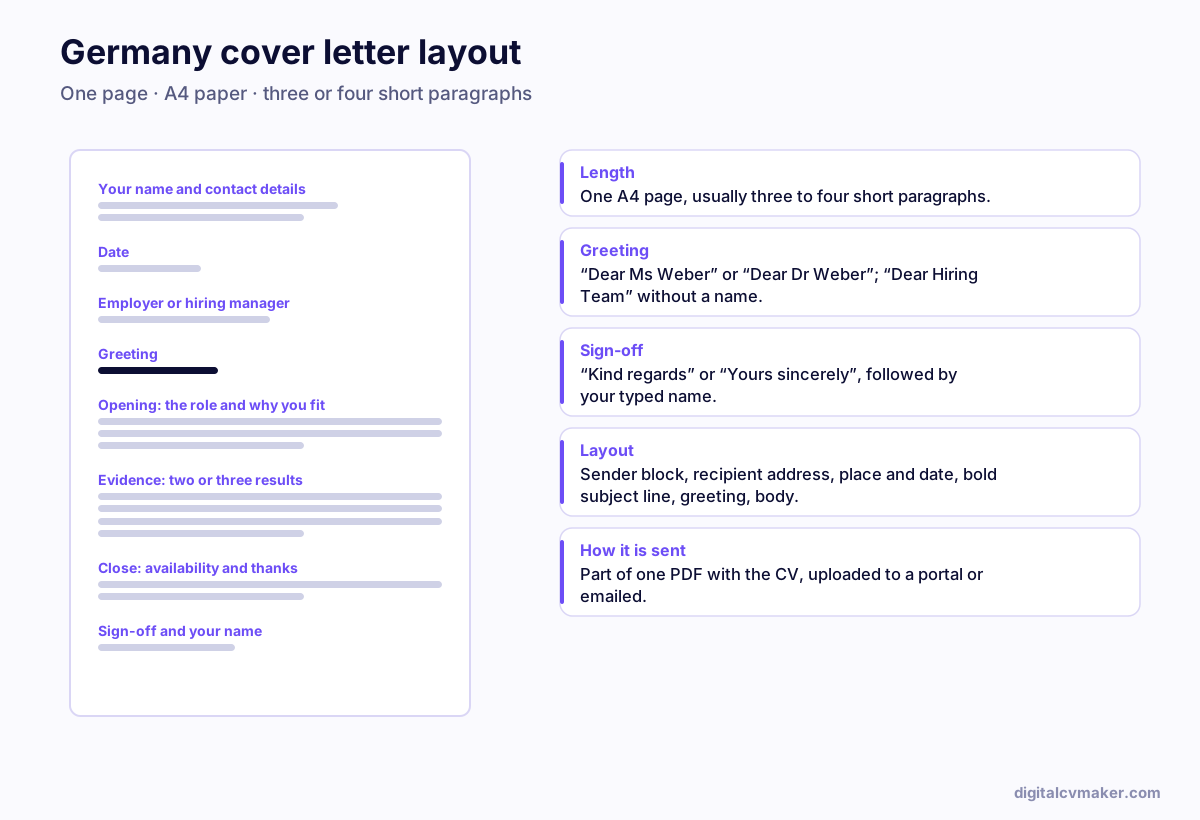
| Length | One A4 page, usually three to four short paragraphs. |
|---|---|
| Greeting | “Dear Ms Weber” or “Dear Dr Weber”; “Dear Hiring Team” without a name. |
| Sign-off | “Kind regards” or “Yours sincerely”, followed by your typed name. |
| Layout | Sender block, recipient address, place and date, bold subject line, greeting, body. |
| How it is sent | Part of one PDF with the CV, uploaded to a portal or emailed. |
Free Germany cover letter template
The sample letter below, set out on a A4 page with the local greeting and sign-off. No signup.
Letter layout and the subject line
German business letters follow a fixed structure, and an Anschreiben mirrors it. Your name and contact details sit at the top, followed by the company’s name and address on the left. The city and date appear on the right, for example “Berlin, 14 March”. Below that comes a subject line in bold that names the position and any reference number, such as “Application for the position of Backend Developer, ref. 4521”. The greeting follows, then the body. This format helps busy HR teams file and route your application correctly.
Salutations, titles and tone
Try to find the name of the hiring manager or HR contact, which is often listed in the advert. Academic titles are taken seriously in Germany, so if the contact is a doctor, write “Dear Dr Schneider”. When no name is available, “Dear Hiring Team” or “Dear Sir or Madam” is acceptable in English. The tone should be polite, precise and modest. Strong superlatives and dramatic claims can come across as exaggerated to German readers, who generally respond better to concrete facts, figures and examples.
Why this job and why you
The opening should state which position you are applying for and why it interests you, ideally linked to something specific about the company, its products or its research. The middle paragraph connects two or three requirements from the advert to your own experience, with a short example for each. International applicants can briefly explain their move to Germany, such as a partner’s relocation or long-term career plans, because employers want to know the move is considered and stable. Avoid repeating your CV line by line.
Start date, notice period and salary expectations
German adverts frequently ask for your earliest possible start date and your salary expectations. Put both in the final paragraph if requested. Notice periods in Germany are often one to three months, so employers are used to planning ahead; state yours plainly. If salary expectations are requested, give an annual gross figure or a narrow range based on research for the role and region, rather than ignoring the question. Where the advert does not mention salary, it is fine to leave the subject for the interview.
Is the Anschreiben still required?
Practice is changing. A growing number of German companies, especially in tech, have made the cover letter optional or replaced it with a few questions in the application portal. Traditional employers, the public sector, research institutions and many medium-sized firms still expect a proper letter. If the advert or portal does not mention one, a short, tailored letter is still a safe choice, because it lets you explain relocation plans, visa status and language skills that a CV alone cannot convey.
Sample cover letter
Replace the text in square brackets with your own details, and swap the examples for real results of yours.
Dear [Hiring manager's name], I am applying for the position of [Role] at [Company name], as advertised on your careers page. With five years' experience in cloud infrastructure and a strong interest in industrial software, I would welcome the chance to contribute to your platform team in Munich. In my current role I maintain the deployment pipeline and monitoring for a group of customer-facing services. I led the migration of our build process to containers, which shortened release times and reduced failed deployments. I also documented our incident procedures and trained two junior colleagues, experience that matches your requirement for someone who can share knowledge across the team. [Company name] appeals to me because of your focus on reliable systems for manufacturing clients, where uptime has a direct effect on production. I am relocating to Germany with my family and hold an EU passport, so no work permit is required. My German is currently at B1 level, and I am continuing with an evening course. My notice period is three months, so my earliest possible start date would be the first of the following quarter. As requested, my salary expectations are included in the application form. My CV, degree certificate and reference letters are attached in one PDF. I would be glad to discuss my application with you in an interview. Kind regards, [Your name]
Tips
- Reply in the language of the job advert; an English advert invites an English letter, while a German one usually expects German.
- Use a bold subject line naming the exact position and reference number, as German HR teams rely on it to route applications.
- State your earliest start date and notice period plainly, since German employers plan hiring around fixed notice periods.
- Replace superlatives with facts and figures, because a measured, precise tone tends to read as more credible to German recruiters.
How Germany compares
| Country | Length | Greeting | Sign-off |
|---|---|---|---|
| 🇮🇳 India | Three to four short paragraphs, well under one page. | Dear Mr/Ms [Surname]; Dear Hiring Manager when no name is known. | Regards, Best regards or Yours sincerely, followed by your full name and phone number. |
| 🇺🇸 US | Under one page, roughly 250 to 400 words in three or four paragraphs. | Dear Ms. Rivera or Dear Hiring Manager; avoid To Whom It May Concern. | Sincerely, followed by your typed full name. |
| 🇬🇧 UK | One page, roughly 250 to 400 words, in three or four paragraphs. | “Dear Ms Patel” with a name; “Dear Sir or Madam” or “Dear Hiring Manager” without. | “Yours sincerely” after a named greeting, “Yours faithfully” after Sir or Madam. |
| 🇦🇪 UAE | Under one page, usually 250 to 350 words in three or four paragraphs. | “Dear Mr/Ms [Surname]”, or “Dear Hiring Manager” if no name is given. | “Yours sincerely” with a name; “Kind regards” is fine for email applications. |
| 🇨🇦 Canada | One page, roughly 250 to 400 words in three or four paragraphs. | Dear [Hiring manager’s name], or Dear Hiring Manager, if no name is available. | Sincerely, or Kind regards, followed by your full name. |
| 🇦🇺 Australia | One page, roughly three to five paragraphs; shorter is fine in an email. | “Dear” plus title and surname when known; otherwise “Dear Hiring Manager”. | “Kind regards” is most common; “Yours sincerely” suits more formal applications. |
| 🇸🇬 Singapore | One page, typically 200 to 350 words across three or four paragraphs. | “Dear Ms Lim” when named; otherwise “Dear Hiring Manager”. | “Yours sincerely” for formal letters, “Best regards” for email applications. |
| 🇮🇪 Ireland | One page, about 250 to 400 words, split into three or four paragraphs. | “Dear Ms Byrne” when you know the name; otherwise “Dear Hiring Manager”. | “Yours sincerely” for a named reader, “Yours faithfully” after “Dear Sir or Madam”. |
| 🇩🇪 Germany | One A4 page, usually three to four short paragraphs. | “Dear Ms Weber” or “Dear Dr Weber”; “Dear Hiring Team” without a name. | “Kind regards” or “Yours sincerely”, followed by your typed name. |
| 🇪🇸 Spain | Half a page to one page; three or four short paragraphs. | “Dear Ms García” or “Dear Mr García”; “Dear Hiring Team” if no name is given. | “Kind regards” or “Yours sincerely”, then your full name and phone number. |
| 🇫🇷 France | One A4 page, with three main paragraphs and a short closing. | “Dear Sir or Madam”, or “Dear Ms Martin” when you know the recipient. | “Yours faithfully” or “Yours sincerely”, matching a formal French closing line. |
| 🇮🇹 Italy | Up to one A4 page; three or four paragraphs. | “Dear Dr Rossi” where a title is known; “Dear Hiring Manager” otherwise. | “Kind regards” or “Yours sincerely”, followed by your full name. |
| 🇵🇹 Portugal | Under one page; three or four concise paragraphs. | “Dear Ms Silva” or “Dear Mr Silva”; “Dear Sir or Madam” without a name. | “Kind regards” or “Yours sincerely”, with your name and phone number. |
| 🇧🇷 Brazil | Short: half a page, or three brief paragraphs in an email. | “Dear Ms Souza” or “Dear Mr Souza”; “Dear Hiring Team” if no name is listed. | “Kind regards” or “Best regards”, then your name, phone and LinkedIn. |