At a glance
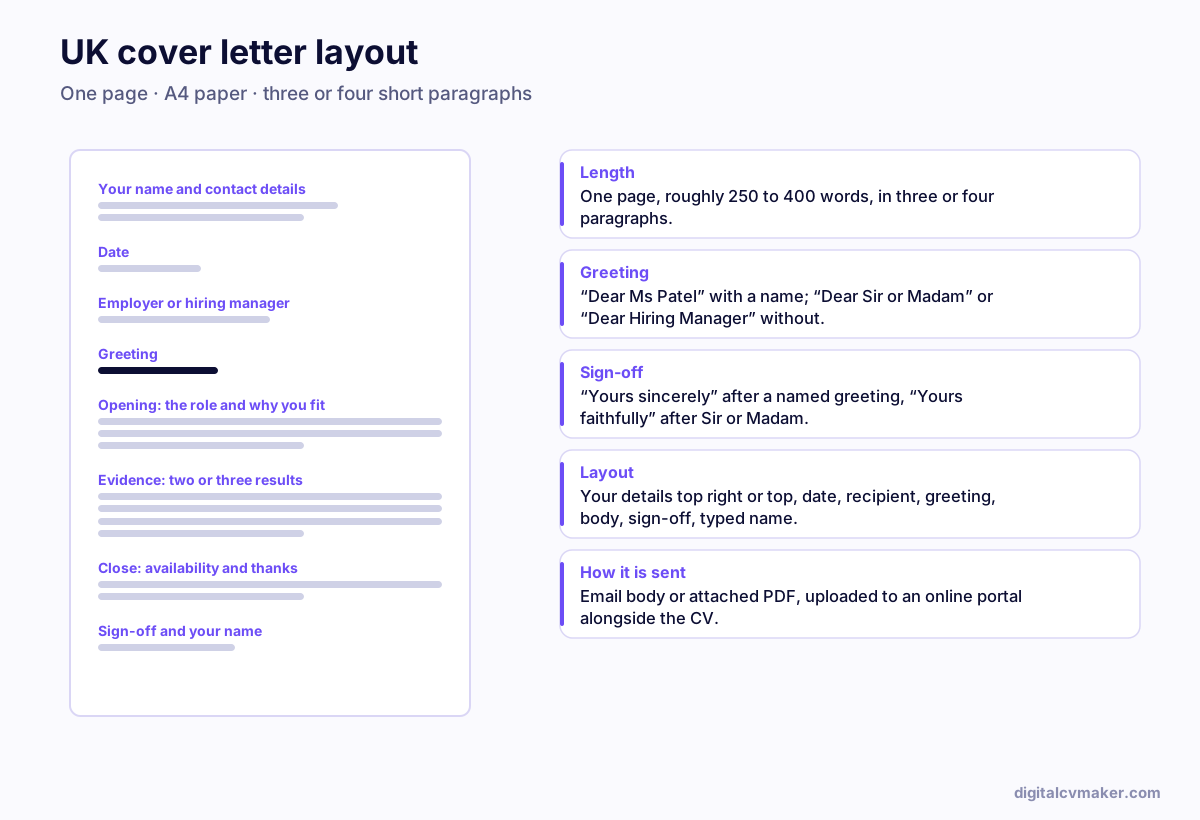
| Length | One page, roughly 250 to 400 words, in three or four paragraphs. |
|---|---|
| Greeting | “Dear Ms Patel” with a name; “Dear Sir or Madam” or “Dear Hiring Manager” without. |
| Sign-off | “Yours sincerely” after a named greeting, “Yours faithfully” after Sir or Madam. |
| Layout | Your details top right or top, date, recipient, greeting, body, sign-off, typed name. |
| How it is sent | Email body or attached PDF, uploaded to an online portal alongside the CV. |
Free UK cover letter template
The sample letter below, set out on a A4 page with the local greeting and sign-off. No signup.
Greeting and the sincerely or faithfully rule
British letter etiquette still matters to many readers. If you know the hiring manager’s name, write “Dear Mr Jones” or “Dear Ms Jones”, with no full stop after Mr, Ms or Dr, and close with “Yours sincerely”. If you genuinely cannot find a name, “Dear Sir or Madam” pairs with “Yours faithfully”. “Dear Hiring Manager” is widely accepted in modern recruitment and usually closes with “Yours sincerely” or “Kind regards”. Check the advert, the company website and LinkedIn before falling back on a generic greeting, because a named letter looks more considered.
Opening paragraph
State the role you are applying for, where you saw it and, if relevant, a reference number from the advert. Add one sentence that explains why you are a strong match, drawing on your most relevant experience or qualification. British readers tend to appreciate a direct, understated opening rather than dramatic claims, so avoid starting with a question or a quotation. If someone inside the organisation suggested you apply, mention their name here, since a personal referral can prompt a closer read.
Middle paragraphs: evidence against the person specification
Many UK adverts, especially in the public sector, charities, education and the NHS, include a person specification listing essential and desirable criteria. Use one or two paragraphs to show how you meet the most important of these, with a brief example for each. Pick achievements that are not simply repeated from your CV, or add context the CV cannot give. Explain why this organisation appeals to you in specific terms, such as its services, clients or recent projects, rather than general praise.
Closing paragraph and practical details
Finish by restating your interest and saying you would welcome the chance to discuss the role at interview. This is also a sensible place for practical details, such as your notice period, your availability to start or your right to work if sponsorship might be a concern. Keep the tone polite and confident, but avoid pressure phrases such as “I look forward to your call next week”. Thank the reader for their time, then sign off in the matching form.
Formatting a UK cover letter
Use the same font and header as your CV so the two documents look like a set. In a traditional printed layout, your address sits top right, the employer’s address sits on the left below it, and the date is written in the British style, such as “14 March”, with the day before the month. For email applications, the letter goes in the message body with a clear subject line containing the job title and reference. Leave a blank line between paragraphs and keep margins generous.
Sample cover letter
Replace the text in square brackets with your own details, and swap the examples for real results of yours.
Dear [Hiring manager's name], I am writing to apply for the position of [Role] at [Company name], as advertised on your careers page. With five years' experience in project coordination across construction and facilities management, I believe I can bring organised, reliable support to your delivery team from the start. In my current role I coordinate schedules, budgets and supplier contracts for a portfolio of refurbishment projects. Last year I introduced a shared tracking system that reduced late invoice approvals and gave site managers a clearer weekly view of progress. I also prepare monthly reports for directors and act as the main contact for three regular subcontractors, which has strengthened my negotiation and communication skills. I am particularly interested in [Company name] because of your focus on energy-efficient retrofits in the public sector. Your person specification asks for experience of stakeholder management and working to tight deadlines, and I have attached my CV with examples of both. I hold a recognised project management qualification and a full UK driving licence. My notice period is one month, and I have full right to work in the UK. I would welcome the opportunity to discuss how my experience could support your projects, and I am available for interview at your convenience. Thank you for considering my application. Yours sincerely, [Your name]
Tips
- Match your sign-off to your greeting, because some British readers still notice when “Yours faithfully” follows a named salutation.
- Mirror the essential criteria from the person specification in the same order, so shortlisters can tick them off quickly.
- Keep the tone measured and factual; understated confidence usually reads better to UK employers than bold self-promotion.
- Mention your notice period and right to work briefly near the end if either could affect the employer’s decision.
How UK compares
| Country | Length | Greeting | Sign-off |
|---|---|---|---|
| 🇮🇳 India | Three to four short paragraphs, well under one page. | Dear Mr/Ms [Surname]; Dear Hiring Manager when no name is known. | Regards, Best regards or Yours sincerely, followed by your full name and phone number. |
| 🇺🇸 US | Under one page, roughly 250 to 400 words in three or four paragraphs. | Dear Ms. Rivera or Dear Hiring Manager; avoid To Whom It May Concern. | Sincerely, followed by your typed full name. |
| 🇬🇧 UK | One page, roughly 250 to 400 words, in three or four paragraphs. | “Dear Ms Patel” with a name; “Dear Sir or Madam” or “Dear Hiring Manager” without. | “Yours sincerely” after a named greeting, “Yours faithfully” after Sir or Madam. |
| 🇦🇪 UAE | Under one page, usually 250 to 350 words in three or four paragraphs. | “Dear Mr/Ms [Surname]”, or “Dear Hiring Manager” if no name is given. | “Yours sincerely” with a name; “Kind regards” is fine for email applications. |
| 🇨🇦 Canada | One page, roughly 250 to 400 words in three or four paragraphs. | Dear [Hiring manager’s name], or Dear Hiring Manager, if no name is available. | Sincerely, or Kind regards, followed by your full name. |
| 🇦🇺 Australia | One page, roughly three to five paragraphs; shorter is fine in an email. | “Dear” plus title and surname when known; otherwise “Dear Hiring Manager”. | “Kind regards” is most common; “Yours sincerely” suits more formal applications. |
| 🇸🇬 Singapore | One page, typically 200 to 350 words across three or four paragraphs. | “Dear Ms Lim” when named; otherwise “Dear Hiring Manager”. | “Yours sincerely” for formal letters, “Best regards” for email applications. |
| 🇮🇪 Ireland | One page, about 250 to 400 words, split into three or four paragraphs. | “Dear Ms Byrne” when you know the name; otherwise “Dear Hiring Manager”. | “Yours sincerely” for a named reader, “Yours faithfully” after “Dear Sir or Madam”. |
| 🇩🇪 Germany | One A4 page, usually three to four short paragraphs. | “Dear Ms Weber” or “Dear Dr Weber”; “Dear Hiring Team” without a name. | “Kind regards” or “Yours sincerely”, followed by your typed name. |
| 🇪🇸 Spain | Half a page to one page; three or four short paragraphs. | “Dear Ms García” or “Dear Mr García”; “Dear Hiring Team” if no name is given. | “Kind regards” or “Yours sincerely”, then your full name and phone number. |
| 🇫🇷 France | One A4 page, with three main paragraphs and a short closing. | “Dear Sir or Madam”, or “Dear Ms Martin” when you know the recipient. | “Yours faithfully” or “Yours sincerely”, matching a formal French closing line. |
| 🇮🇹 Italy | Up to one A4 page; three or four paragraphs. | “Dear Dr Rossi” where a title is known; “Dear Hiring Manager” otherwise. | “Kind regards” or “Yours sincerely”, followed by your full name. |
| 🇵🇹 Portugal | Under one page; three or four concise paragraphs. | “Dear Ms Silva” or “Dear Mr Silva”; “Dear Sir or Madam” without a name. | “Kind regards” or “Yours sincerely”, with your name and phone number. |
| 🇧🇷 Brazil | Short: half a page, or three brief paragraphs in an email. | “Dear Ms Souza” or “Dear Mr Souza”; “Dear Hiring Team” if no name is listed. | “Kind regards” or “Best regards”, then your name, phone and LinkedIn. |
Applying to United Kingdom from India?
Registration steps, what to change in an Indian-style CV and sample bullets for: