Registration, licensing and visa rules change. Treat this as an overview and confirm every step on the official regulator and immigration websites before you apply or pay anyone.
Steps before your CV is read
- Apply for qualified teacher status in England. In England, teachers trained overseas can apply for QTS through the Teaching Regulation Agency’s online service. You usually need a teaching qualification at the level of a UK bachelor’s degree, such as a B.Ed. or a degree plus a teacher training qualification, along with experience teaching children and evidence of your English and subject knowledge. The criteria are reviewed from time to time, so read the current guidance before applying.
- Know the rules in Scotland, Wales and Northern Ireland. The other UK nations register teachers separately. Scotland uses the General Teaching Council for Scotland, Wales the Education Workforce Council and Northern Ireland the General Teaching Council for Northern Ireland. Each has its own process for overseas-trained teachers, and recognition between them is not always automatic, so decide which nation you are targeting before you start an application.
- Find a school that can sponsor you. Most Indian teachers need a Skilled Worker visa, which requires a job offer from a school or trust holding a sponsor licence. Demand for overseas teachers is usually strongest in shortage subjects, particularly the sciences, mathematics and languages. State schools, academy trusts and independent schools all recruit internationally, but not every school sponsors visas, so check the advert or ask before investing time in an application.
- Complete safeguarding and background checks. UK schools must carry out safer recruitment checks before you start. These normally include an enhanced DBS check once you are in the UK, a police clearance certificate from India and any other country you have lived in, references covering your recent employment and a right to work check. Keep copies of your documents ready, since delays in these checks can push back your start date.
What to change in an Indian-style CV
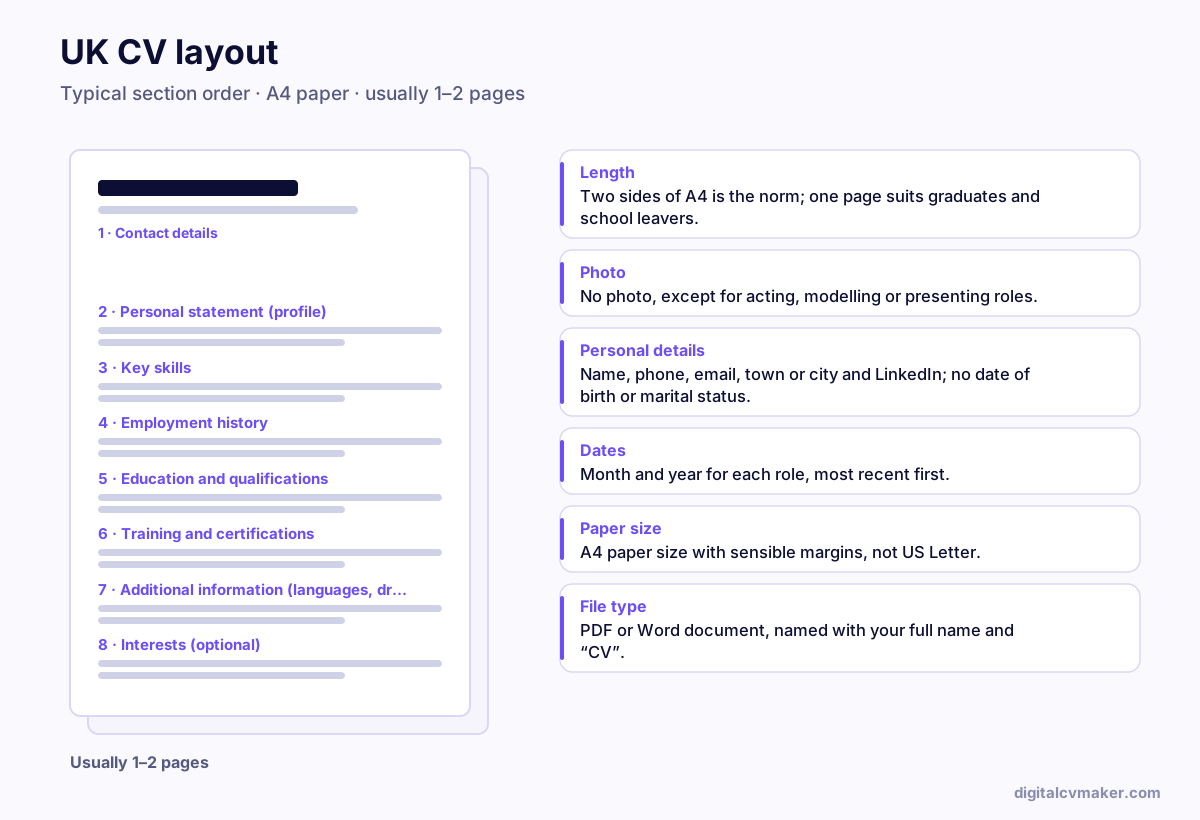
- Remove your photo, date of birth, religion and marital status, and add a line stating your QTS status and whether you need visa sponsorship.
- Translate grades into UK year groups and key stages, for example CBSE Class 9 and 10 mathematics described as equivalent to Years 10 and 11.
- Replace general duty lists with pupil outcomes, such as improved board results, reading gains or intervention groups that narrowed attainment gaps.
- Account for every period since leaving education, because UK safer recruitment practice expects any gaps in employment to be explained.
- Add a short safeguarding and pastoral section showing child protection training, form tutor duties and how you supported pupils with additional needs.
Explaining Indian boards and school types
A UK head teacher may know little about the difference between CBSE, CISCE and state boards, so add a brief descriptor under each school. Mention the board, the type of school, such as private, government-aided or international, and the age range you taught. If you delivered IGCSE, A level or IB programmes at an international school, highlight it, since those courses connect directly to what UK pupils study. A short note on the medium of instruction also helps, particularly when you taught entirely in English, as it supports your case on language.
Class sizes, workload and differentiation
Class sizes in Indian schools are often larger than in the UK, and describing them honestly can work in your favour. State the number of pupils per class, the sections you taught and your weekly teaching load. UK schools then want to see how you adapted lessons for different abilities, so explain your approach to differentiation, formative assessment and feedback. Give an example of support for pupils with special educational needs and disabilities, known in England as SEND, or for learners who speak English as an additional language.
Evidence of pupil progress and responsibility
UK schools track progress closely, and your CV should show you did too. Where you can support it, give board examination pass rates, the share of pupils reaching top grades or gains between internal assessments, and describe how you used data to plan interventions. Keep figures modest and verifiable, because referees may be asked about them. Responsibilities such as head of department, examination coordinator, house leader or class teacher in charge of a group’s welfare translate well, as UK schools value staff who contribute beyond their own lessons.
Qualifications, training and wider school life
List your B.Ed. or equivalent teaching qualification with the university and completion date, followed by your subject degree and any master’s degree. Note the subject specialisms and the age range your training covered. Mention CTET or a state teacher eligibility test only briefly, with a few words of explanation, as UK readers will not recognise the names. Include professional development in assessment, digital tools or behaviour management, and list extracurricular work such as clubs, trips, science fairs or sports coaching, since UK schools expect staff to take part in activities outside the classroom.
Sample profile and experience bullets
Mathematics teacher with eight years’ experience teaching pupils aged 11 to 18 in CBSE and international schools in India, including IGCSE and A level classes. Skilled at planning differentiated lessons for mixed-ability groups of up to 40, using assessment data to target intervention and preparing students for external examinations. Former head of department and form tutor with child protection training. Applying for QTS in England and seeking a sponsored secondary mathematics post.
Taught mathematics to five sections across Class 9 and 10, around 190 pupils, raising the department’s board pass rate through targeted revision groups.
Led a department of six teachers, coordinating schemes of work, moderation of internal assessments and fortnightly lesson observations with written feedback.
Introduced weekly low-stakes quizzes and progress tracking for Class 9, helping lower-attaining pupils close gaps well before board examinations.
Served as form tutor for 38 pupils, working with parents and the school counsellor on attendance, wellbeing and safeguarding concerns.
Documents to keep ready
- Current passport and any previous passports
- B.Ed. or teaching qualification certificate
- Degree certificates and transcripts
- English language test result, if required
- Police clearance certificate from India
- Experience letters and referee contact details
- QTS award letter or application confirmation
- Tuberculosis clearance from a Home Office approved clinic
Free UK CV template
Laid out the UK way, ready for your own details. No signup.