At a glance
| Length | Under one page; three or four concise paragraphs. |
|---|---|
| Greeting | “Dear Ms Silva” or “Dear Mr Silva”; “Dear Sir or Madam” without a name. |
| Sign-off | “Kind regards” or “Yours sincerely”, with your name and phone number. |
| Layout | Contact details, date, recipient, subject line, greeting, body, sign-off. |
| How it is sent | A PDF with the CV, or in the body of the email when applying directly. |
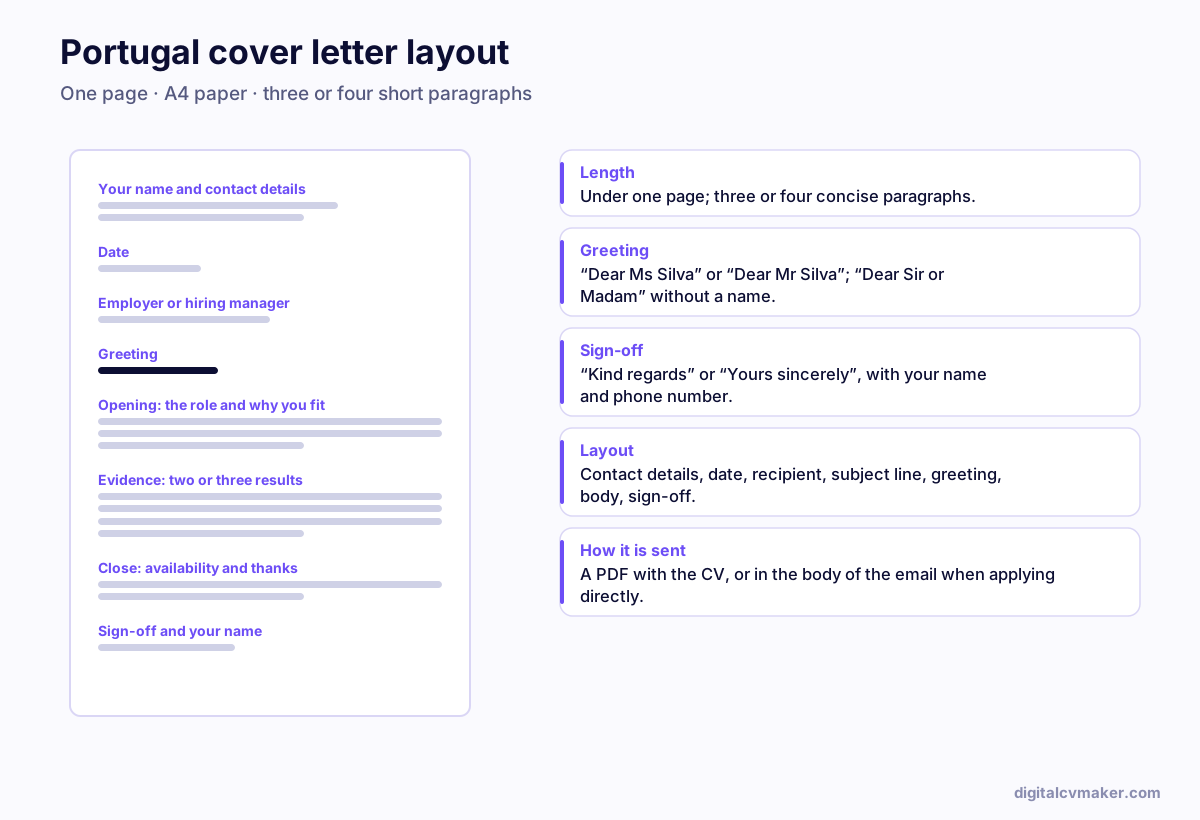
Free Portugal cover letter template
The sample letter below, set out on a A4 page with the local greeting and sign-off. No signup.
Formal courtesy in Portuguese letters
Portuguese business correspondence uses formal forms of address. In Portuguese, a letter to an unknown recipient typically opens with “Exmos. Senhores”, and one to a named person with “Exma. Senhora” or “Exmo. Senhor”, followed by the surname or title. In an English letter, the same courtesy comes through in “Dear Ms Silva”, “Dear Mr Silva” or “Dear Sir or Madam”. Academic and professional titles, such as Doutor or Engenheiro, are also used in Portugal, so if you know the recipient’s title, it is polite to use it.
What the letter should cover
Open by naming the role and where you saw it. In the main paragraph, choose two or three requirements from the advert and show, with brief examples, how your experience meets them. Then explain why the company interests you, mentioning its sector, projects or values. If you are relocating to Portugal or applying from another country, say so briefly, along with your work status and availability. End with a polite request for an interview and thank the reader for their time. The whole letter should fit comfortably on one page.
Email applications
Many applications in Portugal are sent by email or through company portals. When you email an application, use a clear subject line with the job title and reference, place a short version of your cover letter in the body and attach the CV as a PDF with your name in the file name. Keep the email polite and well formatted, and include your phone number in the signature. Recruiters often reply by phone, so make sure your voicemail is set up and your number includes the country code.
Tone and length
Portuguese recruiters appreciate letters that are warm and professional without being long. Avoid heavy superlatives and general statements about your personality; specific examples of what you achieved will carry more weight. A few sentences about why you want to work in Portugal, or in this region, can help international applicants, because employers want to know the move is planned. Keep paragraphs short and leave white space, so the letter is easy to read on screen as well as on paper.
Speculative applications and graduate roles
Speculative applications, or candidaturas espontâneas, are a normal way to approach Portuguese companies, especially in consulting, engineering, technology and hospitality. Many companies also run internship and graduate programmes with fixed application periods. In both cases, a tailored letter makes a difference. For speculative applications, explain the type of role you are seeking and what you could offer. For graduate programmes, connect your studies, projects and internships to the programme’s focus, and mention your availability to start.
Sample cover letter
Replace the text in square brackets with your own details, and swap the examples for real results of yours.
Dear [Hiring manager's name], I am applying for the position of [Role] at [Company name], as advertised on your website. I am a software developer with five years' experience building web applications for clients in retail and travel, and I would like to join your engineering team in Lisbon. In my current role I work on a booking platform used by travellers across Europe. I rebuilt the payment flow to make it easier to maintain, added automated tests that catch problems before release and regularly review code for two junior developers. Your advert mentions experience with modern front-end frameworks and a habit of writing tests, and both are central to how I work. [Company name] stands out to me because of your focus on accessible digital products and your mix of local and international clients. I am relocating to Lisbon with my family, I hold an EU passport and I am learning Portuguese, currently at A2 level, with weekly lessons. I can start after a one-month notice period and would be happy to meet online or in person. My CV is attached as a PDF. Thank you for your time and consideration. Kind regards, [Your name]
Tips
- Use a title and surname in the greeting, reflecting the formal courtesy common in Portuguese correspondence.
- When applying by email, keep a short version of the letter in the message body and attach the CV as a PDF.
- Explain briefly why you want to work in Portugal, so the employer sees the move as planned and stable.
- Mention your Portuguese level, even if it is basic, because it shows commitment to working with local teams.
How Portugal compares
| Country | Length | Greeting | Sign-off |
|---|---|---|---|
| 🇮🇳 India | Three to four short paragraphs, well under one page. | Dear Mr/Ms [Surname]; Dear Hiring Manager when no name is known. | Regards, Best regards or Yours sincerely, followed by your full name and phone number. |
| 🇺🇸 US | Under one page, roughly 250 to 400 words in three or four paragraphs. | Dear Ms. Rivera or Dear Hiring Manager; avoid To Whom It May Concern. | Sincerely, followed by your typed full name. |
| 🇬🇧 UK | One page, roughly 250 to 400 words, in three or four paragraphs. | “Dear Ms Patel” with a name; “Dear Sir or Madam” or “Dear Hiring Manager” without. | “Yours sincerely” after a named greeting, “Yours faithfully” after Sir or Madam. |
| 🇦🇪 UAE | Under one page, usually 250 to 350 words in three or four paragraphs. | “Dear Mr/Ms [Surname]”, or “Dear Hiring Manager” if no name is given. | “Yours sincerely” with a name; “Kind regards” is fine for email applications. |
| 🇨🇦 Canada | One page, roughly 250 to 400 words in three or four paragraphs. | Dear [Hiring manager’s name], or Dear Hiring Manager, if no name is available. | Sincerely, or Kind regards, followed by your full name. |
| 🇦🇺 Australia | One page, roughly three to five paragraphs; shorter is fine in an email. | “Dear” plus title and surname when known; otherwise “Dear Hiring Manager”. | “Kind regards” is most common; “Yours sincerely” suits more formal applications. |
| 🇸🇬 Singapore | One page, typically 200 to 350 words across three or four paragraphs. | “Dear Ms Lim” when named; otherwise “Dear Hiring Manager”. | “Yours sincerely” for formal letters, “Best regards” for email applications. |
| 🇮🇪 Ireland | One page, about 250 to 400 words, split into three or four paragraphs. | “Dear Ms Byrne” when you know the name; otherwise “Dear Hiring Manager”. | “Yours sincerely” for a named reader, “Yours faithfully” after “Dear Sir or Madam”. |
| 🇩🇪 Germany | One A4 page, usually three to four short paragraphs. | “Dear Ms Weber” or “Dear Dr Weber”; “Dear Hiring Team” without a name. | “Kind regards” or “Yours sincerely”, followed by your typed name. |
| 🇪🇸 Spain | Half a page to one page; three or four short paragraphs. | “Dear Ms García” or “Dear Mr García”; “Dear Hiring Team” if no name is given. | “Kind regards” or “Yours sincerely”, then your full name and phone number. |
| 🇫🇷 France | One A4 page, with three main paragraphs and a short closing. | “Dear Sir or Madam”, or “Dear Ms Martin” when you know the recipient. | “Yours faithfully” or “Yours sincerely”, matching a formal French closing line. |
| 🇮🇹 Italy | Up to one A4 page; three or four paragraphs. | “Dear Dr Rossi” where a title is known; “Dear Hiring Manager” otherwise. | “Kind regards” or “Yours sincerely”, followed by your full name. |
| 🇵🇹 Portugal | Under one page; three or four concise paragraphs. | “Dear Ms Silva” or “Dear Mr Silva”; “Dear Sir or Madam” without a name. | “Kind regards” or “Yours sincerely”, with your name and phone number. |
| 🇧🇷 Brazil | Short: half a page, or three brief paragraphs in an email. | “Dear Ms Souza” or “Dear Mr Souza”; “Dear Hiring Team” if no name is listed. | “Kind regards” or “Best regards”, then your name, phone and LinkedIn. |