At a glance
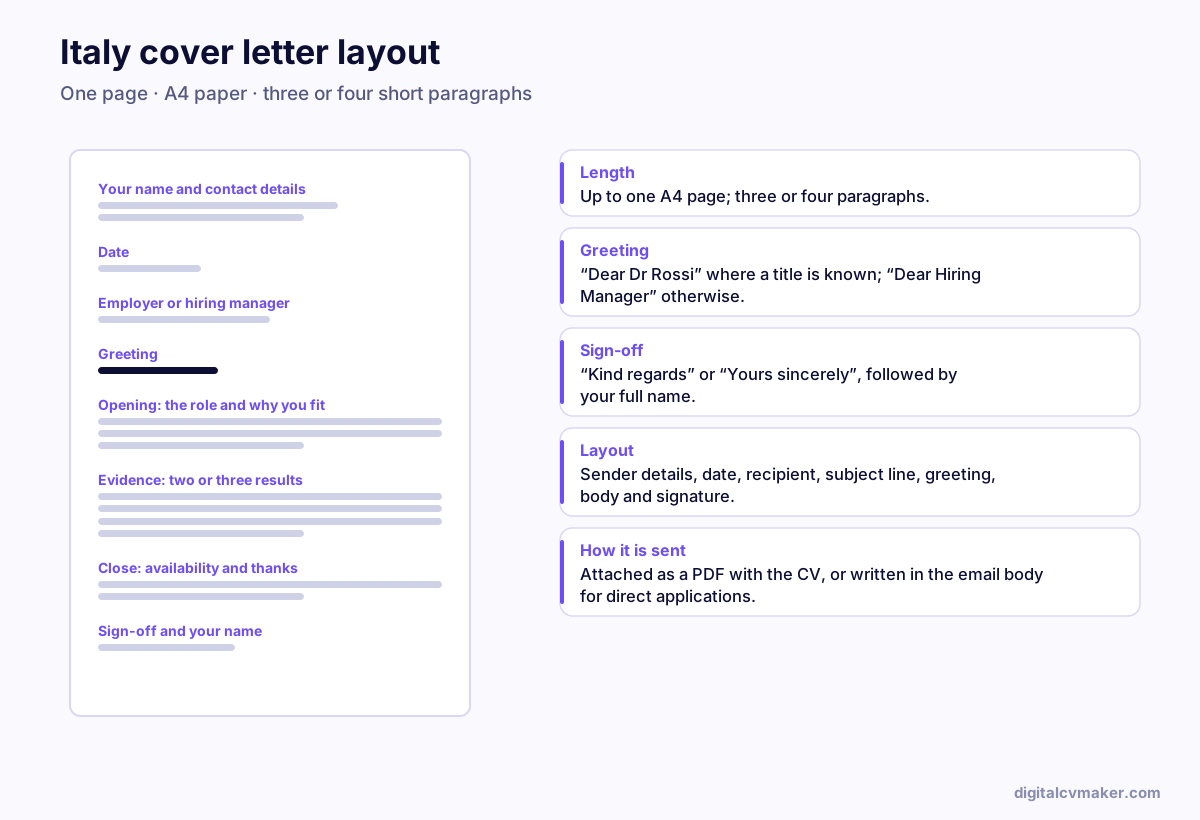
| Length | Up to one A4 page; three or four paragraphs. |
|---|---|
| Greeting | “Dear Dr Rossi” where a title is known; “Dear Hiring Manager” otherwise. |
| Sign-off | “Kind regards” or “Yours sincerely”, followed by your full name. |
| Layout | Sender details, date, recipient, subject line, greeting, body and signature. |
| How it is sent | Attached as a PDF with the CV, or written in the email body for direct applications. |
Free Italy cover letter template
The sample letter below, set out on a A4 page with the local greeting and sign-off. No signup.
Structure and length
An Italian cover letter follows a familiar structure: your details, the date, the recipient, a subject line naming the role, a greeting, three or four paragraphs and a formal close. The opening names the position and explains how you heard about it. The middle paragraphs connect your experience to the advert with specific examples, and the closing paragraph confirms your interest and availability for an interview. One page is the maximum; Italian recruiters appreciate letters that are complete but not padded with generic statements.
Titles and greetings
Titles are used more often in Italy than in many English-speaking countries. Graduates are commonly addressed as Dottore or Dottoressa, and engineers or lawyers may use their professional title. In an English letter, “Dear Dr Rossi” is a natural way to show the same respect when you know the recipient holds a degree, and “Dear Ms Rossi” or “Dear Mr Rossi” is always acceptable. When no name is available, “Dear Hiring Manager” or “Dear Sir or Madam” works. Avoid first names unless the recipient has already used yours.
Tone and content
Italian business writing tends to be polite and somewhat formal, with complete sentences and careful phrasing. At the same time, recruiters look for a clear reason why you want this particular job. Mention something concrete about the company, such as its products, markets or projects, and explain how your experience fits. Keep claims modest and supported by examples. If you are relocating to Italy, say so briefly and mention your work status and Italian level, so the reader can picture you working with the team.
Applying by email
Many Italian companies, especially smaller ones, receive applications by email. In that case, write a short subject line with the job title and any reference code, keep a condensed version of your letter in the body of the email and attach the CV as a PDF. Use a professional email address and include your phone number below your name. If you are sending a speculative application, known as an autocandidatura, address it to a named manager or the human resources contact, and explain which type of role interests you.
Public competitions and formal calls
Public-sector jobs in Italy are usually filled through formal competitions, the concorsi pubblici, and calls for applications at universities and research bodies. These follow their own rules: the advert specifies the documents to submit, the format of the CV and the deadline, and a cover letter is often not part of the process. Read the call carefully and follow it exactly, including any requirement to use a European format CV or to sign self-declarations. Private employers, by contrast, generally welcome a tailored cover letter.
Sample cover letter
Replace the text in square brackets with your own details, and swap the examples for real results of yours.
Dear [Hiring manager's name], I am writing to apply for the position of [Role] at [Company name], advertised on your careers page. With six years' experience in supply chain planning for consumer goods, I would be glad to contribute to your logistics team in Milan. In my current role I plan production and distribution for a range of food products sold across several European markets. I redesigned our weekly planning meeting around a shared dashboard, which made stock issues visible earlier and reduced last-minute changes for the warehouse. I also work with suppliers on delivery schedules and with sales teams on seasonal forecasts, which matches the cross-functional work described in your advert. I am drawn to [Company name] because of your focus on quality products and your growth in export markets, an area where my experience could be useful from the start. I am an EU citizen and will move to Milan next month; my Italian is at B2 level and I am continuing with lessons. I would be happy to discuss my application in an interview, online or in person. My CV is attached as a PDF. Kind regards, [Your name]
Tips
- Use a professional or academic title in the greeting when you know it, as Italian correspondence often does.
- Keep a subject line with the job title and reference code, especially when applying by email.
- For public competitions, follow the call’s instructions exactly instead of sending a standard cover letter.
- Mention your Italian level and relocation plans in one or two sentences so the recruiter can judge your fit.
How Italy compares
| Country | Length | Greeting | Sign-off |
|---|---|---|---|
| 🇮🇳 India | Three to four short paragraphs, well under one page. | Dear Mr/Ms [Surname]; Dear Hiring Manager when no name is known. | Regards, Best regards or Yours sincerely, followed by your full name and phone number. |
| 🇺🇸 US | Under one page, roughly 250 to 400 words in three or four paragraphs. | Dear Ms. Rivera or Dear Hiring Manager; avoid To Whom It May Concern. | Sincerely, followed by your typed full name. |
| 🇬🇧 UK | One page, roughly 250 to 400 words, in three or four paragraphs. | “Dear Ms Patel” with a name; “Dear Sir or Madam” or “Dear Hiring Manager” without. | “Yours sincerely” after a named greeting, “Yours faithfully” after Sir or Madam. |
| 🇦🇪 UAE | Under one page, usually 250 to 350 words in three or four paragraphs. | “Dear Mr/Ms [Surname]”, or “Dear Hiring Manager” if no name is given. | “Yours sincerely” with a name; “Kind regards” is fine for email applications. |
| 🇨🇦 Canada | One page, roughly 250 to 400 words in three or four paragraphs. | Dear [Hiring manager’s name], or Dear Hiring Manager, if no name is available. | Sincerely, or Kind regards, followed by your full name. |
| 🇦🇺 Australia | One page, roughly three to five paragraphs; shorter is fine in an email. | “Dear” plus title and surname when known; otherwise “Dear Hiring Manager”. | “Kind regards” is most common; “Yours sincerely” suits more formal applications. |
| 🇸🇬 Singapore | One page, typically 200 to 350 words across three or four paragraphs. | “Dear Ms Lim” when named; otherwise “Dear Hiring Manager”. | “Yours sincerely” for formal letters, “Best regards” for email applications. |
| 🇮🇪 Ireland | One page, about 250 to 400 words, split into three or four paragraphs. | “Dear Ms Byrne” when you know the name; otherwise “Dear Hiring Manager”. | “Yours sincerely” for a named reader, “Yours faithfully” after “Dear Sir or Madam”. |
| 🇩🇪 Germany | One A4 page, usually three to four short paragraphs. | “Dear Ms Weber” or “Dear Dr Weber”; “Dear Hiring Team” without a name. | “Kind regards” or “Yours sincerely”, followed by your typed name. |
| 🇪🇸 Spain | Half a page to one page; three or four short paragraphs. | “Dear Ms García” or “Dear Mr García”; “Dear Hiring Team” if no name is given. | “Kind regards” or “Yours sincerely”, then your full name and phone number. |
| 🇫🇷 France | One A4 page, with three main paragraphs and a short closing. | “Dear Sir or Madam”, or “Dear Ms Martin” when you know the recipient. | “Yours faithfully” or “Yours sincerely”, matching a formal French closing line. |
| 🇮🇹 Italy | Up to one A4 page; three or four paragraphs. | “Dear Dr Rossi” where a title is known; “Dear Hiring Manager” otherwise. | “Kind regards” or “Yours sincerely”, followed by your full name. |
| 🇵🇹 Portugal | Under one page; three or four concise paragraphs. | “Dear Ms Silva” or “Dear Mr Silva”; “Dear Sir or Madam” without a name. | “Kind regards” or “Yours sincerely”, with your name and phone number. |
| 🇧🇷 Brazil | Short: half a page, or three brief paragraphs in an email. | “Dear Ms Souza” or “Dear Mr Souza”; “Dear Hiring Team” if no name is listed. | “Kind regards” or “Best regards”, then your name, phone and LinkedIn. |