At a glance
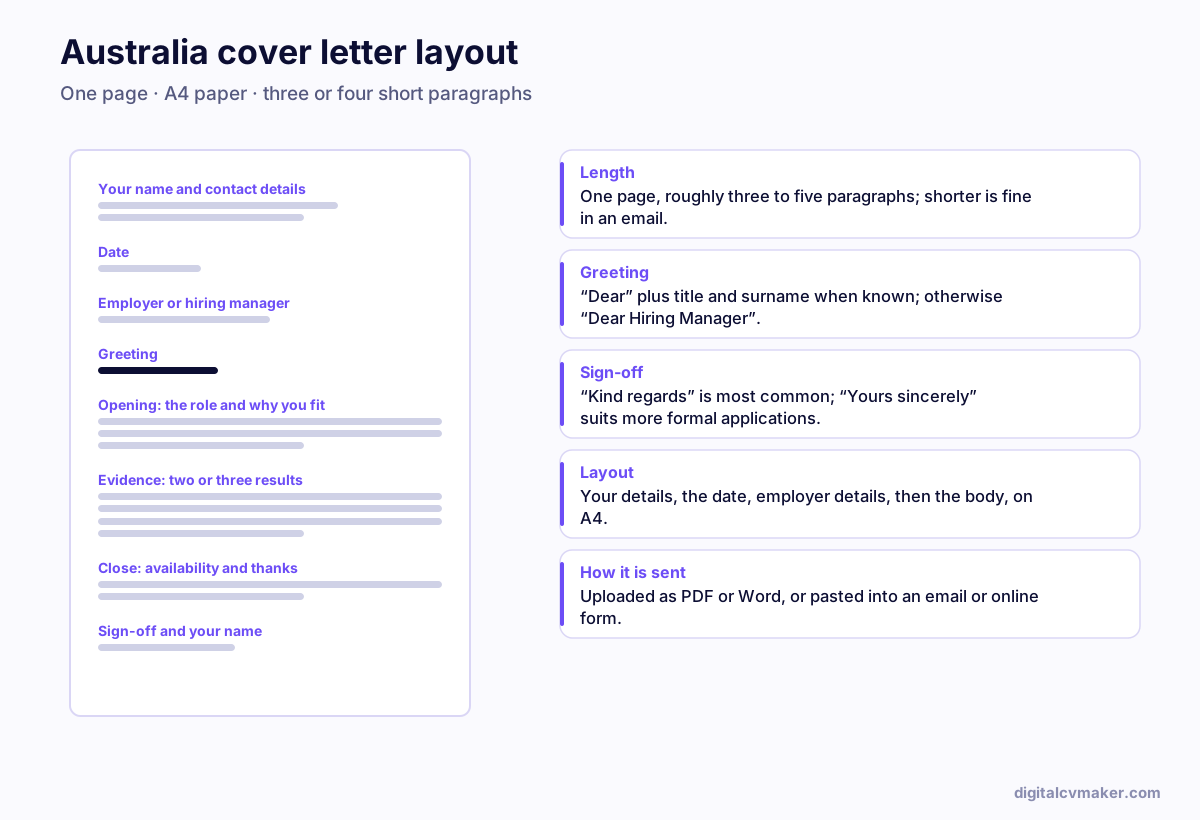
| Length | One page, roughly three to five paragraphs; shorter is fine in an email. |
|---|---|
| Greeting | “Dear” plus title and surname when known; otherwise “Dear Hiring Manager”. |
| Sign-off | “Kind regards” is most common; “Yours sincerely” suits more formal applications. |
| Layout | Your details, the date, employer details, then the body, on A4. |
| How it is sent | Uploaded as PDF or Word, or pasted into an email or online form. |
Free Australia cover letter template
The sample letter below, set out on a A4 page with the local greeting and sign-off. No signup.
Addressing the letter to a person
Australian job ads often list a contact person for enquiries, and that is usually who your letter should be addressed to. Use their title and surname, with no full stop after Ms, Mr or Dr, which follows Australian style. If no name is given, a short phone call or a look at the organisation’s website may reveal the hiring manager. When you cannot find a name, “Dear Hiring Manager” or “Dear Recruitment Team” is safe and reads far better than “To whom it may concern”, which now feels dated.
Opening paragraph: the role and your hook
Name the role you are applying for and, if the ad includes one, the reference number. Then give one sentence that tells the reader why you are a strong fit, such as your current position and the most relevant result you have delivered. Australian readers respond well to a plain, genuine opening, so skip clichés about being the perfect candidate. If someone referred you, or you rang the contact person to ask about the role, mention it here, because it shows initiative and gives the reader a useful connection.
Middle paragraphs: evidence against the ad
Pick the two or three requirements the ad stresses most and give a short example for each, showing what you did and the outcome. Do not repeat your resume line by line; add context it cannot, such as why a project mattered or how you worked with others to finish it. If the role is in a regional area, or with a not-for-profit, school or public agency, show that you understand its community or purpose. Keep sentences short and use Australian spelling throughout, as small details signal care.
Closing: availability, work rights and next step
End with a brief paragraph that confirms your interest, your start date or notice period and, if it is not already on your resume, your right to work in Australia. Thank the reader for their time and say you would welcome the chance to discuss the role further. Sign off with “Kind regards” followed by your full name, and add your mobile number and email beneath it when the letter is sent as an attachment rather than in the body of an email.
Cover letters for government applications
Public sector jobs sometimes ask for a cover letter or pitch in place of separate selection criteria responses, often with a strict page or word limit. In that case the letter carries most of the weight: address the key capabilities listed in the position description, using a concrete example for each. Read the application instructions carefully, since some agencies want selection criteria submitted separately and others want everything in one document. Content beyond the stated limit may simply not be assessed.
Sample cover letter
Replace the text in square brackets with your own details, and swap the examples for real results of yours.
Dear [Hiring manager's name], I am writing to apply for the [Role] position at [Company name]. With six years’ experience in customer operations across retail and logistics, I enjoy turning busy, complex workloads into smooth processes that customers notice. In my current role, I coordinate a team of eight and look after rostering, supplier liaison and escalated customer issues across two sites. Last financial year I redesigned our returns process with the warehouse team, which shortened processing times and noticeably reduced customer complaints. I also introduced a simple weekly report that gives managers a clearer view of stock levels, and it is still in use today. Your advertisement highlights stakeholder management and continuous improvement. I have built strong working relationships with drivers, suppliers and head office teams, and I am comfortable explaining changes to people at every level. I am also confident with spreadsheets, rostering software and inventory systems, and I pick up new tools quickly. I am drawn to [Company name] because of its focus on reliable service and its growth in regional areas, where I have family ties and would be glad to work. I am an Australian citizen and can start after a four-week notice period. Thank you for considering my application. I have attached my resume and would welcome the chance to discuss how I could contribute to your team. Kind regards, [Your name]
Tips
- Tailor every letter to the specific job ad; a generic letter sent to many employers is easy to spot and usually gets little attention.
- Match the fonts, margins and header of your resume so the two documents look like a set when opened or printed together.
- Check the ad for specific questions or instructions, such as responding to selection criteria, and answer them directly in the letter.
- Proofread for Australian spelling and the organisation’s correct name, then ask someone else to read it aloud before you send it.
How Australia compares
| Country | Length | Greeting | Sign-off |
|---|---|---|---|
| 🇮🇳 India | Three to four short paragraphs, well under one page. | Dear Mr/Ms [Surname]; Dear Hiring Manager when no name is known. | Regards, Best regards or Yours sincerely, followed by your full name and phone number. |
| 🇺🇸 US | Under one page, roughly 250 to 400 words in three or four paragraphs. | Dear Ms. Rivera or Dear Hiring Manager; avoid To Whom It May Concern. | Sincerely, followed by your typed full name. |
| 🇬🇧 UK | One page, roughly 250 to 400 words, in three or four paragraphs. | “Dear Ms Patel” with a name; “Dear Sir or Madam” or “Dear Hiring Manager” without. | “Yours sincerely” after a named greeting, “Yours faithfully” after Sir or Madam. |
| 🇦🇪 UAE | Under one page, usually 250 to 350 words in three or four paragraphs. | “Dear Mr/Ms [Surname]”, or “Dear Hiring Manager” if no name is given. | “Yours sincerely” with a name; “Kind regards” is fine for email applications. |
| 🇨🇦 Canada | One page, roughly 250 to 400 words in three or four paragraphs. | Dear [Hiring manager’s name], or Dear Hiring Manager, if no name is available. | Sincerely, or Kind regards, followed by your full name. |
| 🇦🇺 Australia | One page, roughly three to five paragraphs; shorter is fine in an email. | “Dear” plus title and surname when known; otherwise “Dear Hiring Manager”. | “Kind regards” is most common; “Yours sincerely” suits more formal applications. |
| 🇸🇬 Singapore | One page, typically 200 to 350 words across three or four paragraphs. | “Dear Ms Lim” when named; otherwise “Dear Hiring Manager”. | “Yours sincerely” for formal letters, “Best regards” for email applications. |
| 🇮🇪 Ireland | One page, about 250 to 400 words, split into three or four paragraphs. | “Dear Ms Byrne” when you know the name; otherwise “Dear Hiring Manager”. | “Yours sincerely” for a named reader, “Yours faithfully” after “Dear Sir or Madam”. |
| 🇩🇪 Germany | One A4 page, usually three to four short paragraphs. | “Dear Ms Weber” or “Dear Dr Weber”; “Dear Hiring Team” without a name. | “Kind regards” or “Yours sincerely”, followed by your typed name. |
| 🇪🇸 Spain | Half a page to one page; three or four short paragraphs. | “Dear Ms García” or “Dear Mr García”; “Dear Hiring Team” if no name is given. | “Kind regards” or “Yours sincerely”, then your full name and phone number. |
| 🇫🇷 France | One A4 page, with three main paragraphs and a short closing. | “Dear Sir or Madam”, or “Dear Ms Martin” when you know the recipient. | “Yours faithfully” or “Yours sincerely”, matching a formal French closing line. |
| 🇮🇹 Italy | Up to one A4 page; three or four paragraphs. | “Dear Dr Rossi” where a title is known; “Dear Hiring Manager” otherwise. | “Kind regards” or “Yours sincerely”, followed by your full name. |
| 🇵🇹 Portugal | Under one page; three or four concise paragraphs. | “Dear Ms Silva” or “Dear Mr Silva”; “Dear Sir or Madam” without a name. | “Kind regards” or “Yours sincerely”, with your name and phone number. |
| 🇧🇷 Brazil | Short: half a page, or three brief paragraphs in an email. | “Dear Ms Souza” or “Dear Mr Souza”; “Dear Hiring Team” if no name is listed. | “Kind regards” or “Best regards”, then your name, phone and LinkedIn. |