At a glance
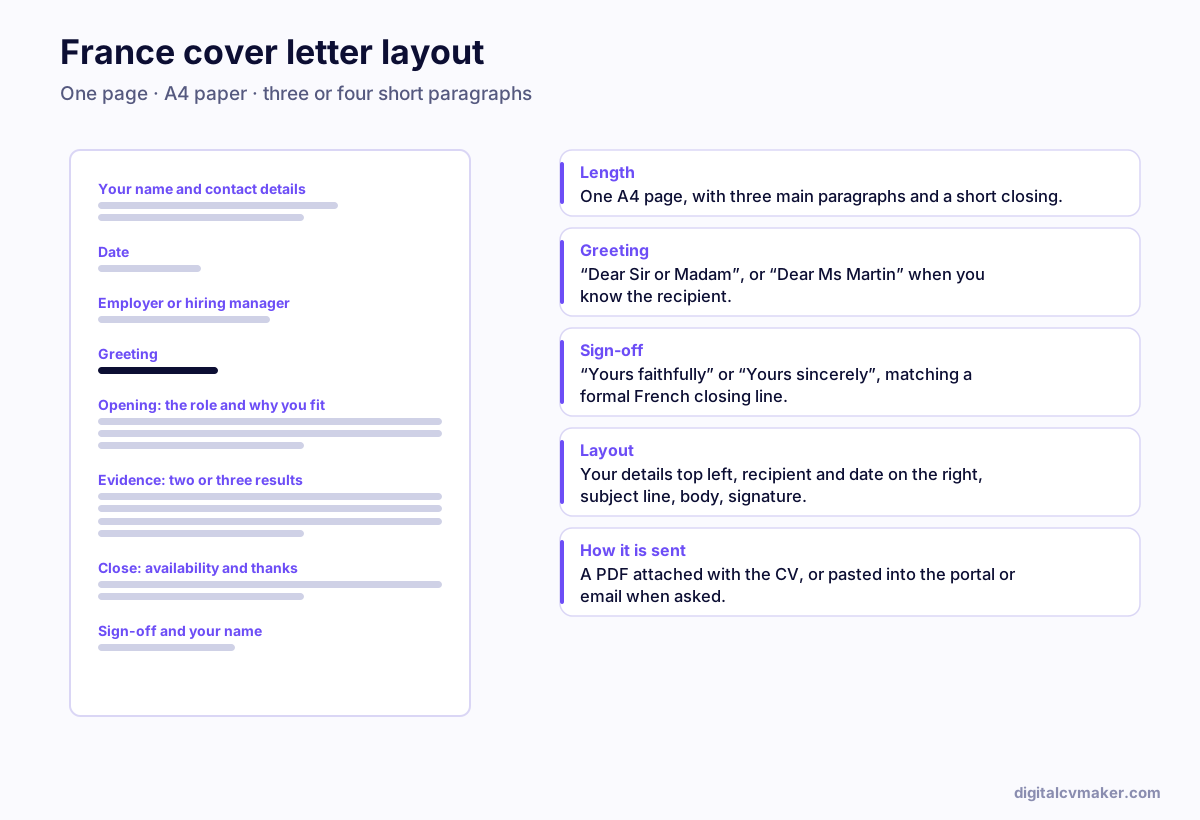
| Length | One A4 page, with three main paragraphs and a short closing. |
|---|---|
| Greeting | “Dear Sir or Madam”, or “Dear Ms Martin” when you know the recipient. |
| Sign-off | “Yours faithfully” or “Yours sincerely”, matching a formal French closing line. |
| Layout | Your details top left, recipient and date on the right, subject line, body, signature. |
| How it is sent | A PDF attached with the CV, or pasted into the portal or email when asked. |
Free France cover letter template
The sample letter below, set out on a A4 page with the local greeting and sign-off. No signup.
The you, me, us structure
Many French career guides teach a three-part structure for the lettre de motivation. The first paragraph is about the company: what it does, a project or value that interests you and why the role caught your attention. The second paragraph is about you: two or three strengths from your experience, each supported by a concrete example. The third is about working together: what you could contribute in the role and how it fits your plans. This structure keeps the letter focused on the employer and avoids a long list of personal claims.
Layout and subject line
A French cover letter follows business letter conventions. Your name and contact details go at the top left, the recipient’s name and address on the right, and the place and date beneath them. A subject line, the objet, names the position and any reference number, for example “Application for the position of Project Engineer, ref. PE-12”. The letter then begins with the greeting. When you send the letter by email or upload it to a portal, keep this layout in the PDF so it looks complete when printed.
Greetings and closing formulas
French letters traditionally open with “Madame, Monsieur” when the recipient is unknown and end with a long formal sentence expressing respectful regards. In English, the closest equivalents are “Dear Sir or Madam” and “Yours faithfully”, or “Dear Ms Martin” and “Yours sincerely” when you know the name. Keep the final paragraph polite and forward-looking, asking for the opportunity to discuss your application in an interview. Avoid casual sign-offs such as “Cheers” or “Best”, which feel out of place in a French application, even in English.
Tone and level of detail
French recruiters value a letter that shows you have researched the company and thought about the role. Generic letters that could be sent anywhere are quickly noticed. Write in clear, well-constructed sentences and avoid exaggerated claims; a calm, precise tone carries more weight than enthusiasm alone. If you are applying from abroad, explain your plans to move to France and your work status in one or two sentences. Mention your French level, since daily work in most teams will involve some French.
Spontaneous applications
A spontaneous application, the candidature spontanée, is a well-established way to approach French companies, particularly for internships, smaller firms and regional employers. In this case the letter does more work than usual. Explain which department or type of role you are targeting, why this company in particular and what you could bring. Address the letter to a named manager or the human resources contact where possible. Keep the same formal layout and send it with a CV whose headline matches the role you describe.
Sample cover letter
Replace the text in square brackets with your own details, and swap the examples for real results of yours.
Dear [Hiring manager's name], Your company's work on energy-efficient buildings, and in particular the renovation programmes you run with local authorities, is the reason I am applying for the position of [Role] at [Company name]. Projects that combine technical quality with public impact are exactly where I want to develop my career. I hold a master's degree in civil engineering, equivalent to a French Bac+5, and have spent four years as a site engineer on residential and public projects. I coordinated subcontractors on a school renovation, kept the schedule on track through a difficult winter and introduced a weekly reporting sheet that the whole site team adopted. I am comfortable with building information modelling tools and with presenting progress to clients. Joining [Company name] would allow me to apply this experience to larger renovation projects while learning from your teams' expertise in thermal performance. I am moving to France for family reasons, hold an EU passport and currently speak French at B2 level, which I am improving through an intensive course. I would welcome the opportunity to discuss my application with you in an interview. My CV is attached. Yours sincerely, [Your name]
Tips
- Open with something specific about the company rather than with yourself; French recruiters expect evidence that you know who they are.
- Give the letter a subject line with the job title and any reference, as French business letters usually do.
- Keep one formal register throughout and close with a polite request for an interview.
- State your French level and work status briefly when applying from abroad, so the recruiter can plan the next steps.
How France compares
| Country | Length | Greeting | Sign-off |
|---|---|---|---|
| 🇮🇳 India | Three to four short paragraphs, well under one page. | Dear Mr/Ms [Surname]; Dear Hiring Manager when no name is known. | Regards, Best regards or Yours sincerely, followed by your full name and phone number. |
| 🇺🇸 US | Under one page, roughly 250 to 400 words in three or four paragraphs. | Dear Ms. Rivera or Dear Hiring Manager; avoid To Whom It May Concern. | Sincerely, followed by your typed full name. |
| 🇬🇧 UK | One page, roughly 250 to 400 words, in three or four paragraphs. | “Dear Ms Patel” with a name; “Dear Sir or Madam” or “Dear Hiring Manager” without. | “Yours sincerely” after a named greeting, “Yours faithfully” after Sir or Madam. |
| 🇦🇪 UAE | Under one page, usually 250 to 350 words in three or four paragraphs. | “Dear Mr/Ms [Surname]”, or “Dear Hiring Manager” if no name is given. | “Yours sincerely” with a name; “Kind regards” is fine for email applications. |
| 🇨🇦 Canada | One page, roughly 250 to 400 words in three or four paragraphs. | Dear [Hiring manager’s name], or Dear Hiring Manager, if no name is available. | Sincerely, or Kind regards, followed by your full name. |
| 🇦🇺 Australia | One page, roughly three to five paragraphs; shorter is fine in an email. | “Dear” plus title and surname when known; otherwise “Dear Hiring Manager”. | “Kind regards” is most common; “Yours sincerely” suits more formal applications. |
| 🇸🇬 Singapore | One page, typically 200 to 350 words across three or four paragraphs. | “Dear Ms Lim” when named; otherwise “Dear Hiring Manager”. | “Yours sincerely” for formal letters, “Best regards” for email applications. |
| 🇮🇪 Ireland | One page, about 250 to 400 words, split into three or four paragraphs. | “Dear Ms Byrne” when you know the name; otherwise “Dear Hiring Manager”. | “Yours sincerely” for a named reader, “Yours faithfully” after “Dear Sir or Madam”. |
| 🇩🇪 Germany | One A4 page, usually three to four short paragraphs. | “Dear Ms Weber” or “Dear Dr Weber”; “Dear Hiring Team” without a name. | “Kind regards” or “Yours sincerely”, followed by your typed name. |
| 🇪🇸 Spain | Half a page to one page; three or four short paragraphs. | “Dear Ms García” or “Dear Mr García”; “Dear Hiring Team” if no name is given. | “Kind regards” or “Yours sincerely”, then your full name and phone number. |
| 🇫🇷 France | One A4 page, with three main paragraphs and a short closing. | “Dear Sir or Madam”, or “Dear Ms Martin” when you know the recipient. | “Yours faithfully” or “Yours sincerely”, matching a formal French closing line. |
| 🇮🇹 Italy | Up to one A4 page; three or four paragraphs. | “Dear Dr Rossi” where a title is known; “Dear Hiring Manager” otherwise. | “Kind regards” or “Yours sincerely”, followed by your full name. |
| 🇵🇹 Portugal | Under one page; three or four concise paragraphs. | “Dear Ms Silva” or “Dear Mr Silva”; “Dear Sir or Madam” without a name. | “Kind regards” or “Yours sincerely”, with your name and phone number. |
| 🇧🇷 Brazil | Short: half a page, or three brief paragraphs in an email. | “Dear Ms Souza” or “Dear Mr Souza”; “Dear Hiring Team” if no name is listed. | “Kind regards” or “Best regards”, then your name, phone and LinkedIn. |