🎙️ Free tool · no signup

Free Interview Question Practice

Pick your profession and level, then answer 10 likely interview questions against a timer and compare your notes with guidance and example answers. Each practice session has 10 questions: tell me about yourself, why should we hire you and strengths and weaknesses for your profession, plus seven drawn from a general bank.

Runs in your browser. Your notes and recordings are not sent anywhere; they stay in this tab only.

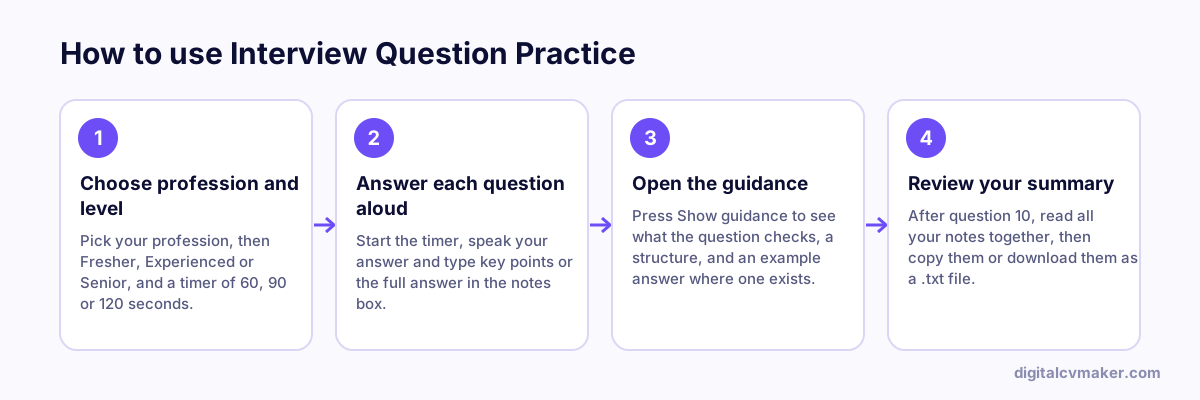
How to use Interview Question Practice: 1. Choose profession and level, 2. Answer each question aloud, 3. Open the guidance, 4. Review your summary.
How to use the Interview Question Practice, step by step.

How to get the most from a practice session

  1. Read the question, then answer it aloud before you type anything. Interviews are spoken, and speaking exposes gaps that writing hides.
  2. Use the timer. If you run out of time, the answer usually has too much background and too little about what you did.
  3. Only then open the guidance. Compare your answer with the structure and note one thing to change.
  4. Say the improved version once more and keep the notes short: three or four prompts, not a script.

The three questions you should always prepare

Almost every interview includes some version of these. Read full examples for your profession, then write your own:

Behavioural questions need a story

Questions that start with “tell me about a time” want one specific example, not a general description of how you work. Pick a real situation, keep the background short and spend most of the answer on your own actions and the outcome. Build these answers step by step with the STAR answer builder, and make sure your resume mentions the same achievements you plan to talk about.

Worked example

A staff nurse practising for a hospital interview

What goes in

Profession: Nurses, level: Experienced Timer: 90 seconds per question Question drawn: Tell me about a time you handled a difficult patient.

What you get

The session opens with tell me about yourself, why should we hire you, and strengths and weaknesses for nurses, then mixes in role and behavioural questions. On the difficult-patient question the nurse speaks for 90 seconds, then reads the note on what the interviewer is checking: calm de-escalation and patient safety, not just patience. Comparing with the model answer shows her reply spent too long on background and never said what changed for the patient. On a second try she cuts the setting to one sentence and ends with the outcome, which is the structure interviewers reward.

Common mistakes

  • Reading the example answer aloud as if it were your own; interviewers notice recited answers, so borrow the structure and fill it with your real situations.
  • Practising only in your head instead of speaking against the timer, which hides how long your answers actually run and where you hesitate.
  • Skipping the questions that feel uncomfortable, such as weaknesses or gaps, which are exactly the ones that most need a rehearsed, honest answer.

When to use it: Use interview practice in the week before an interview to rehearse spoken answers; for one key story, the STAR answer builder lets you shape it in more detail.

FAQ

Frequently asked questions

Each session has 10 questions. Three are profession-specific — tell me about yourself, why should we hire you, and strengths and weaknesses. The other seven come at random from a bank of behavioural, motivation, situational and closing questions; where your job has its own interview questions page, three or four of them are role questions from it.

No. The example answers are written for fictional people and are there to show structure, length and the kind of detail that works. Interviewers notice a recited answer quickly. Borrow the shape, then fill it with your own roles, projects and numbers you can talk about comfortably.

For most questions, one to two minutes is a comfortable length — long enough for one clear example, short enough to keep attention. The timer lets you choose 60, 90 or 120 seconds; if you often run out of time, cut background detail and get to what you did sooner.

Notes and voice recordings stay on your device and are not uploaded. Notes are kept in session storage so a refresh does not lose them; recordings live only in memory and disappear when you leave the page. The optional live transcript uses your browser’s speech service, which in some browsers sends audio to the browser maker.

Recruiters Google you before the interview

Get a page that shows up: your experience, projects and contact details at your own link. Live in minutes.

Start free
Chat on WhatsApp